Alibis and Witnesses X – Gary Edwin

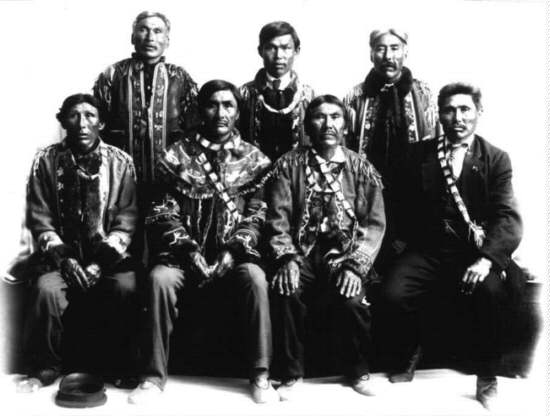
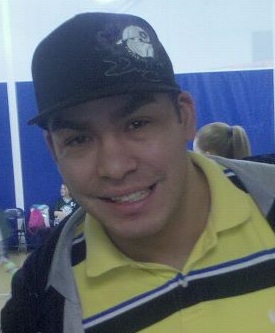
Gary Edwin is originally from Tanana, Alaska. He is the proud father of five, and works for Doyon Drilling.  Gary is arguably Marvin’s most important alibi. In 1997 he was 24 years old, working as a substance abuse counselor, and spent the evening with his wife, Marvin, and Angelo at the wedding reception at the Eagle’s Hall. His younger cousin Angelo Edwin,  spent the entire evening with Marvin. Both Angelo and Gary appear over and over in Marvin’s timeline which you can read HERE.

Through the years there have been many accusations from the community that the Native witnesses that came forward as alibis in this case had alcohol-affected memories and were conspiring to create a cover-up for the Fairbanks Four. It is important, then, to note that Gary was not drinking the night of the murder. It is also important to note that Gary and his brother Angelo went voluntarily and immediately to the police when they heard Marvin had been arrested for a crime committed that night, and that they had not had time to falsify a story, and in fact made statements before anyone knew the time that the assault had been committed against John Hartman (read more about the time of the crime HERE). In a nutshell, the prosecution’s contention that the alibis were either drunk or making up stories simply hold no weight whatsoever in regards to Gary Edwin.

Gary lives with a burden that is tragically not unique in this case – he does not need to read case files, newspapers, opinions, or rulings to know that his young friend was wrongfully convicted. For him there is no speculation of police misconduct, no question about whether or not the evidence in this case was manufactured – he watched it happen. He has never read the content on this blog, yet his story is painfully familiar. It is the kind of thing that a person never forgets. Below, he tells his story in his own words:

On That Night

“I spent the entire, well hours you know, of that night with Marvin. I would say from around midnight until at least 2 am, even later, when the reception ended. He sat with us at our table, and I saw him basically the whole night. Dancing, visiting, having fun.”

Note – Gary had a conversation with Marvin during the night at what ended up being a very critical moment, when 911 was called to bring aid to a beaten and shaken Frank Dayton (whose assault  you can read about HERE). Although no one, including the police, had yet established a timeline on the assault for John Hartman at the time Gary first gave the police this information, Gary was having a conversation with Marvin concerning Frank Dayton at the exact same time that Hartman was being beaten to death blocks away.

The Next Day

“The next day I went over to Marvin’s  he was, he sold me a pair of Oakley’s that he had gotten but didn’t like, and I had seen them the night before and said ‘well, I’ll bring money over for them tomorrow.’ So, I brought him the money had he gave me the glasses. He asked if I wanted to go up and play ball, and I told him I would go pick up Angelo on my way home and grab my ball gear, and meet him up at the SRC.”

Marvin was not at the SRC for the planned basketball game. By then he was sitting with the police, insisting that he was innocent and pleading with the interrogators to listen. Gary Edwin called Marvin’s mother.

“And then his mom asked if we had seen what was on the news. And she said they had picked up Marvin, George, Kevin and Eugene. And I was like, damn.

She said, ‘I thought you guys were with Marv last night.’

And we were like ‘Yeah, all night.’

I asked, what’d you guys do after the reception? And he told me that after they stopped by the bar or party they kinda drove around a little bit, that they went through the drive-thru, and then he dropped him off at home.

So, I was like, wow, you know, we need to go down to the police station and tell them, make a statement. We thought, of course, that was the thing to do.”

On the Interviews with Police

When we got down there, the detectives were acting pretty weird about our statements, we were like, “hey, we were with Marvin all night, you know from this time to this time.”

When I went in with the detectives that were taking my statement they kept trying to twist what I was saying. Finally it just came down to me just wanting to give a statement and get out of there. So was like, just give me a piece of paper and I’ll write it down for you. And I was so uncomfortable, I was writing it, but I was more worried about getting out of there.

When I got out to the lobby, Angelo came out of his room after me, and he was really shook up. And one of the detectives grabbed Angelo by the arm and was like, “You better make DAMN sure you know what you’re saying to be the truth, because we have a 15-year-old kid that’s been murdered and this is, this needs to be taken serious, or something to that effect.

When we left, Angelo said he experienced the same thing while being interrogated, or while he was trying to give a statement.”

On Why These Memories Remain So Clear Today

“You know, I went in believing I was doing the right thing. To show up and have people that are supposed to help and protect you, making you feel like you actually did something wrong, or you are involved in something that’s wrong, it’s….it is a real eerie feeling.

I was twenty-four in 1997, four years older than those others at least. I mean, more or less, we went in there thinking we were doing something to help the police, and by the time we left it was like, we wanted to run, just get the hell out of the police station. I was educated, and I wasn’t as afraid because I know my rights. But the young people that didn’t know their rights, maybe the only interaction they had with police officers was this, was bad, I totally understand how bad it must have scared them.

On What It Is Like to Watch The Case Unfold

It made me really fear Fairbanks Police, for one. I actually moved out of Fairbanks after all of this. Even when we were in Anchorage, when we were there to testify, that Detective and Jeff O’Bryant, they followed us around Anchorage. It was clear, always, trying to intimidate us. My cousin Patrick, they were hard on him. He couldn’t deal with all the harassment from them. It was…..it was unbelievable, but it was happening. Yeah, it changed, wow, it changed a lot of things….. those memories will always be there.”
Witnesses and Alibis IX – The Mugging of Frank Dayton

Frank Dayton’s mugging was only one of the similar attacks that occurred the night John Hartman was killed. However, the beating and mugging of Frank Dayton is of incredible importance because of the part it played in the police theory of the murder and the part it played in trials.

In addition to being charged and convicted of the murder of John Hartman, the Fairbanks Four were also convicted of mugging Frank Dayton, primarily off the eyewitness testimony one man provided in exchange for leniency in the serious criminal charges he was facing. It was the only testimony that put the four together that night, or indicated that they were engaged in violent behavior of any kind. That testimony was made by Arlo Olson, and has since been recanted. We hope to post Arlo’s story, and are hoping that he will be able to tell it himself for us and keep with our focus on letting people speak for themselves. Either way, we will discuss Arlo Olsen’s role in this case at length very soon. For now, we will focus on Frank Dayton’s version of events. It is impossible to overstate how important Frank Dayton’s mugging became in the murder trial. In this post we will describe the mugging that Frank Dayton reported to the police and testified to in trial.

Frank was at the the wedding reception at the Eagle’s Hall along with hundreds of other guests. Sometime around 1am, Frank decided to walk a few block over to meet a friend. Much like Hartman, he was walking alone in the cold late night. He was soon assaulted in a disturbingly similar way.

Frank was in the 300 block of 1st Avenue when he heard a car rolling up behind him. He assumed that the car was slowed to a crawl so that it could pull into the parking lot he had just passed. When he turned around he saw the car. He described it as a four door light colored car (white, or a very light tan or gray). The assailants ran up to him and he was immediately tripped and knocked to the ground. His elbow, knees, and face smashed into the cold pavement. He made a movement to stand, but one of the attackers slammed their foot down on his right hand. Another stood over him. They kicked him in the side and back. As he lay with his face pressed into the pavement he saw the show standing on his hand – a white high top.

The attackers assaulted him primarily by kicking him while he was on the ground. They reached into his pocket and took the $20 he had. They then ran to their car and sped off, disappearing as quickly as they had appeared.

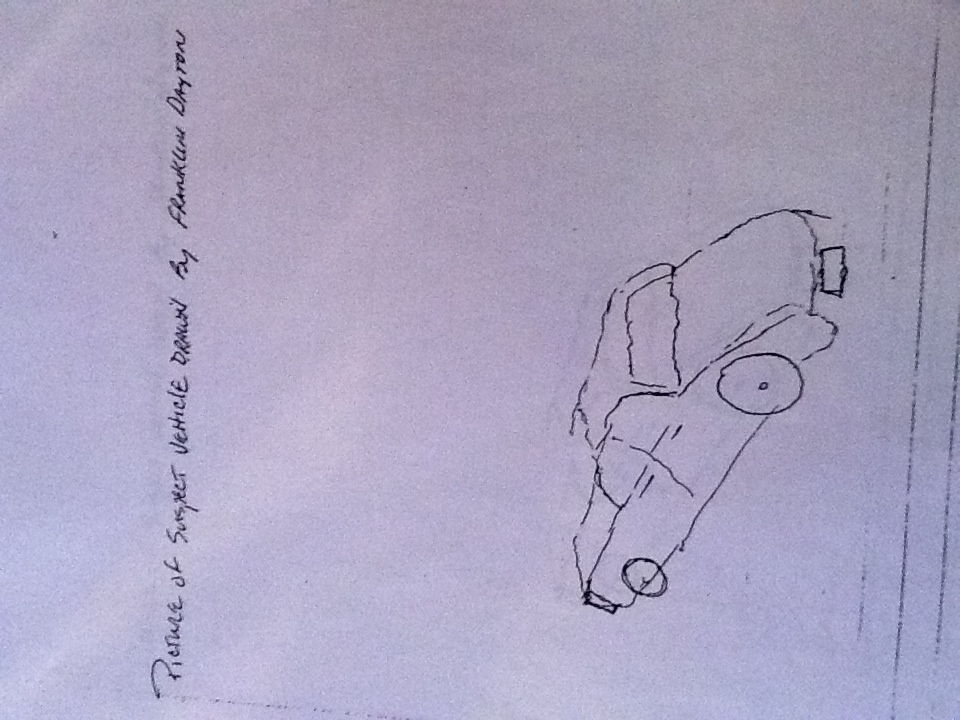
Frank was not able to describe his attackers, it had all happened fast and in the dark, and he was held face-down to the ground during the beating. He was able to see and remember the car well, which he described as a “good-sized” light four-door sedan. Frank even drew a picture of the car for the police, which is pictured above.

In the police theory, they surmised that the Fairbanks Four – Kevin, Eugene, Marvin, and George – had gone on a violent beating spree that night attacking people at random. Indeed, there is a distressing theme in the violence that occurred that night. Three others reported nearly identical attacks which you can read about HERE. In those attacks the eyewitnesses or victims also described a light four-door sedan as the car, but the others were able to provide a better description of their attackers, and across the board they ALL described four young African American men in that light car, getting victims to the ground, kicking them, and speeding away.

Frank Dayton was wearing a leather jacket than night. One that likely had the palm and fingerprints of his attackers on it – Frank offered it up to be tested, and the investigators declined to take it. There are a lot of opportunities lost in this case – Frank Dayton’s jacket was one of them, but much like Conan’s pager (read about that HERE), yet another opportunity to collect that evidence was passed up. It is a theme in the case that is disturbing to say the least.

After the beating, Frank Dayton returned to the Eagle’s Hall, where his sister in law Susan Paskavan called 911. The call is logged at 1:34am, roughly the same time that the assault on John Hartman ended.

Prosecution and police relied on a theory that the Fairbanks Four beat and mugged Frank Dayton, then drove the several blocks to 9th and Barnette and fatally beat John Hartman in a similar way. There are many holes in that theory, but here are some of the most important ones:

* Frank Dayton’s attackers drove a light full-sized four-door sedan, Marvin drove a bright blue two-door tiny car.

* None of the four were there. Read their timelines for more details (MARVIN, GEORGE, EUGENE, KEVIN).

* Marvin was at the Eagle’s Hall when Frank Dayton returned and 911 was called. Gary Edwin testified that he KNOWS Marvin was there at the time because as Gary was leaning over the injured Frank Dayton, Marvin approached him and said, “What happened?” Gary responded that he didn’t know and was trying to figure it out himself.

* None of the four were wearing or owned white high-tops. The shoes that the police collected from the men were listed as brown boots, black boots, and black Nike Air tennis shoes. NO white high-tops. Remember that George, Kevin, and Eugene were all arrested in the shoes they had worn. Marvin’s house was searched and all of his shoes were taken.

* Frank Dayton was Eugene Vent’s cousin. It seems unlikely that Eugene, a person with no history of violence, would attack anyone, but especially his own family. It also seems unlikely that Frank Dayton would not recognize his young relative. It also seems unlikely that Frank Dayton would not be able to identify the suspects as Native given his level of familiarity with a Koyukon Athabascan accent.

* Frank Dayton himself believes the Fairbanks Four are innocent, and KNOWS that they are not his attackers. He said this on the stand, and has said it for the last 14 years.

Despite all of this, the Four would eventually be tried for the mugging of Frank Dayton and the murder of John Hartman in one trial. Juror’s would later say that Arlo Olson’s testimony, which convinced them that the Fairbanks Four were guilty of mugging Frank Dayton, was one of the biggest factors in them finding the men guilty.

Love Gonna Bust Me Out – A Letter from Kevin

Kevin has spent many years in silence. In the early media reports in  and in the press coverage throughout the trials Kevin was relentlessly attacked, more so than the others. The police pushed this media agenda, because in their theory they considered him the ringleader.  It was amazing in a way to watch it unfold – to watch him remain quiet and outwardly calm while his world crumbled around him. Steady.

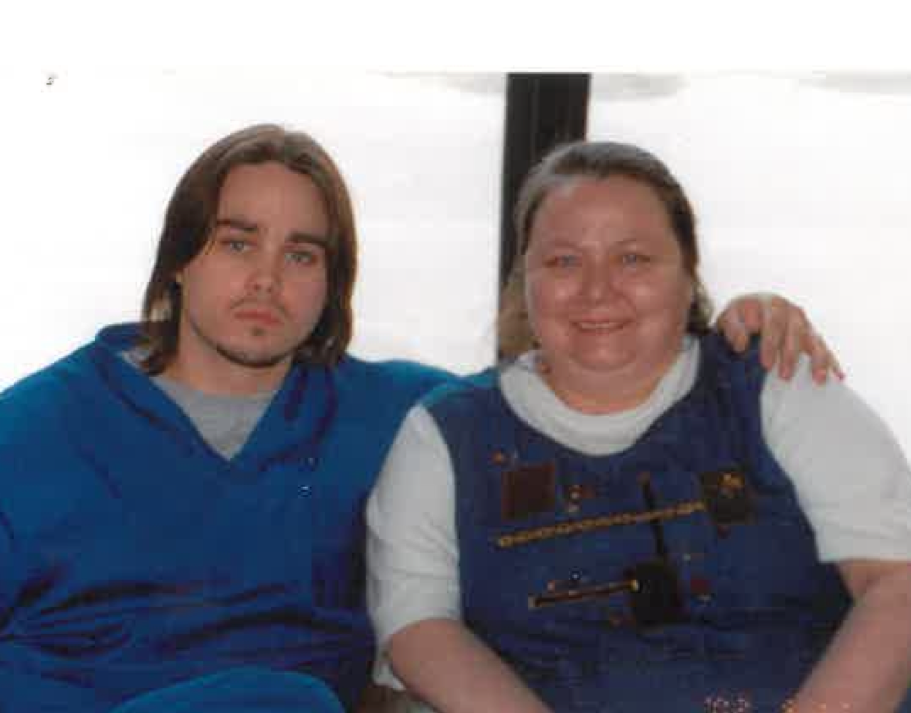
After his conviction, many people stood behind his claim of innocence, but none as strongly or courageously as his mom, the late Carol Pease. He is pictured with her here. It is hard to imagine the grief that Kevin has had to live with. He lost his father a short time before being wrongfully accused, and his mother shortly after his wrongful conviction, all as a very young person. Yet, amazingly, through all of this his faith remains strong.

In this post, Kevin tells his own story. Like with the other letters, the truth in his words is palpable. Painfully clear. Facts, documents, transcripts, legal opinions, and the like abound in this case, and they all back up the claim that these men are innocent.  Still, nothing makes that statement as poignantly than the truth in their own words. Here they are:

PLEASE, if you or ANYONE you know has information about the case call, write, email or do anything you like, just do the right thing. The best person to bring new information and tips to is Bill Oberly at the Innocence Project in Anchorage – 907-279-0454. His email is info@alaskainnocence.org and tips can be made anonymously.

If you were involved in any way in this case, please consider coming forward today and submitting your OWN story. These pieces build a picture together, and each piece is important. Contact US on the Facebook page.

HATE, indeed, put these men in prison, and LOVE will set them free someday. YOUR LOVE, courage, and support, to be specific. So keep it coming!!! Sign the petition, join us on Facebook, and spread, spread, spread the word. We send these pages back to the boys, so feel free to add a comment for Kevin below.

Blood in the Streets – Other Crimes that Night

Who killed John Hartman? We don’t know. And if this case has taught us anything it is that accusations of this seriousness should not be levied lightly. But from the beginning, evidence has pointed firmly away from the Fairbanks Four and toward attackers that have not yet been identified. Over the years at least two serious theories have emerged among readers –  this post outlines one.

One of the most stunning elements of the investigation and arrest of the Fairbanks Four for the murder of John Hartman is that there was no shortage of evidence pointing away from them. In fact, on the night of October 10 into the early morning hours of the 11th, there was a litany of violent beatings and robberies. The victims of these attacks described their attackers as four African-American men in a light-colored four door sedan. These crimes were sickeningly similar – multiple assailants violently kicking and robbing victims who were vulnerable and on foot. They shed terrible light on what John’s terrible last moments may have been like.

Robert John was walking down the road late in the night of October 10th when a light-colored car pulled up behind him. When he turned around, three African-American teenagers jumped out of the car and began a sudden unprovoked attack on Robert John. They attempted to knock him down and began kicking him. They were not successful in knocking him down, and he escaped. He walked into Pastime Card Room, badly shaken, and told Rubin Sam the details of the attack.

12:15 am (approximately) While walking out of Spade Room, Raymond Stickman saw a sight that he will never forget. An older Native man was on the ground, clearly just assaulted, with three young African-American men wearing dark-colored clothing surrounding him. The assailants took off running, jumped into a car with a waiting driver, and sped away. The Native man got up and went into an adjacent building – Raymond Stickman followed him in to be sure he was okay, and the man told him that he had been knocked to the ground and kicked by the group. It is unclear whether he was robbed.

1:00 am (approximately) Frank Dayton left the reception at the Eagle’s Hall and walked along the south side of First Avenue. He was violently assaulted and robbed about ten minutes later. According to Frank, he heard a car rolling up behind him at a slow speed and assumed it was pulling into a parking lot. The next thing he heard was the rapid approach of feet. He was knocked down to the ground, and struck his right knee, elbow, and head on the pavement. One of the attackers stepped on Frank’s right hand, and Frank was able to see a white high-top shoe. While he was pinned to the ground they kicked him in the side and back. One of the  attackers reached into Frank’s pocket and stole the $20 he was carrying. His attackers rushed back to their car and pealed off. Frank Dayton described the car as a large white or light tan four-door sedan. He did not see his attackers. The only details that he was able to provide were the exact location, the description of the car, and that one assailant was wearing white high-top sneakers.

1:30am  Frank Dayton arrives shaken and injured back at the Eagle’s Hall. His sister-in-law calls 911 and the call is logged at 1:34am. Multiple witnesses place Marvin Roberts at the Eagle’s Hall during this 911 call (you can see his timeline HERE).

1:30 am  A few blocks away from the site of Frank Dayton’s attack, John Hartman is beaten to death. The wallet he had with him was never recovered, making it seem as if he also was robbed. The attack on Hartman lasted only five minutes (read about the attack HERE and read his timeline HERE).

Don Moses is a non-drinker and his memories of his attack are still clear these many years later. Don was attacked in the early morning hours of October 11th as well. His attackers pulled up in a car, and four men got out and rushed toward him. He said while recounting the incident, “I have never done anything like this in my life before, but I rushed back at them as if I was ready and willing to fight.” His instincts told him that his life was in danger. At the same moment, sirens rang out nearby. The attackers reacted to either Don’s bold posturing, the sirens, or both, and ran back to their car and drove off. Don does not know the exact time of his attack, but the chilling possibility exists that the sirens in the distance were the ones called to an ailing Frank Dayton, while just a few streets over John Hartman lay unconscious.

Ultimately, the night that John Hartman was murdered was a cold and bloody night on the streets of Fairbanks. Hartman will never be able to describe his attack in his own words. But several others were attacked at random that night and were able to relate the experience, and through them a troubling and uninvestigated thread emerges.

These attacks point to another early investigative failure. ALL of the listed attacks were known to investigators and the DA, and more may have occurred and gone unreported. When at least four similar attacks take place in the span of a few hours with three victims living and one fatally wounded, it is incomprehensible that investigators did not pursue the young men or the getaway car described. But, they did not. With an abundance of evidence indicating that they should be looking for four African-American teenagers in a light-colored four-door sedan, they arrested The Fairbanks Four one at a time through happenstance encounters, with no evidentiary indication that any one of the four had committed the crime. They would eventually enter into evidence Marvin’s bright blue two-door car and four pairs of shoes, none of which were white high-tops.

At least one person reading this blog KNOWS who killed John Hartman. Someone went to high school with these teenagers cruising in that light sedan. Someone remembers. Someone suspects. No information is too small. No gut instinct should be ignored. At least one person, and probably many more, can step forward anonymously and write an ending to this story. Change it from a tragedy to a triumph. Please, please, do.

COMPLETELY ANONYMOUS tips can be emailed to info@alaskainnocence.org or called in to the Innocence Project at 907-279-0454

Method to the Madness – Officer Reid’s Torture Technique

We have, over and over, referred to the specific method of interrogation that was used on the Fairbanks Four AND on many alibi witnesses who were questioned. We have heard from these people that their interrogations or interviews were some of the worst experiences of their lives. Some, even a decade and more later, still suffer nightmares about the experience. These people have done a wonderful job describing how this interrogation technique feels. We want to also help you all understand how it works. And the best place to start is the very beginning, so bear with us for what is going to be a long, but very informative post.

From America’s earliest days as a country well into the 1940’s, suspects of crimes were by policy routinely interrogated with a method known as the “third degree.” Some highlights of this technique included violent beatings, holding heads under water, starvation, threatening to kill a suspect and their families, sleep deprivation, electrocution, and a slew of other nasty tactics that make water-boarding sound like a fun jaunt through a sprinkler on a sunny summer day. These tactics were the rule, not the exception, and officers were trained to use torture because it worked.

These methods produced many confessions, and sent many confessed murderers to their prison cells and graves. There is no question that the third degree was an effective way to get confessions. But by the 1930’s, scholars began to notice that many of these confessions were false. The public became increasingly critical as well and people began asking a lot of questions. When hundreds of people were beaten at rallies the press reports were not favorable. NAACP began an anti-lynching movement. A new era was on the horizon and suddenly the general public was not content with the status-quo. A civil rights movement was a-brewin’.  This whole third degree thing was, after all, pretty outdated. Decades and decades old. It was time for a change, and it was clear that the third degree had to at least begin to die out with the 30’s. With no alternative available the third degree continued to be the standard through most of the 1930s.

By the 1940, the practice of physical torture in order to elicit confessions was rapidly falling out of favor. Several courts had found it to be unconstitutional, forcing the practice underground. Investigators tried beating people with rubber hoses so that there would be less bruising, but it was clear that a more lasting alternative was needed. Society (including most police officers), thankfully arrived at a point where most people were not too keen on confessions being beaten, starved, dunked, and cut out of suspects. No, it was time for something more civilized.

Enter John Reid – an Irish cop from Chicago with no background in psychology whatsoever. If the American law enforcement had not been so desperate for a less violent but effective form of interrogation, his psychology-based method could well have been laughed off. But sometimes timing is everything. Reid had a gift. He could, without beating someone, persuade them to confess. We will never know if Reid himself had a gift for obtaining true confessions, false confessions, or both, but we do know he got more than 5,000 of them during his career. He shared and taught his technique. Eventually, he published a book on interrogation –  it came at the perfect moment in history, and it was rapidly adopted. In lieu of physical torture Reid’s book recommended something equally as effective but much less likely to leave visible marks: psychological torture!

The Reid Technique of Interrogation was simple, easy to learn, and it worked! It produced confessions! As a matter of fact it worked better than old-fashioned torture. So, police officers across the country and world began to use his 9-step process. By the time 1960’s passed the third degree had been all but replaced by the Reid Technique. The process works something like this:

The first order of business is to perform a non-accusatory interview, review the evidence, and be reasonably sure that the suspect is guilty of the crime. The 9 steps are supposed to be used on people who are GUILTY of a crime, so it is important to be reasonably sure that you are dealing with the perpetrator. So, how do investigators know they have the right guy? Basically, one of two ways. In the first scenario, they have mountains of evidence (eye-witnesses, fingerprints, found the guy at the murder scene covered in blood and holding a knife – that kind of thing). In the second scenario the officer determines that the person is guilty using their expertise in psychology. You know, the expertise they got in the book written by a guy with no background in psychology. Sadly, as with many of life’s crappy ideas, the Reid Technique of interrogation often fails before it even begins.

Because the investigator believes they can spot guilt just by looking at or interacting with a suspect (and in fact have been instructed that they can) these investigators rely on this  super-power to be sure that they have the right guy. The good news? One person did do a study which concluded that investigators are better than the average joe-shmo at spotting guilt. The bad news? That guy would be John Reid. After he finished pretending to be a psychologist, he moved on to the illustrious position of pretend-scientist. The other bad news? Pretty much every other study done on the topic shows that police officers are no better than spotting a guilty person than the average citizen, and sometimes worse. But the problem is that unlike the average citizen they BELIEVE they have the right guy. And as soon as they are sure they have the guy, Reid interrogation process beings in earnest.

Once the investigator is sure he’s got the right suspect, he starts the nine step process. Here are the nine steps:

  • Step 1 – Direct Confrontation. Lead the suspect to understand that the evidence has led the police to the individual as a suspect. If there was no evidence, lead them to believe this by MAKING UP evidence. (Case Example: Telling Eugene there was blood all over his shoes, telling George that a science lab had matched his shoe to the victim, telling Marvin that eyewitnesses and tire tracks proved his car was at the scene).
  • Step 2 – Shift the blame away from the suspect to some other person or set of circumstances that prompted the suspect to commit the crime. (Case example: Suggesting that Kevin was the ringleader, that the others were just in the wrong place at the wrong time). That is, develop themes containing reasons that will justify or excuse the crime. (Suggesting that perhaps the victim had used racial slurs, was gay, had ripped them off, that it was a gang initiation). Themes may be developed or changed to find one to which the accused is most responsive. (Themes were changed constantly, probably because none of the accused responded with anything but denial to the theories).
  • Step 3 – Don’t let the person say they are innocent. Reid training video: “If you’ve let him talk and say the words ‘I didn’t do it’, and the more often a person says ‘I didn’t do it’, the more difficult it is to get a confession.” (Case example: They tried to interrupt or correct Marvin every time he claimed innocence, and verbally attacked George and Eugene when they claimed innocence or brought up that they felt they were being brainwashed).
  • Step 4 – At this point, the accused will often give a reason why he or she did not or could not commit the crime. (Example: George saying he would never do something like that, Eugene saying he was just not that kind of person, Marvin pointing out that it was impossible) Try to use this to move towards the confession.
  • Step 5 – Reinforce sincerity to ensure that the suspect is receptive.
  • Step 6 – The suspect will become quieter and listen. Move the theme discussion towards offering alternatives. If the suspect cries at this point, infer guilt. (Shara David’s interrogation is a great example – when she was so terrified that she was crying they inferred guilt).
  • Step 7 – Pose the “alternative question”, giving two choices for what happened; one more socially acceptable than the other. The suspect will choose the easier option but whichever alternative the suspect chooses, guilt is admitted. (Case examples: Eugene – I think you ran away when the assault got real bad, or were you the ringleader? Which was it? George – You seem like a nice person, I think you only kicked the kid a few times? If you won’t admit that, we’ll have to assume you were really involved. So, were you a little involved, or very involved? Marvin – Maybe you just drove the car, or did you participate in the assault? With witnesses Edgar , Vernon, and Conan the choices were, did you commit this murder or did you witness your four friends together that night?)
  • Step 8 – Lead the suspect to repeat the admission of guilt in front of witnesses and develop corroborating information to establish the validity of the confession. (Case examples: None. This step did not succeed, they immediately recanted their statements and no evidence ever corroborated them)
  • Step 9 – Document the suspect’s admission and have him or her prepare a recorded statement (Case examples: None. Neither Eugene nor George ever prepared a confession).

To give John Reid and his modern associates some credit, they recognize that this method produces confessions, and that it produces confessions from the innocent and guilty alike. So, they stress that investigators must not start in on a suspect until they are reasonably sure they are guilty. And really, that makes sense. Here is an interrogation method that will nearly always produce a confession, so if used on a guilty person, that is a good thing. But when it is used in the innocent, it is a recipe for disaster.

When this method is exposed and examined it seems – well, barbaric. Out of time. Like some brutal junk-science from the 40’s cooked up by an unqualified nut. And it seems that way because IT IS. The Reid Technique is crap. It is illegal in many places, considered controversial at best and criminal at worst by scholars, and the winds of society are already changing. Someday, probably someday soon, this will go the way of the third degree. The Reid technique will disappear into an embarrassing chapter of our history where it belongs, and we will progress.

In a world where it is very well established that false confessions happen, how can a person tell a false confession from a real confession? Once in possession of a confession, a well-trained investigator will take a look at the statements and make sure that they appear to be accurate. There are some tell-tale signs of a true confession:

1.)  Physical Evidence Backs Up the Confession. Did that happen in this case? Read the physical evidence for yourself HERE.

2.) The Suspect Provides Details of the Crime. If you isolated the statements of the Fairbanks Four you would not know who had been assaulted, where they had been assaulted,what day they had been assaulted, why they had been assaulted, who else was there, when it had happened, or ANY other detail of the crime. Read their interrogations: George, Marvin, Eugene, Kevin. For most of George’s confession he thinks that Eugene is the person in ICU. Eugene thought that a fight had taken place in front of Alaska Motor Inn over a dime bag of weed and that he is being questioned about that. Their statements in isolation mean nothing.

3.) The Suspect Does 80% of the Talking. Read any of the interrogations. The investigator does more than 90% of the talking, the suspects less than 10%.

4.) Circumstantial Evidence Lines Up. For example, in most true-confession scenarios, an investigator will find that the accused has no alibi, or was seen acting suspiciously, or seen with their co-conspirators. They do not usually find that the suspects were miles and miles across town, attending a wedding reception, at a party, or spending the post-murder hours dancing away. See timelines for Kevin, Eugene, Marvin, and George to judge the circumstantial evidence for yourself.

5.) The Confession Reveals Motive. No one at any time has ever been able to connect the Fairbanks Four to the victim, to the victim’s whereabouts that night, or establish motive of any kind (beyond that the suspects were wild Natives).

SO……in the case of the Fairbanks Four, the use of the already shady Reid Technique went wrong before step one. Long before the investigators and the Fairbanks Four came into contact, a fundamental problem already existed in that the training the investigators received was flawed, and the the background of the four was poorly matched to the tactic.

But even with the stage set for disaster, if the investigators had adhered to the first step of the technique, things would have likely ended before they began. There was no evidence to indicate that the teenager in custody was tied to the crime in any way, let alone any evidence to make the investigator “reasonably sure” he was guilty. If the Reid technique of interrogation had been applied properly, these suspects would have been dismissed after the non-accusatory interview. Should they have been erroneously interrogated after the interview, their interrogations should have been ceased when investigators realized the boys in custody were underage, intoxicated, or had questionable memory due to intoxication. If that fail-safe failed, the interrogations should have been dismissed when they failed to meet even ONE of the litmus tests of an accurate confession. Yet…..they were not. This case serves as a scathing expose of the weaknesses of the antiquated and ill-founded interrogation method. The Reid Technique is the corrupt foundation on which many injustices are built.

We wish we could say that this interrogation tactic failed with horrific consequences only for the Fairbanks Four. Sadly, it has led to so many wrongful convictions that it would be impossible to enumerate them here. Perhaps one of the best examples is the case of the Norfolk Four which became the subject of a very well done PBS Frontline program called “The Confessions” which you can and should read about HERE.

Want to read more? Check out these articles and references. Criticism and evidence that debunks the validity of the Reid Interrogation Technique is so prolific that this is a miniscule sampling:

Click to access Arguments%20Against%20Use%20of%20the%20%20Reid%20Technique%20CLRv10i2.pdf

http://nymag.com/news/crimelaw/68715/

http://blog.law.northwestern.edu/bluhm/2006/10/reid_interrogat.html

http://www.cbc.ca/news/canada/story/2003/01/27/interrogation030127.html

http://www.llrx.com/features/falseconfessions.htm

Click to access icprogramfinal.pdf

In the Air – Alibis and Witnesses VIII

Edgar Henry is originally from Tanana, and spent his earliest years being raised along the Yukon, with strong traditional Athabascan values, learning to hunt and live with the land. Today he is the proud father of a seven year old girl, who has him pretty wrapped around her finger. He says she is “the boss.”

He spent the night of the murder with George (see him on George’s timeline HERE) along with his brother, the late Patrick Henry. Edgar drank heavily, alongside George. However Patrick did not drink at all, and was very conscious of time that night. He was absolutely certain on the timeline of the group’s movements, and knew George’s whereabouts from well before the time of the murder until after 3am. Edgar’s memory was not as clear.

When police interviewed him, as with others who you can read about here, here, and here, they actually interrogated him. Like with others, they interrogated him with the Reid Method of interrogation, a methodology so likely to produce trauma and false confessions that it is illegal in many countries (read about this interrogation method HERE). It is not ever recommended for use on young people, impaired people, people whose memory is somehow corrupted, and is designed for use on suspects who the police already know are guilty of the crime.

Edgar’s interrogation was a nightmare. After hours of unrelenting questioning, threats, and lies, he agreed that he might have seen George, Marvin, Eugene, and Kevin together that night. He recanted immediately.

Below, Edgar discusses that night, the interrogation, the past, and the future in his own words.

What do you remember about that night?

Yeah, well, we were at George’s house for most the night. We drank, like, cases of beer within just a few hours, playing a drinking game. We got totally wasted. Really, I don’t remember much of the details. Like I came to for a second, and there was a whole group of us walking to the reception, a big group. And I remember walking down the stairs of the Eagle’s Hall, like a flash of it. I remember, well I guess kinda remember, being by the Eagles’ Hall. (Read about the science behind blackouts HERE).

Patrick never drank that night. My late brother was a good guy, and the kind of person that paid attention to time, too. He was with us, just watching over us. I was so wasted that night I guess I gave him like close to like 600 bucks that night, I didn’t even remember. It was the money I had to get an apartment, when I woke up I thought i got rolled or something, all my cash was gone, and then my brother gave it back to me.

That night we stayed at George’s apartment, in the morning he was all, “Man, my ankle is killing me.” He was real hurt, and he left. It was sometime that day, or maybe even later, that next day that I heard he was arrested.

What was your reaction when George was arrested?

At first when I heard he was arrested, I was just confused. I knew he was with us that night, ya know, so when I heard he was in trouble at all I just thought it didn’t make sense. When I heard that he was arrested for charges like these, man I don’t know, I was like, how could that be? How could that even be? I remember talking to my brother Patrick about it, and we just couldn’t understand how, after learning what he was in jail for and them saying it was that night, we knew it was impossible. We knew he was with us the whole night.

When did you talk to the police?

It was a long time, they (the police) kept on trying to get a hold of me. I was avoiding them, because – well, I was scared. I grew up afraid of them, and then they had just gone and done this to my bro.They told me I was, that I had no choice and was like subpeonaed and had to go. So I was scared that they would come arrest me or show up at the house or something like that.

What was it like when you did talk to the cops?

Well I went downtown, and they took me to this room. I remember one of the guys, they kept on going in and out of the room, and the interrogation room is really, really small. I sat down at this small little space, there was just one chair in the that corner I sat in. I was literally cornered. These two officers sitting basically knee to knee with me, like they were, just had me completely cornered. They kept me two, three hours or more. I had never been through anything like that before, and I never, ever want to be in that position again. I believed they were going to arrest me, they had just done it to George.

It was like they were, ya know, telling me pretty much –  they were scaring me is what they were doing, saying like maybe you were there, maybe you murdered him, things like that. They way they were questioning me, too, they were asking the same questions over and over and over again, but the question was just asked in different ways and the way they were asking it was pretty much only one way to answer it, which is what they wanted to hear. For hours I kept telling them the plain truth, and they were telling me, “you can’t  black out, alcohol doesn’t black you out,” and they were trying to make it sound like I was lying. Then the one was coming in and out, in and out, and lying and telling me that my story was different than my brother’s, that I was going to get Patrick in trouble if I didn’t answer the way they were telling me to. I, I was just really, very scared.

Eventually, I don’t know, I think it was, when I first started agreeing with their answers I was only saying “I guess,” or  “I don’t know,”  and then they just started making “I guess so” into a “yes.”

That question they kept asking, it was whether you saw these four guys together or getting into a car that night. Did you see those four guys together that night?

No, I only said “I guess so” and all that because, I don’t know, it was like some kind of trick. They would ask, ask, ask, in a different sentence, it was hours of the same question, and I knew that. I knew that the only thing was to just kind of agree, to get out. No, I didn’t see them together that night. I saw George, and that was all.

What about Patrick’s interrogation?

My brother was being questioned at the same time, for a long time too. He, though, he didn’t drink at all, he watched times, he was real sure of himself. He didn’t ever agree to their answers. I guess eventually he told them he wanted he lawyer, so they let him go.

After, after they questioned him and after the trials and all, he was really pissed off at Aaron Ring, and Kendrick, O’Bryant, and all those guys, he was like, man, these guys are racist. That they were just racist. It was so obvious, everyone knew they were not together that night. We knew. They knew. Everyone knew they didn’t do it, Patrick just, he couldn’t believe it.

What was George like back in 1997?

We would always be hanging out, I spent a lot of time with George back then. Lifting weights, sometimes I would babysit for them, just hanging out. George, he was a real good dad, his baby girl was everything to him. Real good dad. I’ve known George, cripes, since I was like 11. Since we were real kids. He’s just a good guy, always liked to joke around, and real cool. He would never do something like this, I mean I know he didn’t, but I know also that he wouldn’t.
You were scared to begin with of the police. Why?

Things back then with the police in general were just bad. I mean everyone was scared. Yeah, even one time when Patrick, when he was like 15 years old, he told me about a time he was driving his bike home and an officer pulled him over, for nothing, then the officer told him to lean against the car with his hands behind his head, and Patrick didn’t hear him, but the officer slammed his head into the car, and said, “Next time you do what I say.” And stories like that, they just happened all the time back then. So of course, of  course we were scared.

You were questioned with the same method they used on George. If they had been interrogating you over the murder, do you think you would have agreed, you know, confessed?

Yeah, I do. Probably, yeah, probably. Because, it’s hard to explain, but the persistence, and the pressure, and they way they talk to you. And the way they make you feel, all in your face, making you feel like you are cornered, really you are cornered. And agreeing is the only way out. It’s all about, it is fear.  Fear.

Do you think they will be free someday?

I believe they will. Yes, they will. The word is out, people are getting more educated on this, they have been in there long enough, too long, in there for nothing. And I just, I feel it. I have had dreams about it. It’s like it’s in the air. I have no doubt, I believe they will get out.

Old Ways in a New Time

The story of the Fairbanks Four is old. So, so very old. This happened in 1997, but it was happening long before that, has happened each day since that, is happening now. 1492, 1513, 1667, 1897……in every numbered year this country counts as its own this same story is told. This story is older than any who are reading it today. As old as the first broken treaty, as old as the first proclamation. This proclamation is from 1513, but it could be from any year. They all say the same thing:

But, if you do not do this, and maliciously make delay in it, I certify to you that, with the help of God, we shall powerfully enter into your country, and shall make war against you in all ways and manners that we can, and shall subject you to the yoke and obedience of the Church and of their Highnesses; we shall take you and your wives and your children, and shall make slaves of them, and as such shall sell and dispose of them as their Highnesses may command; and we shall take away your goods, and shall do you all the mischief and damage that we can, as to vassals who do not obey, and refuse to receive their lord, and resist and contradict him; and we protest that the deaths and losses which shall accrue from this are your fault, and not that of their Highnesses, or ours, nor of these cavaliers who come with us.

Proclamations are the only promises made to Indians that never got broken. They all contain a singular threat – one hundred romantically penned variations of the same violent proclamation: cast away your story, strip away all that you are, shed yourself of the past. Take our ways into yourself so completely that you forget you ever had a story separate from the conquerer.Come to us as pilgrims, empty-handed and lost. And if you do not, we will be certain that you suffer in every imaginable way. And this suffering will be your fault.

It was and is a threat impossible to bow under, no matter its gravity. Because we, as humans, cannot shed all that we are. No matter how time marches, no matter how the world around us changes we are, all of us, born into something. Born into a story that began long before we came to this earth, that will continue long after we depart.

In Athabascan culture, in nearly every indigenous culture, there is a story. An idea. A truth. So old it cannot be cast away. It lives inside all the people who were raised with it. Taken at a mother’s breast, breathed in like a smell that can bring you to your knees with homesickness. Stained like a white porcelain cup that has held many years worth of tea. Soaked in like the faint smell of salmon on hands that have worked on the fish all day and all night. Lingering, like the scent wood smoke clings to long hair. Pieces of your distant history that remain. Traces of the place you came from. Bits of long-ago. They cannot be beaten, threatened, or proclaimed away. They remain.

The old ways. For hundreds and thousands of years, those with authority had earned it. These people lived through winters of suffering and summers of laughter, season after season of a life not lived by chance. They spent many hours in work and silence. They found stories in dreams and memory, through all of these things, they were listening. And in this way, authority came to them. A kind of medicine. Chiefs. Healers. Elders. Old warriors. Grandmothers.  Among this people, authority was bestowed by fate and by time onto those who deserved it. And authority of this kind could be trusted. They, above all others, could be trusted. Their truth held more power than yours, their truth is more true. And that was the old way.

Yet, it is a new time. And in the new time came authority in new forms, it came to these en differently. Strong-armed, stolen, grabbed, wrestled from the hands of others. A kind of authority taken through vows, seminary, schools, presented in paper certificates, draped on in sashes, pinned on as badges.

You can scream at the top of your lungs, claw at the earth, write until your fingers bleed, and it is still so hard, so very very hard, to show someone a story like this one – so old, so buried, so deep. A story that refuses to rise out of the dream realm, a story that lingers in the in-between, a story that seems never told, just known or not known.

I have to tell you that story. Somehow.

No one wants race to be an issue in this case. No one wants race to be an issue at all. But in some ways we are all beholden to our history. When authority as defined by colonialism encounters children from a culture with a different concept of authority entirely, history bursts into reality. The two parts do not fit they way we wish they did. And it doesn’t make anyone wrong, it simply proves that everyone is human, and that we are not after all exactly the same.

In 1997 in Fairbanks, Alaska there were men in power who issued a proclamation. Not written, not official. Unspoken. Painfully familiar. So very real. We heard it – all the kids that ran around those dismal streets in the 90’s, always afraid, always looking over our shoulders. It shuddered through the air when the cars rolled into Midtown, crept through our streets. When they screeched toward us we could hear it between the pulses of the siren. It came from the static on their radios. We could hear it in our bones……we shall powerfully enter into your country, and shall make war against you in all ways and manners that we can, and shall subject you to the yoke and obedience of the Police and of their Court; we shall take you, and your women and your children, and shall make slaves of you all. We shall sell and dispose of you as the Court may command; and we shall take away your goods, and shall do you all the mischief and damage that we can – and we protest that the deaths and losses which shall accrue from this are your fault, not ours.

We were afraid of these men. We had fair reason to be. Nothing but little kids, chased and caught, pushed and harmed, by grown men. A deeper reason, too. Something like the way the fish moves from just the slight shadow of the spear, the way any animal knows when what would end it lurks near. We feared these men who were somehow also people with authority.  We knew that there was something in us they sought to punish. And it shames me still to say it, but if we could have cast it away and freed ourselves of the dogs at our heels, I think we would have. But we couldn’t. And we didn’t know how to stand up against it.

Inside us with that fear –  lingering, stronger  – was a very old way. A way that whispered a contradiction: these men have authority. They possess a truth greater than our own. Perhaps not earned, but there nonetheless. They will tie you to a chair. Lock you away. Steal you from your family. Cut your tongue, take your breath, try, try to take away the story.

So, when they came to take away the simple truth from a dozen and more young Indians, they got what they wanted. Or at least, they thought they did.

Underneath, the truth remained. Proclamations were fulfilled and treaties broken, but still something kept the people and their story alive.The truth waited. It never changed and it grew only stronger. Because in these last fourteen years we did the work of remembering. Remembering that you cannot take away a person’s story. You cannot abduct, handcuff, beat down, or lock up the truth.

Some of us do not make proclamations or treaties. Some still prefer to lay in wait, to rely on truth and prophecy, to do our work and let the world do its work. So, we will not proclaim to you that something has changed. But we will be here, as present and as peaceful as shadows in the grass, because we have never left. And we are content simply to know, to feel the years blow through like winds, the push of something coming up through the soil. There is no proclamation, only the truth. We know what comes next. See, this is still our story, this is still a story where truth outlasts and outsmarts deceit.

We know the ending.

SIGN THE PETITION TO FREE THE FAIRBANKS FOUR HERE

Blank Tape: The Science Behind Alcohol Induced Blackouts

When I was a young kid VCR’s were the newest, coolest standard in technology. I remember thinking that you could tell a kid was rich if they had a Big Wheels car, and that they were really, really rich if they had one of those cars and a VCR.

Eventually my parents came upon some kind of windfall and we got one of our own. Then our neighbors brought their VCR over for us to borrow, along with a bunch of movies. It was quite the sight to see. There were cords everywhere – one VCR stacked on top of the next, packages of blank tapes, this bizarre recording machine built by my father, which he controlled with the carefully timed pressing of buttons. The setup was supposed to work like this: one VCR played the movie, the other one recorded it. All the blank tapes would soon be full of free movies.

My dad stayed up all night copying films, including E.T. I hated that movie, it scared the crap out of me, and I was absolutely horrified to think about my sister being able to watch it whenever she liked. So, when my dad took a quick break to the bathroom I walked to the VCR tower and pulled a few plugs, effectively disconnecting the communication between the two VCRs. When my dad came back he sat on the couch and watched the rest of E.T. convinced it was being recorded. From the outside, it was impossible to tell that the movie wasn’t being transferred. When my sister eventually sat down to watch it, the first bit of the movie was there, and then without notice, nothing. Complete black nothing.

Alcohol blackouts work exactly like that. The film cannot be played back because it was never recorded.

Blackouts are a simple phenomenon in many ways: if you get drunk enough, alcohol interferes with the creation of long-term memory. Short-term memory is like this first VCR, playing the movie. You may be able to engage in physically or emotionally complex actions, and your brain will use the information around you to continue functioning, but it simply will not convert the information into long-term memory. Long term memory is like the second VCR. The movie is playing on the screen, the record button is blinking, everything appears to be working just fine, but that last drink essentially disconnected the two VCRs.

One thing scientists do not understand is why some people experience blackouts and other people do not. There have been studies of all kinds, but they do not provide a simple answer. It is controversial to make the statement that Alaska Natives or Native Americans experience blackouts more than other people, but there is some evidence that that is the case. The only thing I can say is that I myself blackout completely when I get really drunk. Not every time, and I cannot say what causes it to happen and what prevents it. That is, of course, not a scientific study, just the unflattering truth. I don’t know if my ancestry or some other factor is to blame, but I must have played the locally popular drinking game upriver-downriver hundreds of times in the 90’s, and I can’t remember the end of one of those games to save my life. Which is why it was easy for me to understand that George and Eugene, both having drank in that fashion, had blacked out at points in the night.

I never questioned whether or not blackouts were scientifically proven because I didn’t need to – I know they are real. I grew up around people who experienced them. Family, friends, and myself. I was raised with that truth. But if it is the case that most people do not experience blackouts, it would explain why so many people do not believe that they happen, and I want to address that. I would also like to ask a favor of readers – if YOU have blacked out, comment about it, anonymously if you like. I think it is important for skeptics to understand what many of us know, which is that alcohol related blackouts happen. The scientific verdict came in a LONG time ago regarding alcohol induced blackouts – they are absolutely, completely, totally real.

So, why a post about blackouts on this blog? Because alcohol induced blackout is an important issue in the case of the Fairbanks Four.

Let me start be reiterating that, although George and Eugene both drank heavily the night of the murder, both WERE certain of their whereabouts at the time of 1:30am (read their timelines HERE and HERE).

NO ONE in this case was blacked out at the time of the murder. NO ONE in this case was unsure about where they were at the tie of the murder, and even though they were young, drunk, and terrified, correctly stated their whereabouts, which were verified with alibis, for that time frame. But when they were interrogated, the police did not have any idea what time the crime had taken place but appeared to be working on a theory that it had happened much later. So, even when Eugene and George eventually agree to the interrogator’s story, based on times alone these incriminating statements still would not be accurate. However, it is important to understand how alcohol related blackout effected the investigation.

Both George and Eugene had been drunk enough that they felt they could not be 100% sure of their every move that night. Both had experienced blackouts in the past, and were open to the possibility that they may have been somewhere that they didn’t remember. But they were interrogated by police officers who insisted that blackouts were fiction -“scientifically impossible” and that continuing to state that they were unsure where they had been, that there were blank spots, would result in the police “filling in the blanks with the worst thing.” (Read about their interrogations HERE and HERE).

While investigating and interrogating the Fairbanks Four Detective Aaron Ring took a stab at being a scientist and lectured in great detail about the science behind blackouts. According to Detective Ring, only “people with Alzheimer’s and old alcoholics” could have blackouts. While interrogating George, he said simply, “You can’t have a complete blackout.”

The officers then moved on to stating a long litany of made-up evidence. For hours and hours they told these intoxicated and terrified young men incredible lies. Among those lies were statements that there was scientific proof that they had been at the crime scene. That their friends said they were there. That people very close to them said they had committed this crime. So, ultimately, these two were left in a terrible predicament: the honest answer, that they could not be 100% sure of their movements, was recast by the interrogators to be an admission of the worst kind of guilt, and would not be accepted.

At the end of the day, their consumption of alcohol left them especially vulnerable to interrogation techniques that can produce false confessions from sober people with no questionable memory. The officers involved should have never used the interrogation techniques on people so young, intoxicated persons, or any person who admitted that their memory of a night was compromised. The specific interrogation technique, the Reid Model, is highly controversial, banned in many countries, and KNOWN to lead to false confessions, especially in young people. Given the severity of the interrogation and the circumstances, it is a wonder that only two of the four relented under it.

Below are some resources on the science behind alcohol induced blackouts for those who are interested in my sources or want to read about this subject on their own.

http://pubs.niaaa.nih.gov/publications/arh27-2/186-196.htm

http://news.wustl.edu/news/Pages/747.aspx

http://addictionrecoverybasics.com/alcohol-blackout-types-of-alcoholic-blackouts-how-they-work-and-consequences/

Sites/ Studies Looking Specifically at Alcohol Related Amnesia in Native Americans/ Alaskans

http://www.wellbriety-nci.org/Publications/myth.htm

Click to access 4%283%29_Wolf_Commentary_on_Alcohol_Policy_new.pdf

Click to access 2%283%29_Wolf_The_Barrow_Studies_new.pdf

Trail of Tears – Witnesses and Alibis VII

Shara David was fifteen years old in 1997. She spent the evening of October 10th and early morning hours of October 11th with Eugene Vent and Kevin Pease. Shortly after the police apprehended the four, they went to the Goebel residence where they interviewed Shara and others for a first time, and second time. These first interviews were not on tape. A last interview was taped. Shara describes these interviews as one of the worst experiences of her life.

The police used an interrogation technique, known as the Reid method, to interrogate the four suspects. This method is highly controversial, and illegal in many countries because it is so psychologically unraveling. Damaging. It is implicated in many, many false confessions. The method should really, if ever, only be used on suspects that interrogators know are guilty, and certainly not on youthful or intoxicated suspects. It should not have been used on the Fairbanks Four.  But what is really heartbreaking and unique about the case of the Fairbanks Four is that this method was not just used on the four accused – it was used on those who came forward with stories that contradicted the police theory. It was used on kids that the police knew were innocent. On children, whose parents were not present. Shara was one of those kids.We should all remember that although we hear from people who are adults today, in 1997 many of them were just kids.

Shara cried through both interviews, has been haunted for years by her treatment and the experience of watching this wrongful conviction unfold. Her story is a reminder that so many tears are shed, and that so many people heartbroken in the pursuit of injustice. The experience changed her life and hurt her badly. It is brave, very brave, and admirable that she agreed to tell her story. Here it is:

On That Night

It was just a normal night. A fun night of going out and everything. If this wouldn’t have happened the memories of that night would be just a normal night of going out.

After all these years of trying to forget there are so many things I don’t remember. Mostly little details. Like what it was like at the party at Kevin’s house, and how it was, or who all was there. But I know it was me, Kevin Pease, Kevin Bradley, Shawna, and Eugene. And Joey, he drove.And the things I remember well, its like vivid.

When we were driving back, like toward the Eagle’s hall, I saw a clock. A digital sign clock, I guess it must have been on University and Giest. And I saw that clock, I saw the time. I was so sure. All these years later I don’t remember for sure what it said, two something maybe, but I know that in that first police interview I KNEW. I was sure. So insistent when the police first talked to me about the times. Its been years, all these years of trying to force myself to forget but there are some things you can’t get rid of. Like that clock. I know I saw the time, and when I told them that first time  I know I was right.

We got back to the Eagles and it was late. Like, from the time that we first pulled up to the Eagle’s and then drove over to Conan’s and back, and were at the Eagle’s for a while. All of that could not have even taken an hour, from when we first pulled up to the Eagle’s to when Marvin gave me a ride. It was so fast.

Another memory that is so clear is that at the Eagle’s Eugene was standing at the door. He was so drunk that he was swaying and leaning on the door. He kept asking every woman he saw to dance with him and we were like clowning on him about it. He was so drunk and just asking everyone to dance, and we were, he was our friend, our boy ya know, but we were clowning on him about that. It was funny.

I got a ride out of there from Marvin. And he was sober. He was sober and everything was fine, normal. Him, his car. He dropped us off at Conan and Shawna Goebel’s house, Allen and I.

We were there for a while – I think probably not much more than an hour. And what I remember about Kevin coming over there was we heard his three wheeler pulling up. Allen and I were sitting on the couch. Kevin never really got that drunk, so it was kinda funny you know. He came in just blabbering and laughing I think about something, and kinda fell back. And we were like, what the hell are you doing driving?

And it was dark, really dark, and late. So he was kinda rolling around laughing, we were just, it was funny. And that used to get to me after the cops kept saying maybe he was crying, maybe….that used to get to me sometimes, but in reality it was planted. The cops just tried to drill things into your head, to like make you doubt your memories.

But I know I was with Eugene, I mean, the whole time, the whole night. Even without perfect times, I know it was from early, that whole time at Kevin’s party, and then at the Eagle’s. And I was with Kevin the whole night, too, except for when he was at his mom’s but after that he came to Conan and Shawna’s and passed out there. And so I have always known, I mean KNOWN, that they are innocent.

On Being Interviewed By The Police

They came I think it was that next day. The evening I think, and they talked to us. It was not an interview. It felt like an interrogation. I don’t even know how to describe it. It was scary, terrifying. I was crying and crying. I agreed to talk to them just to, you know because I should. You know this is how young I was, that it scared me to tell them that Kevin drove because I thought he would get a DUI. I told them, but that is how I guess naive I was that I thought like the worst trouble, that maybe I could get him in trouble for driving. But when we got to times and everything is when it turned so bad. I was just saying the truth, all I remembered about the night. Calling me a liar, the way they treated me, it was terrifying. I thought they would take me to jail, I thought that they would take me away. That there was nothing. Nothing. I can’t describe it.

The second interview then they were just trying to mess me up. To drill their times into my head, to make me unsure about everything. And it did. I was scared, and I thought that they were going to take me away. I was crying, and it was just bad.

On the Call From Kevin

“The police tried to make it like, they said that Kevin called and told us to lie. But didn’t. That wasn’t how the call was at all.

When Kevin called it was after the first time when Aaron Ring was there. He said how he had made a huge mistake when he lied, that he had told the police he was with his girlfriend all night, that he shouldn’t have. I did tell him that it was so scary, how bad it was they way the police were talking to us. He was, really, he was just reassuring to us. He told us to just stick to the truth, and he felt bad about the way, how the cops had been to. He said just keep your head up, tell the truth. He was always that kind of person, I don’t know, just watched out for you. And he said, tell the truth. He never, ever, never asked us to lie.”

On How the Experience Affected Her

“After they were arrested, I honestly thought they would get out. I knew they were innocent, so I honestly thought they would. I was young, all I thought was that justice and cops was there to bring real justice. Now, I understand that there is a lot of wrong in the world. It’s like, I thought the cops were there to protect us, so I thought they were there to do the right thing. That they would do the right thing. Learning that that is not true, it’s hard.

I have always known they were innocent. It changed me. It changed my life. It sucked so much until I forced myself to block it out…it was really hard on me at first. For a long time. Them going to jail and being innocent, me being interrogated and it was so terrifying, it as just a lot for me. Them calling me a liar and all that stuff. And just the fact KNOWING that your friends are innocent and you can’t do nothing about it.”

On Deciding to Come Forward Today

I always kept up on it, the case and articles, at first. For a long time I thought honestly they would get out. But eventually I had to let it go. So for a long time I just have blocked it out.

And then when you and Ricko emailed me, I kinda thought it over, I talked to my sister for a long time and I’ve thought and thought and I finally decided that this is a big issue in my life, and I really need to not sit here and do nothing.It was something so hard to remember, to deal with it, that I worked, I really worked at blocking it out.  But eats at you. That’s why it’s so hard.

I dream about it.  I used to dream about it ALL the time. I can’t even remember the details of the dreams, just like fear. Fear, nightmares. Especially from getting interrogated. I felt like I was being arrested. Nightmares because of the helplessness of it.  I felt like I couldn’t do nothing, nothing to help. So I tried to forget.

I was fifteen then, and now I’m 30. I hated him. I hated Aaron Ring for a long time, a real long time. I don’t hate them anymore. I’m an adult, so I choose to believe that they were trying to do their jobs.  I think they need some intensive training on how to interrogate people, that what they did to us, it should never be done to anyone. That they were the total wrong people to deal with the situation at all.

I wish I wouldn’t have been so young then. I wish I wouldn’t have been so scared. They scared me so bad, but I wish I had sat there and stuck up for the truth, been more persistent. Just not be scared. I wish I had sat there and stuck up for my friends better.

I am an adult now. I want to say that these men are innocent and I KNOW that. I was there, and that there is no way they did this crime. I was so scared back then that they were going to come take me and put me in jail. Now that I am older, I just want to say that I know for a fact that I saw that clock, that I was right, that I was with them that whole night. So it’s hard, but for me to sit here now as an adult and KNOW that this is just wrong, I have to speak up. This hurt me so much, it changed me. And it’s still hard, you know, to talk about. But I want to say that these guys, they are innocent.


We cannot applaud Shara enough for sharing her story. There are many people out there in our community who have information about who killed John Hartman – information that could change lives and heal wrongs. You can come forward completely anonymously by calling 907-279-0454, or if you wish to come forward and give your name, be eligible for the ever-growing reward for information in this case. If you OR ANYONE YOU KNOW has information about the Hartman case, please come forward.

If you want to see Shara in Eugene, Kevin, and Marvin’s timelines, she’s there!

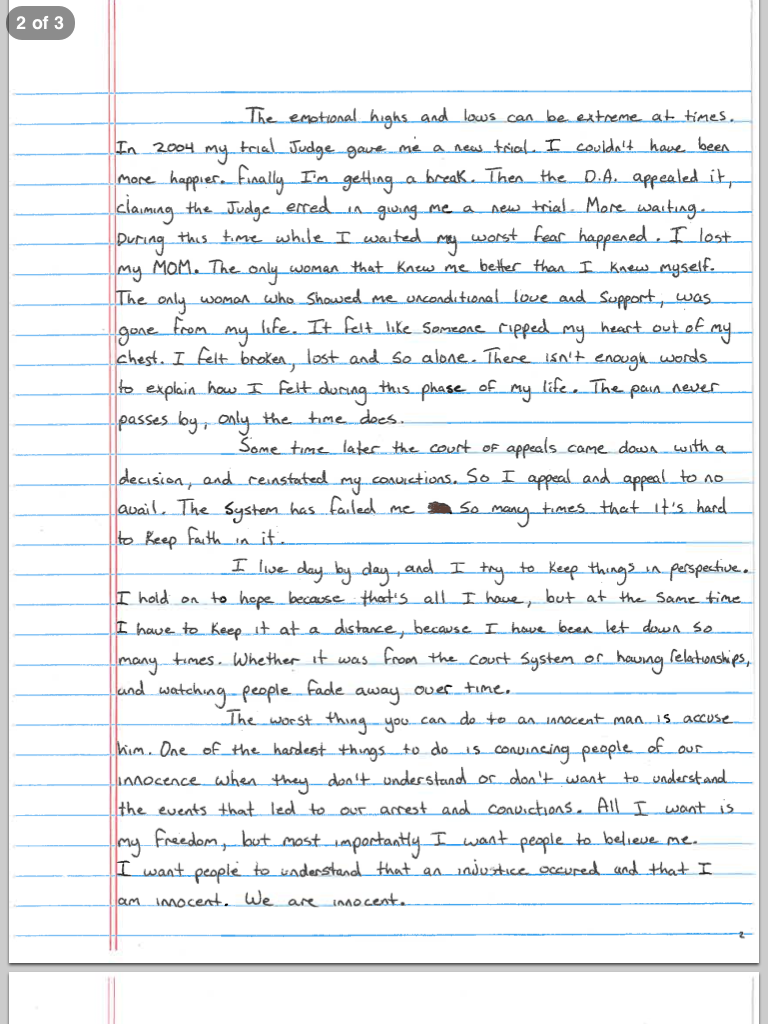
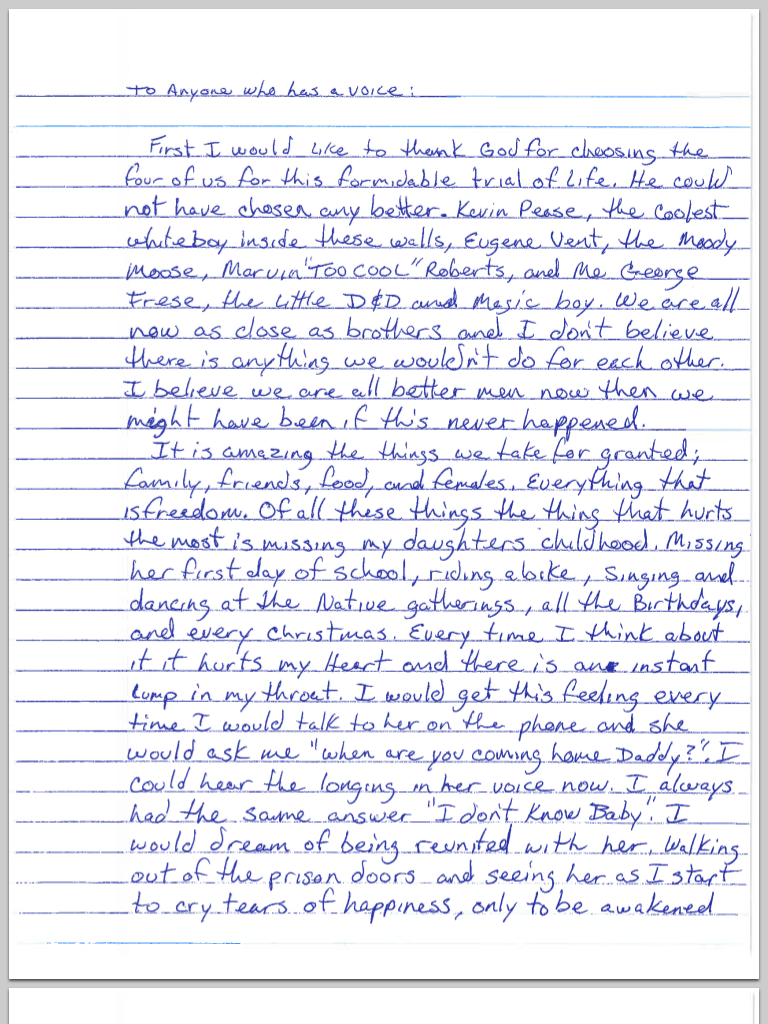
“When Are You Coming Home?” – A Letter from George

A person always tells their own story best. We could write a thousand pages without expressing the simple truth as well as one short letter.  George is not a particularly sentimental person, so I know it took a lot to write this.It never fails to humble and amaze me that all four of these men have faith that this experience was meant to be and will serve a larger purpose. I think it is hard for many of us to keep faith in a life with all our freedom and every advantage - that they have found strong faith in a relatively hopeless place is.....beautiful.

If this letter moves you, get out there, and spread the word!! There is a lot of power in the truth, it has a way of spreading far and wide when it is repeated!

Also (since George begins this letter teasing Kevin) it is probably a good time to clarify that Kevin is Outside Indian and White, not Alaska Native. We have been asked about that a few times, and although it is not terribly important, thought this would be a good time to clarify for readers that Eugene, Marvin, and George are all Alaska Native, that Kevin is Native American and white.

Want to help bring George home? Sign our petition – click HERE!