Unknown's avatar

About thefairbanksfour

A blog promoting awareness of the case of the Fairbanks Four, four young Native American men wrongfully convicted of a brutal murder and sexual assault in 1997. One post at a time, we will tell the story of a shocking murder, a hasty small-town investigation, and reveal the shocking racism and personal motives that fueled the process. You will hear directly from the accused who are writing in from prison, stories of brutality and corruption from witnesses ignored by police, testament of alibis, and much more. The innocence of The Fairbanks Four will become evident, their fight for justice with the Alaska Innocence Project will be followed, and slowly the story will lead toward the real killers.

The Fairbanks Four in the Press: the 49th Report

ImageThe story of the Fairbanks Four was seen for the first time by many in Anchorage tonight on a KTUU Channel 2 Special called :”The 49th Report: The Fairbanks Four.” This thoughtful program did a good job of scratching the surface of the story of the Fairbanks Four. We hoped that this program would inspire many people to dig deeper, and it did. Over 2,000 people have visited this site in the hour since the program ended.

Because the program led so many new readers to our blog we wanted to take a moment tonight to welcome you. and to express a deep an sincere appreciation of you and your willingness to dig deeper. Justice depends upon the ability of the common man to act on curiosity. To ask questions. To seek the truth. To have watched the program and come to this site shows that you have that ability.

We would also like to ask something of you:READ THIS BLOG. Start at the first posts and read this story.

Later tonight we will repost our very first blog entry. In it we said that we believed that the truth, if spoken, would travel. That people would come to it. That people feel the truth, and see injustice, and that everyday people can indeed be trusted with the truth, and that through their actions, their reading, their gathering, their storytelling, their facebook posts, their phone conversations with friends, simply through their existence, that the truth would travel with them, beyond us, and would ultimately right a terrible injustice.

We still believe that. We KNOW that.

Thank you for coming, for reading, and for carrying with you a truth that will someday defeat thousands of lies.

Let the Circus Begin – The First Days of the Hartman Case in the Press

For those of you that have read this blog from the beginning, consider for a moment that most of the events we have discussed here represent mere hours of real-time. If this blog took place in real-time, the victim in the crime would still be on life support in ICU, not yet identified. The evening news would come on with a picture of his badly beaten face, identifying him only as John Doe, and pleading with residents of Fairbanks to help identify the boy.

Eugene would be in Fairbanks Youth Facility, just beginning to sober up, no doubt terrified and confused from many hours of interrogation with the Reid Method. He would be spending the first of the more than 5,300 nights in jail to come.

George would still be in interrogation. Later that night he would go home, tell his girlfriend’s brother about the interrogation, how terrified he had been, that he felt like they had made him agree to a crazy story, that he was afraid. Then he would  lay down and let his small daughter fall asleep beside him for the last time.

Marvin would be at home with his mother, bewildered and shaken by his interview with police but confident that the ordeal was over, and with no idea that the police were coming to arrest him in mere hours.

Kevin would be at home with his mother and girlfriend, watching that broadcast, not yet aware that the police were already using his name in their theories and as a device in interrogations of others.

And in the press room of the local Fairbanks Daily Newsminer, the first articles about this case were being checked for typos. Headlines were being written. And as those first words went to press, the saga of the Fairbanks Four began in earnest, as did the decades long role of the media in this case.

Our next posts will be copies of the original newspaper articles in the case.

“In a sense, words are encyclopedias of ignorance because they freeze perceptions at one moment in history and then insist we continue to use these frozen perceptions when we should be doing better.”
– Edward de Bono

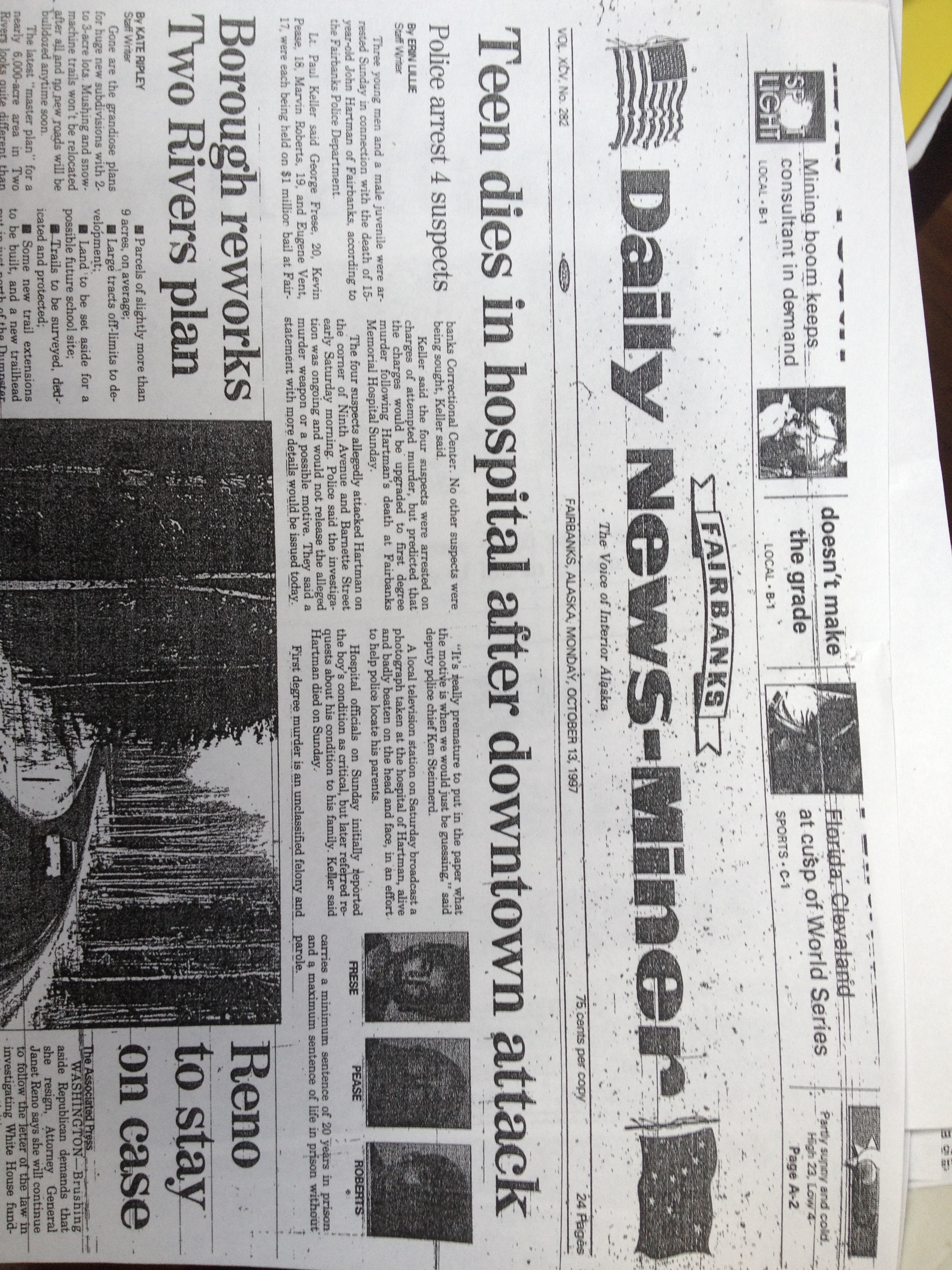
The first newspaper article on the case appeared on Monday, October 13th. The front-page article was titled “Teen dies in hospital after downtown attack” and contained little information. It said that four men and one juvenile were being held on $1 million bail, and that the motive for the attack was unknown. They promised details would follow the next day.

The next day, on October 14th, the case was front page news again, this time with details that ignited a deep and widespread rage throughout the small Alaskan city. Most of the details would prove to be fiction in the days and weeks to follow, but the damage was done. These details would be the ones that Fairbanks residents remembered about the case forever – these details would inspire randomized attacks on Native Alaskans with crowbars downtown in the days to come. These details would create a divide that may never be healed.

The headline of that article was “Attack called “random violence” and beside it was a picture of John Hartman, aged 13 in the photograph, kneeling in his Redskins Youth Football League Uniform.The caption of the photo was “Random Victim John Hartman.”

The article began with a sentence that no doubt made most readers shudder: “The 15-year-old boy beaten to death by four assailants early Saturday was kicked in the head at least 15 times and then sexually assaulted in what the police say was an act of ‘random street violence.’ ”

The article goes on to say that the four had attended a wedding reception, and that a string of random violent assaults began there and culminated with the fatal beating and sexual assault of Hartman. The article insinuates that the four were together, began a string of violent attacks at the wedding reception, attacked Hartman, and then attacked a hotel clerk. The article is short – very short  – with an astounding number of inaccuracies and contradictions. Among the most important:

1. The victim was “kicked in the head at least 15 times and then sexually assaulted.” In reality, there was no confirmation of any kind that there had been a sexual assault. The manner of death remained unknown, and the number of blows suffered remained unknown. The victim had been found with oversized pants near his knees(belonging to Chris Stone, the last person to see him alive), creating speculation among hospital staff that he may have been sexually assaulted.  Ultimately the medical examiner would state there was not evidence of a sexual assault. Other experts to review the report would agree that there had been no sexual assault.

2. “Paramedics found him lying in a pool of blood.” Although this is likely true, and corroborated by the statement of the college student Calvin Moses who found the victim, no photographs were taken of the scene. Police would later claim that there was almost no blood, or an “insignificant” amount of blood, and offer that as the explanation as to why there was no DNA evidence of any kind to tie the accused to the crime.

3. “The suspects confronted the victim shortly before 3 am as the teenager walked home from a friend’s house.” No one had described any circumstances surrounding the attack – there was no indication of any kind of confrontation. The victim was walking with a friend, and was not walking home from a friend’s house. More importantly, the assault took much earlier, near 1:30 am, and at a time the men had alibis. Read about that HERE.

4. “A key break in the Hartman investigation came when a hotel clerk reported he had been assaulted by three males in a hotel room.” Although the hotel clerk Mike Baca rapidly confessed to having fabricated the story of the gun-weilding attack, even in his original fictitious report he did not describe being assaulted by three males in a hotel room.

5. “One of them was Vent, who pulled out a handgun.” Eugene Vent did not have any altercation with the hotel clerk. No one pulled a gun on the hotel clerk. The hotel clerk admitted that he made up the story in an effort to get police to respond to a loud and out of control teenage party at his hotel. Security cameras confirmed there was no assault, and no gun. Read more about that HERE and directly from Eugene about that night HERE.

6. “Vent told police he participated in the Hartman assault…..” Read about Eugene’s interrogation and read the transcript of the interrogation HERE.

7. “Frese corroborated Vent’s statement…” Read about George’s interrogation HERE. Hear about that night from George directly HERE.

8. “No one tried to intervene but police have witnesses who heard the assault.” The second title of the story was “FATA:L ASSAULT: Witnesses.” No witnesses had come forward, and witnesses (plural) never did. One ultimately would, but her time-specific testimony would be upending to the police timeframe and theory. Read about her HERE.

9. The four suspects were “probably drinking.” Police knew that Eugene and George had been extremely intoxicated during interrogation, and also  knew that Marvin had been sober the night in question. The insinuation that they were “probably drinking” insinuates that they were together, drinking together, and indicates intoxication as a motive even though the police know it was not a factor that night for all four men. It also reinforces sterotype.

10. “All four defendants…attended a wedding reception at the Eagle’s Lodge.” In reality, only Marvin attended the reception. George was in the parking area at one point, Kevin was in a car that stopped at the reception, and Eugene walked through the reception briefly looking for a friend. The four did not attend the reception together, and three of the four did not truly attend at all. For more information, read their timelines.

11. “The first in a string of assaults occurred in the lodge parking lot.” No assault occurred at the lodge or in the lodge parking lot. Frank Dayton walked to the parking lot of the busy lodge after he was assaulted to get help. Read about that HERE. That said, there was a troubling amount of violence that night, with a car and suspects that did not match the description of the four accused. Read about them HERE.

12. “Some of the people at the reception attended a separate party at the Alaska Motor Inn.” This information is attributed to the hotel clerk, who would not have known if the hotel room party and reception were connected. They were not connected events. One was a wedding reception for a respected and responsible family, the other was simply a teenager’s party.

13. “20 people were drinking in one of the rooms.” There was never any indication that 20 people were present at Alaskan Motor Inn.

14. The article went on to identify Hartman as home schooled (in reality, he was not enrolled in school) and as a football player (he had not played on any sports team for more than a year). The picture used was out of date, exaggerating the contrast between the accused and the victim.

Ultimately, the article was little more than a fictional yet sensational story that would be repeated over and over in the community of Fairbanks until it was universally accepted as true. It was easy to accept that it was true, even though nearly all of it was embellished, because the story woven from half-truths and lies took advantage of racial stereotypes hundreds of years older than any of the people writing or reading it. Four drunk Native men killed a white all-American boy and raped him for no reason, he just happened to be in the way on a night when they were on a spree of random violence. Savage. Attacking children, white children, for no reason. Four on one. Merciless.

America created itself with the Declaration of Independence, which contains the following sentence: ” the merciless Indian savages, whose known rule of warfare, is undistinguished destruction of all ages, sexes and conditions.”

The first newspaper articles on this case printed lies. Lies told by a bored hotel clerk named Mike Baca and  police Lt. Keller who was desperate to solve a crime and save face. The sensational plot line was never plausible, accurate, or backed up by facts. Yet, this story was accepted because it had already been written into this town. Into this country. In newspapers, hearts, minds, souls, history, the future. It struck a chord in a population with a bias, and in shock over a brutal crime, that bias blinded them.

The Fairbanks Four were tried and convicted in the newspaper October 14, 1997.

They were not innocent until proven guilty.

They would be convicted with lies and sensationalism a hundred times in the press before they were convicted with lies in a courtroom that had made its mind up long ago.

In a few short months, newspaper articles would begin to unearth inconsistencies in the case. Ten years after the murder the first ray of hope – the largest and most serious effort to expose the injustice the Fairbanks Four had suffered would be a series of articles, covering the front page of the Fairbanks Daily Newsminer for weeks in a row, just as the case had in those early days. But this series would focus on the many indications that the Fairbanks Four had been wrongfully convicted.

Perhaps they will be exonerated in the press a hundred times before they are exonerated in a courtroom, just as they were convicted first in the press.  Either way, the local press is one of the most compelling characters in this story, one that plays a fascinating and always-changing role – a character we introduce in this post and will write about many times before this story is over.

Who Killed John Hartman?

That is a question that I cannot answer. But it is a question that many people in our town can answer, and this post is for them.

The truth is a simple thing. Funny how it is always the simplest things that make life complicated.

I know many truths about the Fairbanks Four. Lots of small ones, and some big ones.

The way that Marvin loves his mother and sister as if there was only ever them on the Earth, how when he speaks about them every aspect of him softens.

I know Eugene’s easy laughter – so genuine and enthusiastic that it can brighten any day.

I have seen the depths of grief Kevin reached when he lost his mother, the piece of her that will always linger with him.

I know, for example, the way that George’s eyes light up for a split second before he cracks a joke, the sadness that flickers there when he hugs his daughter goodbye.

I know that one night, in what has come to feel like a time very long ago and far away, these four spent a snowy night in the company of friends. I know where each of them were the moment that a boy none of them had ever seen lay dying, the last of him ebbing out of this cold world. I know the names of the girls Marvin danced with at a wedding reception with hundreds of guests as that boy died. I know faces of the boys, now men, that walked drinking and laughing against the cold alongside George on the snow-packed sidewalk at that moment. I know the license plate number of the borrowed mini van that Kevin and Eugene rode in; the corners and turns and pot holes that they passed over in those fateful minutes.

I know, I think, more than I ever wanted to about these four men. I wish that they could have aged with the rest of us out of the October night and into adulthood. Into the time in life when children clamber at your feet, and the bills are barely paid, and you share meals with people you love more often than you appreciate. The age when you come home tired every night, and the passage of time begins to show itself white at your temples and in creases around your eyes. When your years number into a trinity of decades and you begin to accept the rhythm of the every day. The rise, the fall. Still young enough that you mostly fail to be grateful for the endless tiny blessings, yet live your life so surrounded by them. An age where restlessness fades and who you were as a teenager on some October night long ago is nearly forgotten. When the names and faces of the girls you danced with then are blurred, like a photo taken in dim light from too far away. Because if they had not been interrupted there, in that early hour of life, the details of their movements on October 10th of 1997 would not matter. They would have been forgotten. Probably, that they ever corresponded to a time when a boy much like them lost his life would be unknown. These details, minutes, names, faces, temperatures, routes, guest lists……they would be absorbed into the anonymity of long ago, where they belong.

But, it didn’t happen that way, so here in my mind, and in these pages, are many small truths which all add up to one large truth. A truth that must be borne by any who possess it: Marvin, Eugene, Kevin, and George are innocent men, wrongfully imprisoned. Unfairly interrupted. I know that much is true. More importantly, I want you to understand that I wish I didn’t know. Partly because I wish it wasn’t true at all, and partly because it is a burden. Because to hold that truth means I will be held responsible for what I did with it, and because doing what I know is right is both exhausting and scary. But I, and so many others, are doing our best with the truths we have, which is what gives us the right to ask the same.

For all the things that I know about the boys who were convicted of killing him, there is little that I know about the 1997 murder of John Hartman. That is not my truth to carry. But it is someone’s.

There are people who know the details of that killing because the moment that boy began to die they were becoming something else, too – murderers. And more likely than not, those truths are ones they wish so badly to cast off of themselves that they will never speak them aloud and accept judgement. We foolishly fear things in the places they are most harmless – to fear judgement here on Earth is like fearing shark attack in a hotel pool. Life is like that. The truth is like that.

But there are others. There are people among us who know the names and the faces of the men who killed John Hartman. There are people who know the truth about those men, and the truth about how they killed that boy. And I bet they wish they didn’t know. I imagine they wish that they had never heard the details, heard the rumor, seen the faces. But we often are born for burdens that we would never wish for, and that truth is in their possession because it has to be. Is meant to be.

The truth that they hold could set these four innocent men free and being the peace to dead boy’s family that they deserve. The silence that they choose is the prison in which these men live.

The opposite of love is too often considered to be hate. But I have heard it said, and believe completely, that the opposite of love is apathy.

Likewise, the greatest enemy of the truth is not a lie. It’s silence.

All great men begin simply as the bearers of a truth that overwhelms them. A truth that feels like a burden. They become heroes when they listen, and understand that to hold the truth is already a form of greatness. A test. In silence, many transform that greatness into a great evil. In courage, with the wisdom to bear witness to the truth they hold, some become heroes.

I wish I could choose for you – for those of you that know the truth about who killed John Hartman. I wish I could implore you, trick you, cut away your story and steal your truth because I believe myself to be more capable of using it wisely. Yet the universe believes otherwise. I know, and you do too, that is not how life is. I hold my truth, and you hold yours, and that is one of those simple things we all know about life.

I say to you, and only because I am certain that I have earned the right, do what you were sent for. Become what you were born for. Be worthy of the burden you carry. It will not be easy. It may not be safe. It may cost you all and earn you nothing.

Do it anyways.

The reward is now over $35,000 for information leading to the exoneration of the Fairbanks Four. You can call in to (907) 279-0454 with any information.

The Sun Never Sets on Injustice – Summer Solstice in Downtown Fairbanks

The saga of the Fairbanks Four began on the streets of downtown Fairbanks, Alaska fifteen years ago. In October of 1997 one of the most notorious murders in Alaskan history took place on these downtown streets, during a very different season, when the snowy avenues were empty and cold. Four young men would ultimately be convicted of that murder despite a complete lack of physical evidence and their uninterrupted assertions of innocence. For all of these fifteen years the Fairbanks Four have maintained their innocence. Each year a little more light is shed on this dark chapter of Alaskan history – their support grows, as does the credible information against alternative suspects, and more and more evidence of racism and police and court corruption is unearthed.

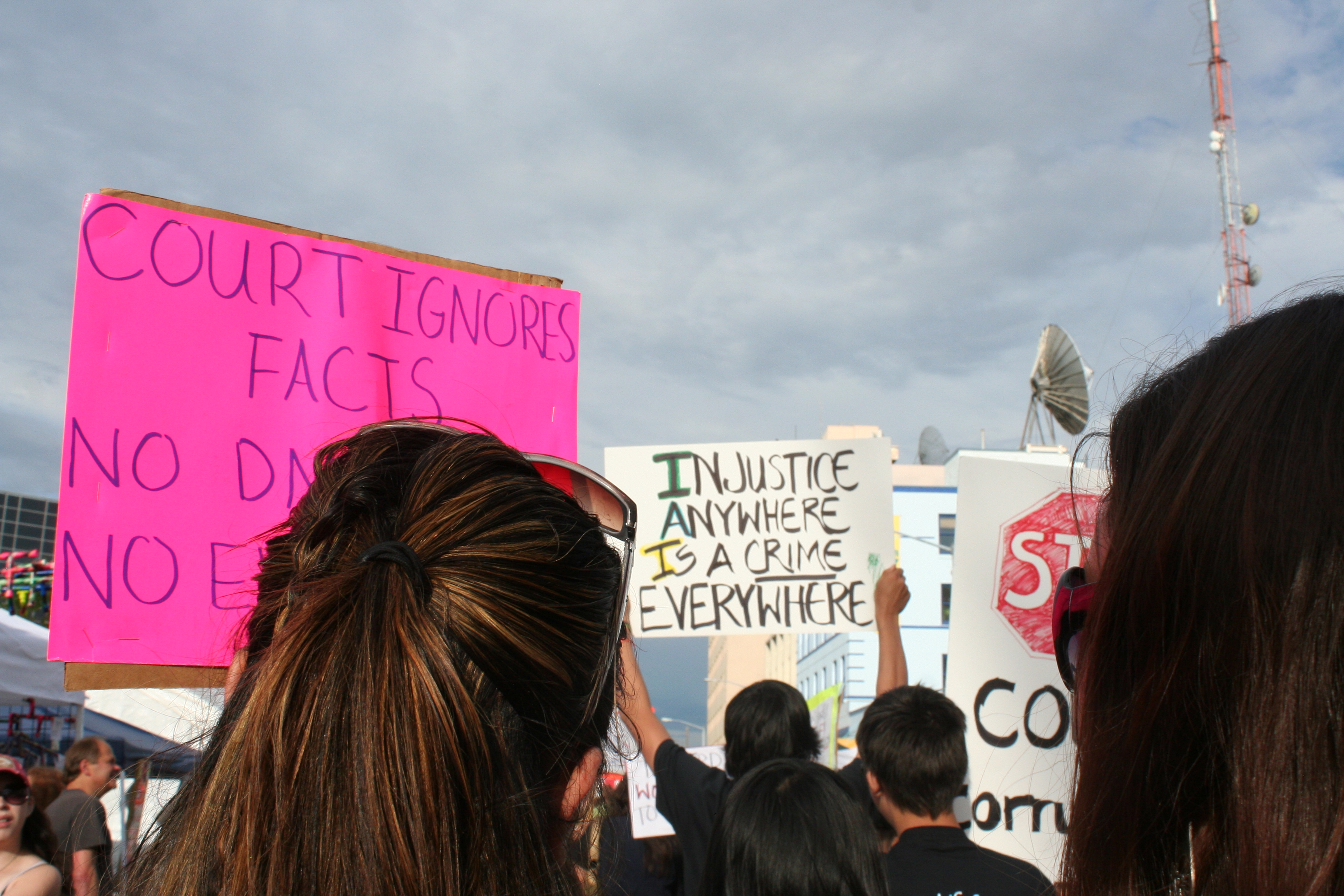
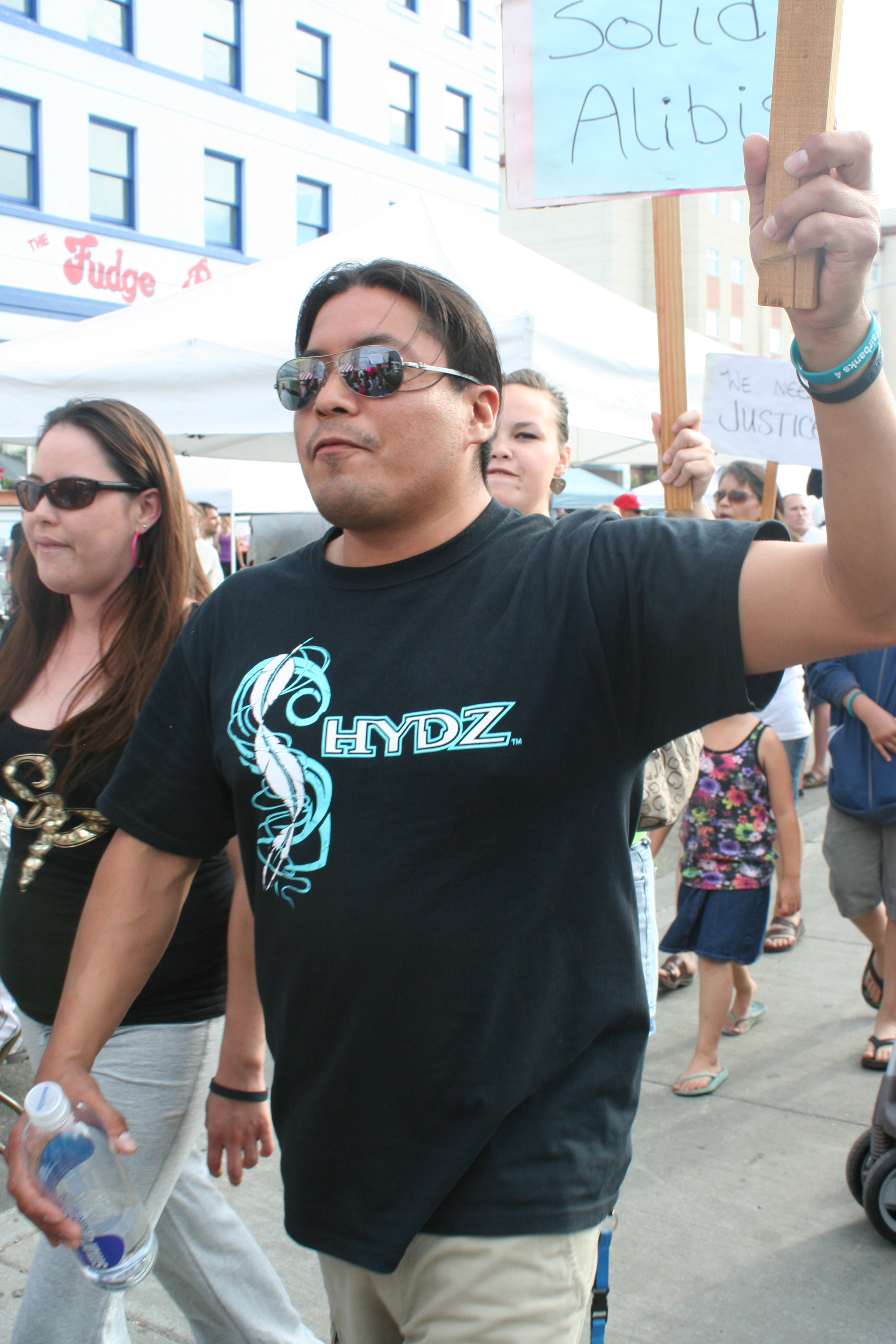
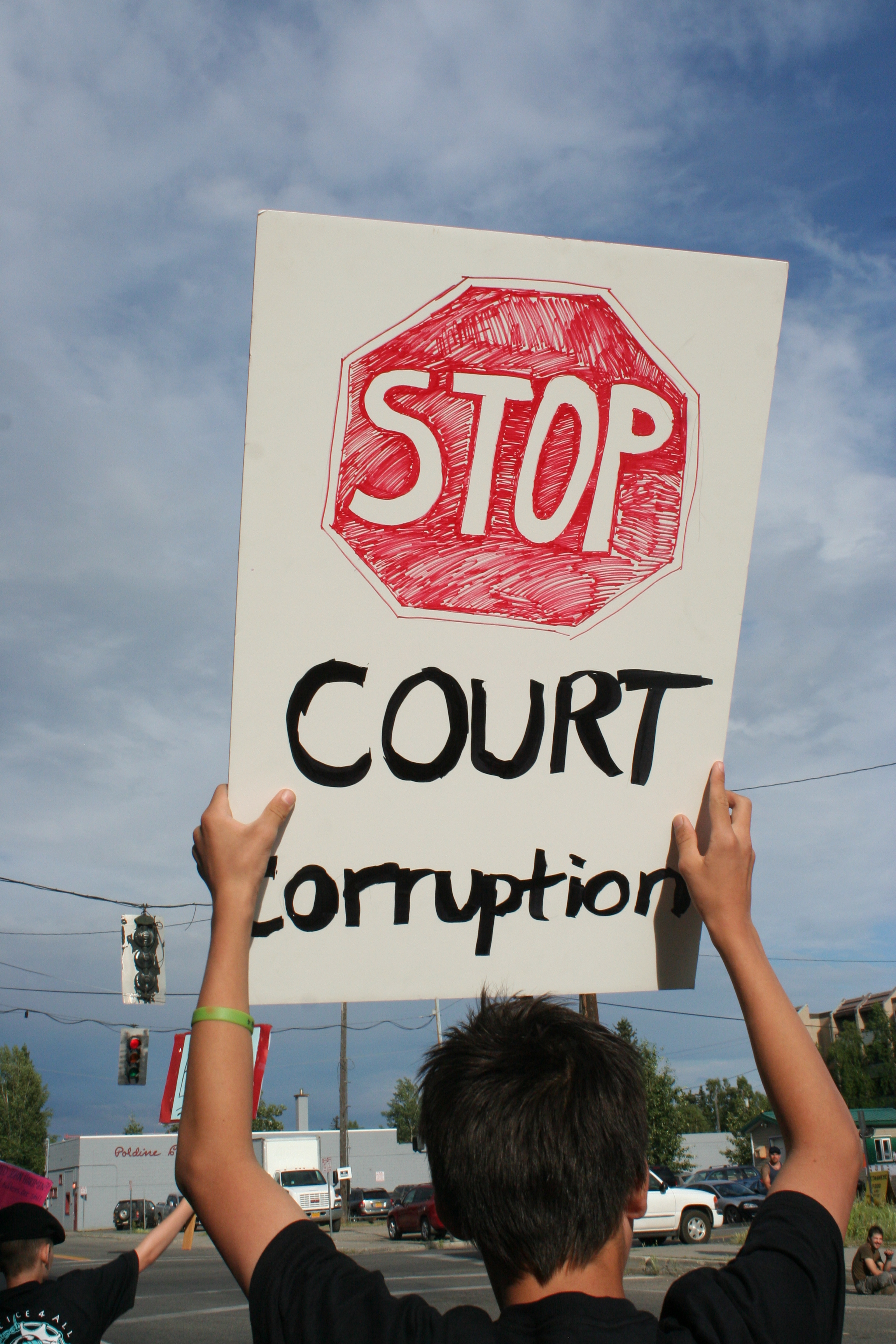
This summer solstice some of the supporters of the Four marched through those same streets underneath the midnight sun, a time in which the avenues are packed with people celebrating and every corner and crevice is well lit. They marched to remind their neighbors, community members, and visitors of the dark and heartbreaking injustice perpetrated against the Fairbanks Four.

Below are some pictures and a brief video of that march. If this is your first time to this site, start with the oldest post and read forward to hear this incredible story of injustice on the last frontier. And please take a moment to sign our online petition by clicking HERE.


ImageImageImageImageImage

Hope – A Letter from George Frese

20120608-123632.jpg

This letter needs little introduction, if any at all. George Frese wrote this from his cell in Spring Creek Correctional Center, a maximum security prison where he is waiting. Waiting, approaching his 15th year of incarceration for a crime he did not commit. A crime to which no physical evidence ever connected him, committed against a boy he never met, on a night he spent with half a dozen alibi witnesses. Most importantly, a crime that people outside the walls confining him have information about. Information that could allow him to receive a new trial. This information is the key that unlocks his cell and sends him home. These people have chosen to remain silent for many years out of fear and a false belief that someone else should come forward, and that their non action hurts no one. This letter is to them.

They say time heals all wounds, but what if it was the complete opposite? Where every moment that passed you by was an accumulation of pain, sadness, loneliness, and missed memories? This is the life that has been dealt to the Fairbanks Four.

Nearly fifteen years have been accumulated. Sixty years when you add all four of our lives together. Perhaps thousands of years when you include our family and friends.

The first fourteen years were tough, but none as tough as the past year. The last year has allowed me to see family that I haven’t seen in nearly twelve years because I spent all of that time in an our of state prison. The ones that I have seen have aged considerably and have caused me to feel a sense of urgency to be home. Old friends come back and new friends have been made.

All this publicity has caused out hopes to soar. Hope that the powers that be will have mercy and give us back to our families. Hope that anyone with information will come forward and free us from our misery. Hope that all this ends. Hope that it happens soon. Hope that we will be free to follow our dreams and not take anything for granted.

Always Hopin,

George Frese

20120608-123456.jpg

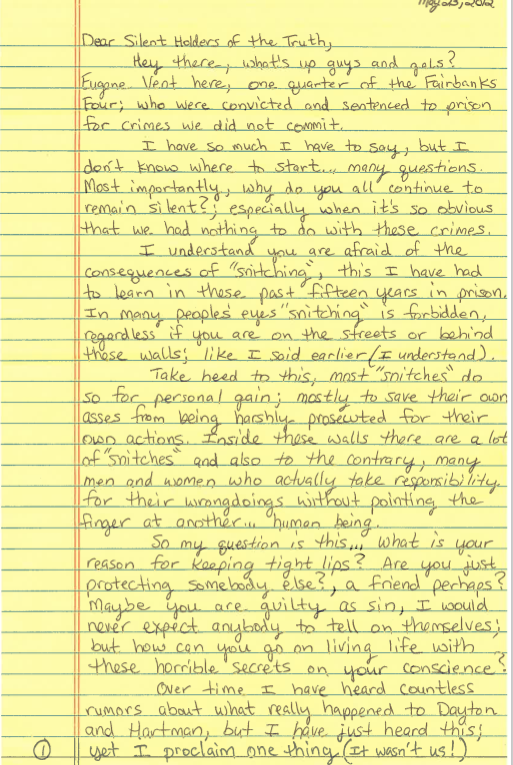
Dear Silent Holders of the Truth – A letter from Eugene

One incredibly frustrating, heartbreaking, difficult reality about the murder of 1997 is that THERE ARE PEOPLE OUT THERE WHO KNOW WHO DID IT. One investigator after another has identified a small handful of people that have information about this case, and knows that there are others. There is a $35,000 reward for information. ANYONE with information can call Bill Oberly with the Innocence Project at 907-279-0454 and come forward anonymously or on the record, and PLEASE, PLEASE, if you or someone you know has information about the killing of John Hartman, DO come forward.

What the investigators continually hear from people with information is that they are afraid of retaliation or being labeled as snitches, most especially afraid of retaliation or hardship if they themselves end up in prison. Although their choice to remain silent is their choice to make, it is heartbreaking. In order for the Fairbanks Four to get a new trial, these people would HAVE to come forward.

Below, Eugene speaks to THEM. To people that have information in this case but choose to stay silent.  Spread this letter everywhere you can, most especially to anyone you think it might apply to. Hopefully their heart is softened by Eugene’s plea and they are encouraged by his words of support.

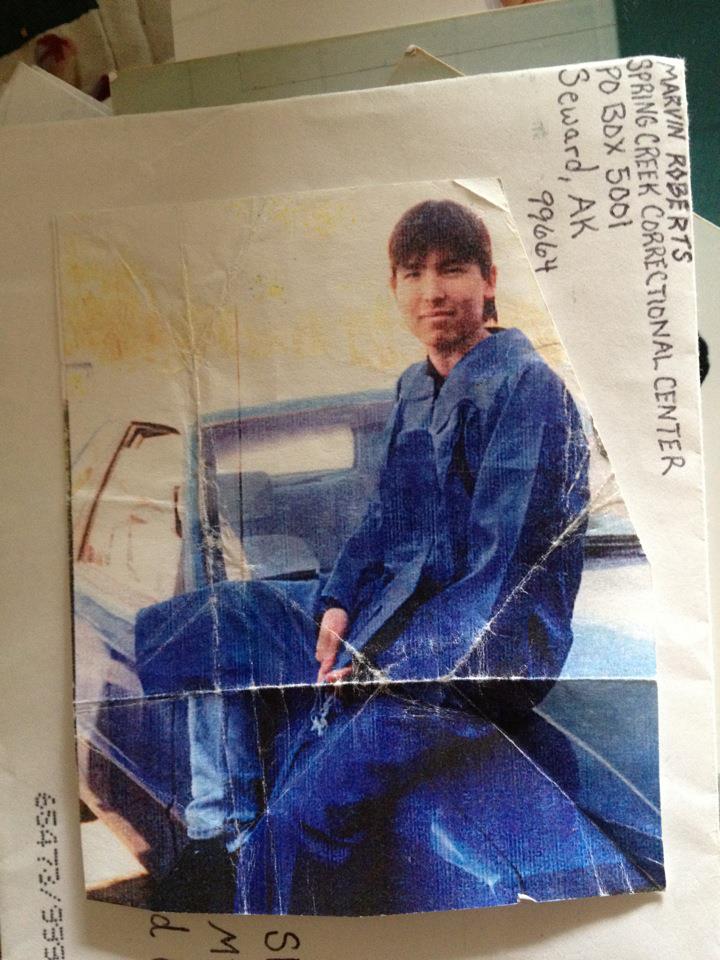
I Feel Blessed – An Interview with Marvin Roberts

Marvin Roberts gave an interview with Dan Bross of KUAC when the reward amount in this case was raised to $35,000. The radio show was brief, but here is the full audio, where Marvin talks about how he feels about his imprisonment and the movement to free him.

Marvin was wrongfully convicted in 1997, just over a year after he graduated as valedictorian of his class. If Marvin can feel blessed in prison, a short season away from the day that will mark his 15th year there, those of us who have the ability to read this, to sleep in a bed, to turn a door knob and walk out a door, to breathe the air and walk with the Earth beneath our feet, are surely blessed beyond belief.

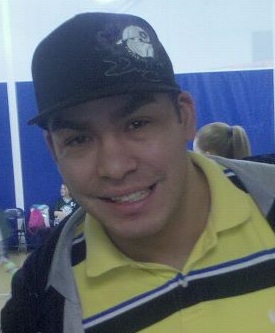
Endess Graditude – An Interview with Eugene Vent

When reporter Dan Bross of KUAC did his short radio story on the reward in the Hartman Murder being increased to $35,000 he provided us with the unedited audio so that we could share it here on the blog.

We are pleased to bring you a longer conversation with Eugene Vent, who talks at length about how much the movement to free the Fairbanks Four has lifted his spirits, and of his gratitude for all of you!

A conversation with Eugene will always leave a smile on your face – his optimism is heartening, his laugh is contagious, and we are lucky to have one friend who can do that for is. It is a wonder that Eugene can be such a beacon of light from such a dark place.

Below, Eugene speaks from prison, where he has grown up. Where he was sent at an age that most young men are looking forward to getting their first car, to summer, to moving out of their parents house. Where he has pondered for a decade and a half the nature of injustice, of social segregation, the nature of racism, and the corruption of power, in the years where most young men are able to ponder such things on college campuses, or over dinner with friends. Where he was waited for the arc of justice to bend in his favor. All of this in prison – where he could grow into an old man unless this injustice is corrected.

An Interview with George Frese

Dan Bross of KUAC here in Fairbanks, Alaska did a brief segment on the reward increase to $35,000 and was gracious enough to share the unedited full audio with us. Unfortunately, George’s interview was cut short when the prison went on lockdown because of a violent episode – he had a lot more to say. In the future we will bring you direct conversations with the Fairbanks Four, so if there are any questions you would like to hear them answer, let us know in the comment section.

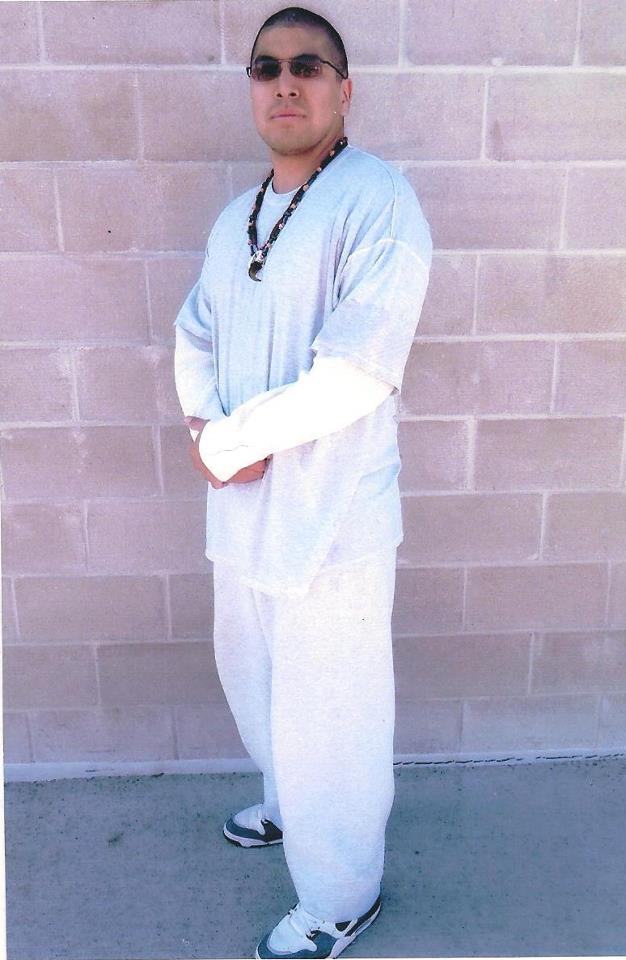
There is an important reality in hearing George go on lock down – these men live in a horrible place, intended to be a hell on Earth. Do not let their optimism or hope confuse you; let it inspire you and impress you. These young men have managed to hold onto faith, hope, inner peace, and have done the incredible work of holding onto themselves in an environment that is designed to take all of that away. Society would like to believe that the wrongfully convicted are simply sent away, or locked up, that to wrongfully convict a person costs them time, but nothing more. Prison is a violent, brutal, miserable place. The wrongfully convicted are sent to the worst environment that America could engineer, and live among the worst humanity has to offer. None of the Fairbanks Four speak much or dwell much on the darkest sides of their story, but to understand the cost of wrongful conviction, we must understand what it really means to send four innocent adolescent men into this environment and keep them there for 14 years.

Below is the interview with George Frese, who is speaking from Spring Creek Correctional Center, where he could spend the next 83 years unless this injustice is corrected.


Alibis and Witnesses X – Gary Edwin

Gary Edwin is originally from Tanana, Alaska. He is the proud father of five, and works for Doyon Drilling.  Gary is arguably Marvin’s most important alibi. In 1997 he was 24 years old, working as a substance abuse counselor, and spent the evening with his wife, Marvin, and Angelo at the wedding reception at the Eagle’s Hall. His younger cousin Angelo Edwin,  spent the entire evening with Marvin. Both Angelo and Gary appear over and over in Marvin’s timeline which you can read HERE.

Through the years there have been many accusations from the community that the Native witnesses that came forward as alibis in this case had alcohol-affected memories and were conspiring to create a cover-up for the Fairbanks Four. It is important, then, to note that Gary was not drinking the night of the murder. It is also important to note that Gary and his brother Angelo went voluntarily and immediately to the police when they heard Marvin had been arrested for a crime committed that night, and that they had not had time to falsify a story, and in fact made statements before anyone knew the time that the assault had been committed against John Hartman (read more about the time of the crime HERE). In a nutshell, the prosecution’s contention that the alibis were either drunk or making up stories simply hold no weight whatsoever in regards to Gary Edwin.

Gary lives with a burden that is tragically not unique in this case – he does not need to read case files, newspapers, opinions, or rulings to know that his young friend was wrongfully convicted. For him there is no speculation of police misconduct, no question about whether or not the evidence in this case was manufactured – he watched it happen. He has never read the content on this blog, yet his story is painfully familiar. It is the kind of thing that a person never forgets. Below, he tells his story in his own words:

On That Night

“I spent the entire, well hours you know, of that night with Marvin. I would say from around midnight until at least 2 am, even later, when the reception ended. He sat with us at our table, and I saw him basically the whole night. Dancing, visiting, having fun.”

Note – Gary had a conversation with Marvin during the night at what ended up being a very critical moment, when 911 was called to bring aid to a beaten and shaken Frank Dayton (whose assault  you can read about HERE). Although no one, including the police, had yet established a timeline on the assault for John Hartman at the time Gary first gave the police this information, Gary was having a conversation with Marvin concerning Frank Dayton at the exact same time that Hartman was being beaten to death blocks away.

The Next Day

“The next day I went over to Marvin’s  he was, he sold me a pair of Oakley’s that he had gotten but didn’t like, and I had seen them the night before and said ‘well, I’ll bring money over for them tomorrow.’ So, I brought him the money had he gave me the glasses. He asked if I wanted to go up and play ball, and I told him I would go pick up Angelo on my way home and grab my ball gear, and meet him up at the SRC.”

Marvin was not at the SRC for the planned basketball game. By then he was sitting with the police, insisting that he was innocent and pleading with the interrogators to listen. Gary Edwin called Marvin’s mother.

“And then his mom asked if we had seen what was on the news. And she said they had picked up Marvin, George, Kevin and Eugene. And I was like, damn.

She said, ‘I thought you guys were with Marv last night.’

And we were like ‘Yeah, all night.’

I asked, what’d you guys do after the reception? And he told me that after they stopped by the bar or party they kinda drove around a little bit, that they went through the drive-thru, and then he dropped him off at home.

So, I was like, wow, you know, we need to go down to the police station and tell them, make a statement. We thought, of course, that was the thing to do.”

On the Interviews with Police

When we got down there, the detectives were acting pretty weird about our statements, we were like, “hey, we were with Marvin all night, you know from this time to this time.”

When I went in with the detectives that were taking my statement they kept trying to twist what I was saying. Finally it just came down to me just wanting to give a statement and get out of there. So was like, just give me a piece of paper and I’ll write it down for you. And I was so uncomfortable, I was writing it, but I was more worried about getting out of there.

When I got out to the lobby, Angelo came out of his room after me, and he was really shook up. And one of the detectives grabbed Angelo by the arm and was like, “You better make DAMN sure you know what you’re saying to be the truth, because we have a 15-year-old kid that’s been murdered and this is, this needs to be taken serious, or something to that effect.

When we left, Angelo said he experienced the same thing while being interrogated, or while he was trying to give a statement.”

On Why These Memories Remain So Clear Today

“You know, I went in believing I was doing the right thing. To show up and have people that are supposed to help and protect you, making you feel like you actually did something wrong, or you are involved in something that’s wrong, it’s….it is a real eerie feeling.

I was twenty-four in 1997, four years older than those others at least. I mean, more or less, we went in there thinking we were doing something to help the police, and by the time we left it was like, we wanted to run, just get the hell out of the police station. I was educated, and I wasn’t as afraid because I know my rights. But the young people that didn’t know their rights, maybe the only interaction they had with police officers was this, was bad, I totally understand how bad it must have scared them.

On What It Is Like to Watch The Case Unfold

It made me really fear Fairbanks Police, for one. I actually moved out of Fairbanks after all of this. Even when we were in Anchorage, when we were there to testify, that Detective and Jeff O’Bryant, they followed us around Anchorage. It was clear, always, trying to intimidate us. My cousin Patrick, they were hard on him. He couldn’t deal with all the harassment from them. It was…..it was unbelievable, but it was happening. Yeah, it changed, wow, it changed a lot of things….. those memories will always be there.”