Alibis and Witnesses IV – Alibis Interrogated

If Marvin had owned a mini-van, there would probably be a “Fairbanks Eleven.” God save anyone who knew him at all if he had owned a bus, there could be an entire tribe in prison.  The next posts will feature some of the alibis and witnesses that appear to have barely escaped arrest for the crime as well. The number of people accused of involvement would have never been able to squeeze in the vehicle, and although some had their fingerprints, etc. submitted, none were arrested or prosecuted. They can be thankful for their own strength of mind and Marvin’s small car!

In all seriousness, there are several witnesses who were brought in because they were named as alibis, or who initiated contact with the police because they had been with one of the four that night. But the interviews rapidly devolved into something that reads a lot more like an interrogation. This post features one of those interviews.

These people were lied to. The police are allowed to lie. It is completely legal and standard practice. These young people were not aware of that, and were understandably baffled. These lies read a lot more like thinly veiled threats. The interrogators attempted to threaten anf bully these people into changing their stories with a common interrogation technique. The technique is, in its simplest form, just “good cop, bad cop.” We all know that term, but most of us do not appreciate how psychologically unraveling it can be. With this technique police officers offer the person being interrogated two options. Both are bad, but one is clearly better. One is a threat -“you will be accused of murder.” The other is an offer of a way out of that -” or maybe you were just a witness.”

For example, when they interrogated George they told him for hours that continuing to stick with his story (the truth) was completely unacceptable. That he had to either admit to playing a smaller role in the beating, or else keep up his story, in which case they would assume he was a ring leader of a brutal sexual assault and beating. It seems incomprehensible to most people that a normal person would pick between two lies, but the reality is that the situation is terrifying. People with a lot of power are telling you that you only have two choices. Experts say that many people give in out of terror and anxiety, and simply pick the lesser of two evils – anything to make the experience end.

Some people are very strong, very sure of themselves. These people often see right through the tactic. Others are weaker and cave immediately. Most of us are likely somewhere right in the middle, and as such are potentially vulnerable to this tactic.

In the case of these witnesses, the police attempted to give them the following choices: agree that you were present, and that you were an eye-witness to the crime (of course, they cite made-up evidence and “proof” that this is the case) or we might have to consider you a participant. Essentially, which were you? An eyewitness or a murderer?

This approach is most successful on people who have any doubt about their whereabouts or gaps in their memory as they can often be led to believe the scenario. (More on that HERE) It is actually surprising that they were not successful in creating an eye-witness with this tactic, but thankfully, they were not. Still, their treatment of these people who were simply doing their best to give their whereabouts that night is astonishing.

Race is a contentious issue in this case, but having read all of the police interviews, we can say this: there were many Native people interviewed, and there were many white people interviewed. Only Native people were subjected to this treatment. Racism is not something that can be often proven – unlike murder, it leaves no physical evidence. But there is more circumstantial evidence of these investigators being racists than there was circumstantial evidence of the Fairbanks Four being guilty of the crime.  Yet, those four sit in jail, the investigators sit behind the desks they were promoted to, and the people they bullied and berated sit with the memory of this kind of treatment. Some people recommend that we shy away from saying that, that playing the “race card” is unfair. But sometimes in life as in poker you have no choice but to play with that hand that you were dealt, and in this case the circumstantial evidence of racism is in our opinion overwhelming. Readers will have to judge for themselves.

Vernon Roberts. When Vernon Roberts was interviewed by the police he told them simply that he was drinking that night at George and Crystal’s apartment, that he did not remember the specific time that things happened, but said that the order of events was that they drank at the apartment, that they then walked from George’s apartment to downtown, that the group spent time at the reception, and that he and George parted company in front of Tommy’s Elbow Room (also known as Cabaret).

He confirms that the group of people outlined in George’s timeline. He says that his girlfriend thought George was about to get in a fight in front of Elbow Room, that he left and returned to George and Crystal’s apartment.We know the times of these events through the testimony of people who were keeping track of the time (see George’s timeline HERE). There is no question that his intoxication makes him a somewhat unreliable alibi. But there is much to be learned about the case from the way he was interrogated.

Vernon’s interview rapidly devolved into an interrogation-like situation, with officers Aaron Ring and Jim Grier tag-team questioning him for a long period of time. When he concedes that he was drunk and that it is possible that he may not remember the entire night they begin to use the same interrogation techniques on him as they had on the four. They tell him some severe lies: they say that George sent them to talk to him, that George and Eugene indicated he knew who was responsible for the sexual assault, that coming forward as an eyewitness would help George, and insinuate that he will be in trouble if he does not come forward with the story they are supplying. NONE of this is true. They accuse him of being in the car, of sitting in the middle seat, of being either a participant or a witness. So, his bad cop, good cop choices are to either admit to being an eye-witness, thereby helping his friend and keeping himself out of trouble, or to take his chances on being investigated as a participant.

Vernon made a choice after being exposed to this technique for a long time in the interview that probably kept him from being either pressured into some kind of false statement or even falsely imprisoned for murder as well – he told them that he wanted to speak to his father, and when they pressured him to stay, he insisted.

A long excerpt of his interview is below. In time we hope to find a way to post these thousands of pages of documents in their entirety to link to (so if anyone knows how to do that, volunteer). Vernon’s experience is simply best told through the police transcript, and we wanted to include it. Prior to the segment here Vernon outlines his night over and over. Shortly after the ending of this segment there is a prolonged period of time where Vernon says he wants to speak to his father, the interrogators encourage him to wait, and eventually his insists and leaves. Vernon’s experience is simply best told through the police transcript, and we wanted to include it.

Interview conducted with Vernon Roberts. Interview conducted by Detective Aaron Ring and Investigator Jim Geier. For the purposes of this transcription “R” will indicate the voice of Vernon Roberts, “G” will indicate the voice of Investigator Geier, and “X” will indicate the voice of Detective Aaron Ring.

X:  I mean I suppose it’s even possible could YOU have been in the car with these GUYS when this happened?
R:  No, I don’t think so.  I think I was downtown most of the night.  Actually all the night.
X:  I mean you…

R:  Until I came over here
X:  Because we have some information that there was maybe even another person with these four guys.
R:  Um

X:  When this happened.

R:  I don’t know
X:  And I was wondering if maybe that could’ve been you.  Maybe you stayed in the car or something when this happened.  is that a possibility?
R:  Nah, cause if this shit would a happened in front of me, man, I would’ve stopped, I’d put a stop to it
X:  Oh, unless you had too much to drink and you were just sitting there and these guys were, I mean they’re out of the car and all of a sudden it happens and it’s too late for you to do anything, ya know, this probably only took a few seconds
R:  I don’t remember, I shouldn’t, I honestly don’t know.
X:  Well, ya know, I , I don’t like keeping things from ya here. And, and I’ve talked to George and George has admitted what his involvement in this is

R:  Uh-huh (affirmative)
X:  Okay, and uh, and I asked who else I can talk to about this, and he told me you, okay you’re not under arrest here or anything, cause I, I don’t think that uh anyone’s told us that he was involved in kicking this guy or anything, but the information we have is maybe you have some information about it, or maybe YOU were even in the car, okay.  So that’s what I’m looking at.
R:  Well, like I said, I have no informatio
X:  Did you have a car that, did you have a car that night?

R:  No, I was walking.
X:  Okay, well that leads me back to the night there at the Eagles and I wanta, I wanta be serious with you here, okay.  I don’t want you to cause a problem for yourself by, by trying maybe to keep things from us.

R:  Oh I’m not, I, that, I’m being honest, honest with you guys
X:  Cause the most important, the most important thing that you can do now is be completely truthful in this thing.

R:  That’s what I’m doing
X:  And I think maybe you’re afraid that you don’t wanta get your friends in any deeper trouble, let me tell you this, George can’t be in any deeper trouble, he can’t be in any deeper trouble.  He’s told us that he did this, okay.  He’s told us that he did this, Eugene told us that he did this, okay.  I mean it goes all the way around.

R:  Uh-huh (affirmative)
X:  And they’ve already told, so any, any information that you have isn’t gonna hurt George, I mean it’s not.  We just wanta verify some things that he’s told us about his limited involvement and he said, these other guys were more involved than he was and that he just kicked this guys a couple of times, he didn’t have anything to do with sexually assaulting this guy

R:  Uh-huh (affirmative)
X:  And I asked him well how can I verify that and how can I prove what your involvement is and he tells me I should come see you, okay.  So what does that leave me to believe is that you were either there or he told you about it, and I’m, I’m kinda curious as to which it was.
R:  I don’t even know.

X:  Cause he, okay
R:  I’m telling you guys the honest truth, I mean you all just

X:  I know
R:  Act like I’m fucking lying to you all, but

X:  Well no, no

R:  Shit
X:  No, I don’t think it’s, I wouldn’t call it that

R:  Yeah, but that’s what your saying
X:  Vernon, well, well here’s the
R:  Be, be truthful, you keep saying, telling me to be truthful, and then I am…
X:  Here’s the point, Vernon

R:  And your all just, saying I’m a liar or something
X:  If we came, if we came over here and you said right away, the first, first thing we sit down with you and say, okay, I know all about this, here’s what George did, ya know, here’s, here’s the whole thing, I would think well geeze, this is kinda strange, this is George’s friend, he shouldn’t tell us this all that that quickly ya know.  So I know people cover for their friends, I, I, ya know, I don’t live in a dream world, I know people try and keep their involvement limited
R:  I ain’t covering for nobody, I’m just telling you guys what I know
X:  Well, here’s another thing that I’m concerned with Vernon, is that if you were in the car, that might be a reason you might not wanta talk about it.  Cause You would think you would be in trouble, okay.
R:  Like I say, I don’t even know if I was in the car
X:  Vernon, here’s the thing, if you didn’t kick this, this boy, if you didn’t have anything to do with that, if you didn’t hit him, then you’re not in trouble, okay

R:  Uh-huh (affirmative)
X:  But, but if you’re a witness to it, we need, we need to talk seriously about it, okay.  If you witnessed it happen, then WE need to talk about it.
R:  I don’t know if I did or not, like I told ya, I blacked out, when I drink, when I drink
X:  Do you remember driving around with the four of them?
R:  (Inaudible) No, I don’t even know if I was, I don’t think I was either
X:  Well you, what does Marvin drive, you know what Marvin drives, right?
R:  I don’t know, I just, I don’t know, didn’t even see him that night and if I did, I was blacked out cause I don’t remember seeing him, Eugene, or Kevin.
X:  People black out when they pass out and fall down on the ground.  You were functional. You were walking around, you made it back over here, you made it back over to Chrystal’s
R:  I, I do that lots, when I’m blacked out
X:  And here’s, here’s the thing, YOU left, from Chrystal’s with George, and you ended back up over at Chrystal’s.

R:  Uh-huh (affirmative)
X:  Okay, and in between there, something happens, okay.  That’s all we’re trying to get at, okay.
R:  I know, I wouldn’t mind knowing what the hell happened too.

X:  Okay
R:  But it’s like I said, I blacked out from drinking so much
X:  Okay, but these, these boys, who have told us that they done this, when we asked them about
you, they said well, he probably knows, but I, ya know, they don’t, I don’t think any of them said that Vernon kicked anybody, did they?

Geier:  No, no involvement, but he knows about it.
X:  I mean that’s so, I’m here trying to verify yourfriends story, okay.  That’s, that’s all
R:  Uh-huh (affirmative)
X:  And if you wanta listen to the tape where George says that, I’ll play it for you, okay.  Cause he showed up at the hospital, thinking he broke his foot on this guy

R:  Uh-huh (affirmative)
X:  And, and wanted some help over there, and, and he talked pretty honestly about it, okay.  He talked pretty honestly and I’m not psychic, I’m here to talk to you cause he sent me over here, okay.  And uh, I’m sorry it took me ya know, so long to get over here to see ya, but, and then I hear more and more, and your names involved a little more and then, and uh, based on what Eugene and George have had to say, we’re here trying to find out if, if you wanta help us or not, okay.  If you wanta help us.  And I suppose that people say, well he was in the car too, he’s just as guilty, but that’s not necessarily so.

R:  Uh-huh (affirmative)
X:  Okay, that’s not necessarily the truth.  The extent of your involvement is what we’re looking at and whether you actually got out and took anything from this guy, or you hit him, or kicked him or, or, or sexually assaulted him, okay.  And whoever’s responsible for sexually assaulting this kid, that’s one thing that George and Eugene really didn’t wanta talk about.

R:  Uh-huh (affirmative)
X:  Okay, I don’t know if they’re involved in that or not, whether they put something, an object up this guy or not.    I don’t know.  I don’t know if it’s Kevin, ya know, I don’t really know for sure.  I, I wouldn’t bet that it would be George.
R:  Uh-huh (affirmative)
X:  Or Eugene, I wouldn’t bet that it be either of those guys.  Uh, but they sent me over to talk to you, maybe that’s hard, them putting this off on you to be the one to tell, ya know?  But, and then maybe that’s not fair, but that’s just the way it is, okay.  So I think maybe we need to go down and, and talk about this seriously and figure it out.  And uh, like I said you’re not under arrest.  We’re, we just wanta get this story from you.

R:  Uh-huh (affirmative)
X:  And you can come back or, or whatever.

R:  I basically told you what I know
X:  Well you said you blacked out

R:  Yes
X:  You could’ve been in the car, but blacked out.

R:  I blacked out

X:  And, how, how old are you?
R:  Twenty two
X:  Okay, I’ve been drinking since I was nineteen, drinking age at nineteen

R:  Uh-huh (affirmative)
X:  Okay, I know when YOU drink a lot, sometimes things are fuzzy, ya know, your memory’s fuzzy, but you don’t forget everything

R:  I do     X:  Okay.
R:  I, that happened to me lots of times before.  I remember some of the people telling me, oh you remember doing this and that, and

X:  Well that’s
R:  Man you were so funny that night, and I’d be like no, and then they’d be all like, I was blacked out
X:  That’s, that’s little things, Vernon, that’s, that’s little funny things that you do, but having some guys hop out of a car and, and stomp a guy, and beat a guy, is probably not something that  happens a lot.  And that’s probably something that would stick out in your mind.
R:  If, if I seen that, I mean I wouldn’t lie about it.  I’d tell you, and if I seen it or not
X:  Well, except for there’s a problem where you’re afraid of maybe being in trouble, or, or George is gonna get in more trouble if he’s the guy that sexually assaulted this boy or something.  I don’t know. There’s a lot of reasons why you wouldn’t wanta tell us that right away, and I understand that.  And I don’t hold that against you.  I don’t hold that against you at all.  But George sent us here to get the story from ya, and that’s why we’re here.  It’s as simple as that, okay.  You, you’re, you’re the guy that can tell us and I know it’s hard, I know it’s a shame that he had to put the rest of that off on you, but he told us, he did it.  He told us what he did

R:  Uh-huh (affirmative)
X:  And uh, I just need to verify that with you, verify who else was involved and verify what your involvement is, they, they don’t say you kicked him, they don’t say you hit him.  If that’s true,that’s fine.     

R:  Uh-huh (affirmative)
X:  Okay, but that doesn’t excuse you from being a witness, you still have to be a witness, okay.  And that’s, that’s all there is to it, okay.  Now, let’s just please get past this a little bit, and tell us straight about it, and if you wanta go down to the police station
R:  I am talking straight about it
X:  And make a statement about it, well we can do that, okay.  But I, I wanta, I want the whole story, ya know.  I realize parts of it are gonna be fuzzy, and parts of it you aren’t gonna remember, but the whole thing is not anything that you’d forget, okay.  And if its, if there’s other people involved that we don’t know, and that you know, we need to talk about that too, okay.  Cause I wanta make sure we have all the facts, and I ya know, if they’re friends of yours that are involved, well we still need to talk about that.  Cause just the indication I get from George, I mean he says, ya know, go talk to Vernon, Vernon will be able to tell ya, Vernon will be able to tell you what happened, that leads me to believe that you were there, okay.  And there’s some talk from some other people about a fifth guy
being in the car, okay.  Well, like we say, we’re not psychic, we’re just, we’re just trying to get to the truth.  And from what I hear from these guys, it doesn’t sound like you assaulted anybody.
R:  Uh-huh (affirmative)

X:  It really doesn’t, it really doesn’t
R:  I honestly don’t know.  I mean I’m telling the truth
X:  May, maybe we, maybe we can take a quick drive up to Ninth and Barnette and maybe that will help you remember.

G:  Do you mind?

R:  I don’t mind.
X:  Sure, let’s take a quick drive up there.

R:  I don’t remember anything though, sorry.
Alibis and Witnesses III

Crystal Sisto is mom to six kids, and as if that isn’t enough she also fills many, many roles in her position at BLM where her job duties range from auditing and payroll to equipment and crew hire. Crystal works and lives in Venetie, Alaska. In 1997 she was living with George Frese and the young daughter the two had together. They were middle school and high school sweethearts and became parents together at a young age. Needless to say, the events of October 1997 changed the course of her life, and her young daughter’s life forever. Her story is a powerful reminder that the reach of injustice is far. Yet despite the hardship she encountered, Crystal has never lost faith that the justice system will eventually work, and that these men will be exonerated. It is still hard for Crystal to talk about that night and the events that followed, but she has courageously agreed to share her story.

CRYSTAL ON THE EVENTS OF THAT NIGHT

It has been so many years its hard to remember everything. But a few things I know, will never forget, is that George was home at 1:30 am that night. I am sure. Also I know that George would have never done this kind of thing.

Okay, on October 12th. There was a wedding going on and at first we went to check that out, and I went to Cabaret for a bit. George and those guys made a run to the liquor store Patrick Henry went for them and had purchased 2 cases of beer a bottle of Bacardi……there was Vernon, myself, Patrick Henry, Edgar Henry, and George.

Patrick and I went to Cabaret and those guys went to out apartment. Then after a short while Patrick and I went to the apartment. My brother and his now wife were upstairs watching the baby. Those guys were already really drunk when we got there. We sat around at the apartment playing drinking games till my show was over that was around 1:30.

I know it was 1:30 in the morning because my show just ended at 1:30am, so they decided to check out the wedding at the Eagles Hall. It was Patrick, Edgar, George, John, On the way down they were going to stop at a friends that lived in the apartments next to the AK motel on Cushman.

George snuck into cabaret (also known as Elbow Room) and it was about 2:45 or 3 in the morning. He was in there with my mom and dad…he made it home between 3:30 to 4 or so in the morning……he had got a ride to part way and then walked. We sat around and continued to drink and laugh and then Vernon and George went to the bathroom to smoke a cigarette and it was the last one and they started to wrestle and became a little serious and in the end he hurt his foot in the bathroom.

CRYSTAL ON THE EVENTS THE NEXT AFTERNOON

George tried to lay down after a while. When he got up he was in pain and so we decided to go to the ER and I even explained it the nurse when she came in. She said something about downtown, and I told her no, and told her how he hurt his foot and she was like huh….then they took a long time to see him and then we found out she called the cops and said he was involved in the crime……I still can not believe an assumption from an ER employee could nurse would change our lives forever…….

When the police got to the hospital they talked with us for about an hour, and then they turned on the cassette tape. It was crazy the things they were saying, it was just like he was in trouble no matter what he said. Everything that happened there and everything and the way they interrogated him was not right. He gave in because he was drunk and tired and in pain. He just wanted it all to end and go home.

Georges shoes were sooo old the soles had holes in them and the tracks on them were flat and gone. We could not afford shoes for him. He kept his so I could get new ones and he kept his old ones, you could see his sock under his shoes…..there were almost no tracks because we were waiting for dividends to get him new ones. They took those shoes at the hospital. They questioned him for a very long time and then eventually they dropped him back off at the apartment. He told us how scary it had been, that he had agreed to this story they told him, that they were saying Eugene and a whole bunch of others had. He just wanted to get home and felt like there was no choice. It was scary.

You all know what happens after that….well anyways I got a hold of Robert Downes, George’s first lawyer and he told me to write everything down,and this was before they printed the times in the paper and on the news, I had it all down on paper the times and everything the whole layout of the night. Later they posted on the news and papers the times and what had happened, the police said I lied and got it off the papers and the news but that was impossible. I said times before anything was ever in the news.

ON GEORGE’S ARREST

My daughter was having a sleep over when they came to our home with bullet proof vest and guns, they came and surrounded our apartment. and searched everyone in my home patting them all down….it was very humiliating and very discouraging. George was laying down and they were yelling at him to stand up and he had no shoes and they threw him against the wall and he had no shoes on and my baby was holding his legs crying and I fell to the floor thinking I was going to wake up and that this was a dream.

I cried and called my dad and mom and they came trying to explain the truth but they said we would all lie. George was handcuffed and had no shoes on……my daughter was crying and I was lost………and little did I know this was only the beginning…..my father told the officers to put Georges shoes on and he is not leaving without shoes on,so they did as my father said and put his shoes on,then my father said can you uncuff him so he can hug his family good bye..they refused and one cop, I think Officer Sullivan, said “Do it, where is he going to go?”

They uncuffed him and he held our daughter tight and told her to be brave and that daddy loves her, then he came to me we looked at each other and then he said I love you, I promise I will be home soon and I will be back. I cried and we held each other so tight I never wanted to let him go, I was scared and he was all I had in life and he was all I ever knew….

ON GEORGE’S PREVIOUS RECORD

(It would come up, over and over in the papers, that George had a record of domestic violence, and therefore a violent past that indicated he was capable of violent assault).

I just wanted to let you know it is not what you think. George was loving and kind and never did hit me. We argued and I called the police with a story. It was me that had hit him, and that I tried to fix . I was the one but they don’t listen, so he told me to be quiet (I hit him). He never would hit a fly. He was never violent not at all.

ON COPING IN THE DAYS, MONTHS, and YEARS TO FOLLOW

I had no faith, courage, hope, or anything to live for anymore, he was all I had! The 3 of us. It was always just the 3 of us and no one else, we had no money but were happiest when we were broke.

You ask me how this changed me, the whole arrests and trials and him being locked away.  I was a drug addict and an alcoholic that wanted to die. I became a cutter and cut myself many times and now I write this thinking how far I have come and thank God for not giving up on me!

It was not easy to move on. It was the hardest part for me, because I would have waited for him till the end of time. He broke it off with me when he realized he was not coming home soon. He said it was the best thing for me and for me to move on. It was like a knife cutting in heart. I did not want to move on –  I wanted my life back.

ON SURVIVING AND MOVING ON

I am thankful each and everyday that God sent Jeremiah my way,when I was at the lowest point in my life and just gave up, there he was holding me, a complete mess, promising me everything will be ok and that he would never leave me,and we have been together since………

My life now is good. It was a long recovery and I have my Love who loves me and he had some big shoes to fill, but in the end he understood where I came from and now he helps me. I have 6 kids and a home and a life I love now….I pray for George every day and know someday the truth will reveal itself!

Thank you for hearing my story. Please pray each day that all our prayers be answered…one day my baby and her daddy will be together again……..

– Crystal Sisto

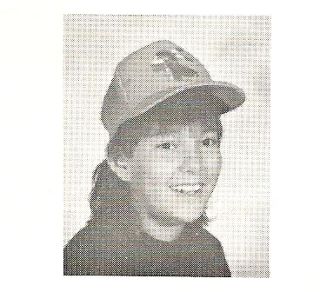
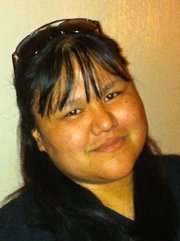
Crystal and George as pictured in their high school year book, a few short years before George was wrongfully convicted of murder.

Read George’s timeline HERE and a touching letter from Crystal and George’s daughter, now 17, HERE. You can read about George’s interrogation and transcripts of it HERE. Crystal was watching Late Night with Conan O’Brien that night. Across town a woman watching that same show was able to provide the time of Hartman’s attack. Read about that HERE.

If you or anyone you know has information about other suspects in the Hartman murder, please come forward. You can call the Innocence Project at 907-279-0454 or email them at info@alaskainnocence.org There is a reward that is always growing for information leading to exoneration.

If you were with any of the Fairbanks Four this night, please consider coming forward and sharing your story.

Dead Man Walking – A Witness and Song Come Forward

“In times of universal deceit, telling the truth becomes a revolutionary act.” George Orwell

In the days and weeks following the murder of John Hartman many, many people who came forward to tell the truth were treated poorly by police, threatened, and terrified by their experiences. In barely veiled threats, some were even made to believe that if they stuck with their story they may become suspects in the murder as well.

“You keep asking me for the truth, I keep telling you the truth, I don’t understand…” cried one fifteen year old being interviewed. Incarnations of her fear, tears, confusion, and BRAVERY when being pressured to give up the truth and accept someone else’s lies are echoed in many, many interviews with the case.

Why? Because by telling the truth in a climate of deceit, these ordinary people were threatening to tear down all that the investigators thought they had built in the early days following John Hartman’s murder.

The police had a lot of things going for them in the moments, hours, and days immediately following John Hartman’s death. They had four men in custody, two of whom relented to some degree to the aggressive and relentless interrogation and had arguably implicated themselves in a murder. They had collected shoes and boots, pants and shirts, jackets and caps, and the alleged getaway car. All evidence was sent to a crime lab, and they likely expected the tests performed there to confirm their theory. Early, brief conversations with the a handful of the people the men claimed to have spent the evening with made it seem at least possible that all four of the men had been at the Eagles’s Hall at 2 am or shortly after. The police theorized that they had met up at that point, taken a short drive down the street, beaten and sexually assaulted John Hartman for being white, then parted ways. Perhaps they expected that as time went on more witnesses would come forward to confirm their theory. They announced that the crime was solved, and maybe they believed it was. A story of the beating appeared on the front page of the local paper, followed the next day by mug shots of the four arrested. And then, the station was flooded with calls. Witnesses did come forward, including one call that would throw the first of many, many wrenches into the case the investigators were building.

The call came from Melanie Durham, a resident at the women’s shelter adjacent to the crime scene. A house where women and children go to escape fists and feet and men that would hurt them. A place women go so that they do not have to hear children plead weakly for help. On the deck outside this place, Melanie heard a murder.

Melanie said that she knew what time John Hartman had been killed. She had been watching the Late Night with Conan O’Brien show that night, and David Bowie was the musical guest of the evening. She is not a Bowie fan. As he began his performance at 1:30 am, she stepped outside for a cigarette. As the door shut behind her, David Bowie played the first acoustic notes of his song for the evening. He played “I’m Afraid of Americans,” and  “Dead Man Walking.”

Melanie could not hear Bowie’s voice haunting the air inside, “I’m gone, gone gone, like I’m dancing on angels. And I’m gone, through a crack in the past…”

Outside the air was freezing cold and dead empty, silent. Melanie lit a cigarette. Then, she heard a smacking sound, a crack in the silence. A familiar sound. Violence had brought her to this place, she knew its soundtrack. She heard one smack, another, another. She heard a small voice plead for help. She heard darker voices respond without mercy. And then, a return to silence.

Melanie rushed inside, told a night shift worker at the shelter what she had heard. The two stood outside together for a moment, listening. They heard nothing. So, they did not call for help.

Inside, perhaps  David Bowie crooned the last of his song, “I know who’s there, when silhouettes fall…… and I’m gone..”

When Melanie saw the article about the boy in the paper, she called the police to tell them her story, to tell the truth. Her timeline was strong, and through it, police established that John Hartman was beaten to death in an assault that lasted the length of a song. 1:30 to 1:35am

This information changed things. All of a sudden, it was crucial to know about time, to the minute. Naturally, these investigators returned to their notes, the others they had interviewed, to verify that the four in custody had no strong alibis during those critical five minutes. But what they found, probably much to their surprise, was that all claimed to have been elsewhere at 1:30am. And initial interviews with the witnesses who had seen them appeared to confirm that claim.

So, they returned. More interviews, more people. People who would continue, by and large, to tell a very simple truth. Only this time they would be treated as criminals. As revolutionaries, threatening the powers that be. Because, when the police heard the truth, a time of deceit had already begun. These small truths were cracks in the theory, threatening to break apart the entire story.

In the days to follow we will provide details of the police interviews that came in the early days of the investigation, and letters from some of those who were interviewed, who have graciously and bravely agreed to tell their stories again.

Marvin’s Last Night – Timeline

Below is a detailed timeline of Marvin’s motions on the evening of October 10th and early morning hours of October 11th. John Hartman was murdered at 1:30am. You can read a timeline of John Hartman’s night HERE.

Marvin spent most of the night of October 10th and early morning hours of the 11th doing two things: dancing at a wedding reception and serving as designated driver to scores of people. Many, many people testified that they saw Marvin throughout the night. Ultimately the DA would make the argument that their testimony should be discounted because his alibis were Native, that Marvin was Native, and that all Natives lie for each other.

Here is what we know of how Marvin spent his last night of freedom:

11:00 pm – Marvin picks up his friend Daniel Huntington from a house about ten blocks from the Eagles Hall.

11:05 pm – After driving for a few blocks Marvin and Daniel stop to chat with some girls on 2nd Avenue. The girls were: Skye Malemute, Monica Carlo, and Justina Demoski. They joked for a few minutes before continuing down the road.

11:15 pm – They arrive at the Eagles’s Hall and head inside, but the dance is not yet in full swing so they decide to go look for a few more friends.

11:20 pm – Marvin and Daniel arrive at Harland Sweetsir’s house, but no one is home. They then drive through the Klondike parking lot and a few other local haunts to see if they come across anyone they know. They don’t, and decide to head back to the Eagle’s Hall and see if things are picking up over there.

11:35 pm – Marvin and Daniel arrive at the Eagles Hall and spend a few minutes talking with Harland Sweetsir, Shannon Jenkins, and Brad Cruger.

11:40 pm – Marvin and Daniel drive a block over to Mapco to use the payphone to page Conan Goebel. They wait 5-10 minutes for a call back but don’t get one. They head back to the Eagle’s Hall, this time to head inside and join the reception in earnest.

11:50 pm – Marvin arrives at the Eagle’s Hall and sees friend Angelo Edwin outside. Daniel stays outside and Marvin hooks up with Angelo. They head in together, where Gary Edwin asks them to sit with him, joking that there are too many women at his table. They sit at his table.

12:00 am – 12:45 am –  Marvin dances with a series of women, including Athena Sweetsir, Tracy Monroe, Michelle Andon, and a handful of others.

12:45 am – Marvin drove a block over to Mapco (gas station) to get a soda for Athena Sweetsir. He was alone in the car.

12:55 am – Marvin made it back to the Eagle’s Hall with a pop for his dancing partner. He say with Gary Edwin, Angelo Edwin, Carrie Orrison, Eileen Newman, Tracy Monroe, and a few others.

1:15 – 1:30 am – Around this time there was some commotion concerning Frank Dayton, who had arrived back at the Eagle’s Hall injured. Marvin and Angelo asked Gary Edwin what had happened, and he responded “I’m trying to find out.” Out of the commotion, Marvin and Angelo eventually hear the basic story – that Frank Dayton had been mugged by four men driving a white or tan four-dour car. (911 Call came in at 1:30am, the same time John Hartman was being assaulted. Police would eventually add the mugging of Frank Dayton to the charges. Three people testified to seeing Marvin while the 911 call was made).

1:45 am – (approximately) Marvin sees Frank Dayton, who has a cut on his head.

1:45 – 2:00 am – Daniel Huntington rejoins Marvin and Angelo. All three continue to hand out at the Eagle’s Hall, where things seem to be quieting down.

2:00 am – The band stops playing. They are on break but a lot of people leave thinking the dance has ended.

2:05 am – Marvin, Daniel, and Angelo realize that the band is only on break and that the reception is not ending, and drive to Detour (a nearby club) to tell some of their friends that the party was not over. Gilbert Frank went with them. Gilbert was unable to get into the club so they all returned to the Eagle’s Hall.

2:15 am – They arrive back at the Eagle’s Hall and run into Allen Sisto who had just been dropped off by Joey Shank (Read more on Eugene’s timeline HERE)

2:30-45 am (approximately) – Marvin drives Alan Sisto and Shara David to Conan Goebel’s house on 24th Avenue. When Marvin drops off Allen and Sisto at Conan’s house Eddie Kootuk was there, and hops in with Marvin to head back to the Eagle’s Hall

2:45am – 3:00 am –  Marvin arrives with Eddie Kootuk at the Eagle’s Hall, and Marvin goes back inside to dance and mingle.

3:00 – 3:30 am – Marvin heads back outside of the Hall, where he visits with Calvin Charlie, Kevin Charlie, and Gilbert Frank for a few minutes. He reconnects with Angelo and Daniel and they decide to drive back over to The Detour to pick up their friend Shannon Jenkins. When they pull into the club parking lot it appears to be closing, with patrons outside in the parking lot and in cars. They cannot spot Shannon Jenkins.

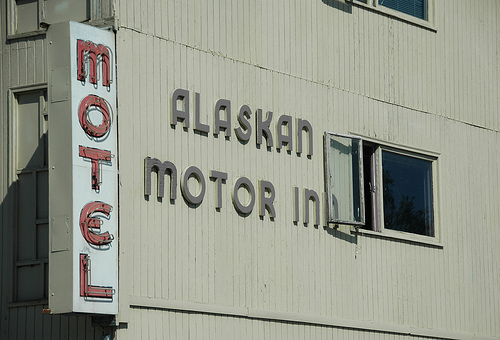
3:30 am – They drive the half block over to Arctic Bar and find Shannon there. Marvin gives him a ride to an apartment at Executive Estates. The group goes inside for a few minutes, then leave Shannon there and head to Alaska Motor Inn to check out a party there.

3:50 am – Marvin, Angelo, and Daniel arrive at the Alaska Motor Inn. They see a heavily intoxicated Eugene Vent sitting on the bed using the phone. Harley Semekan is there along with Nicole Pitka and Gilbert Frank. Gilbert is passed out on the bed. The are only there for a short time before they are told the police had been called on the hotel room.

4:15 am – After hearing that the police were on their way, Daniel takes off on foot. Marvin leaves in his car and drops Angelo off before going home and going to bed.

The next afternoon the police arrive at Marvin’s house and take him into the station to interrogate him. He is as stunned as you would expect him to be. Read about his interrogation and access transcripts of it HERE

Everything that comes next is…..unthinkable. If it had not happened, it would seem impossible. Marvin is arrested for the murder of a young man he had never met, whom he had no connection to, with no physical evidence, and shortly after many hours of interrogation where he begged for a lie detector and maintained his innocence. Marvin had never had so much as a speeding ticket before the day he was arrested for Murder in the First Degree.

Read what Marvin has to say about his time in prison HERE.

Read about the physical evidence against him HERE.

Read a little about the men who sought him HERE.

Who’s Afraid of the Big Bad Wolf?

A better question might be who’s afraid of the big bad wolf pack?

The corruption in this case runs very deep. So deep that there is no point in denying that there is a large range of potential risks in writing about some of it publicly. Every stone that is turned over in researching this case reveals more and more indications of corruption, some on the part of common criminals, some on the part of those that we should be most able to trust – police officers, attorneys, and judges. And the idea of making any of them too angry is, well, scary.

But the truth in this case is that fear was used like a tool to repress many people. A lack of courage on the part of many was required for justice to be so far miscarried. In this climate, the courage of some is all the more astounding. The earliest truth-tellers in this situation are people to be admired. It seems simple enough to just tell the truth, but as Orwell said, “In times of universal deceit telling the truth becomes of revolutionary act.” It was scary to stand up then, and many didn’t.

There is a quote so often repeated that it is hard to find its original source – “All that is required for evil to prevail is for good men to do nothing.” It is a powerful idea, and one that applies here. Many, many, many people did not come forward as alibis, or as informants to the actual perpetrators while this case was active because they were afraid. It is understandable, it was a terrifying time, but to move forward we must let go of that fear. Many good people did nothing when this case occurred. That is the past, and we must learn from it, but we must also let it remain the past and walk bravely into a new future.

So, here is a new quote to for a new era:

“Power is of two kinds. One is obtained by the fear of punishment and the other by acts of love. Power based on love is a thousand times more effective and permanent then the one derived from fear of punishment.”  – Gandhi

We possess a power greater than those that oppose us because we act from love. On that note, here are some of the highlights of corruption in this case. Sadly, this is the tip of the iceberg:

When the labwork came back and there was NO physical evidence against the Fairbanks Four, the investigators did not pursue other leads. They went “shopping” for jailhouse snitches. One was a woman who claims that she overheard an incriminating statement while she was in jail at FCC the same time as the four. Even though male and female inmates are separated even in general population. Even though the four were being held in isolation, where they made comments of any nature to absolutely no one. The star witness was a man who received leniency in his own crimes (and whose criminal record would make you sick) who agreed to testify that he had seen the four together. From 550 feet away. In the dark. Drunk. High on drugs. Standing with a group of people, some who were sober, who saw nothing. (To be fair, perhaps he got into radioactive goo or something as a child and has super powers).

In the absence of any physical evidence to take to trial, Detective Aaron Ring and Prosecutor Jeffery O’Bryant got together in their hotel room and made some. Don’t bother reading that sentence twice, you did indeed read it right the first time. With young men’s entire FUTURES at stake men sworn to uphold justice, to serve and protect us all, made exhibits for court during a hasty craft hour held in their hotel room. They took a lab-made ink print of George’s boot that was printed on clear overhead type paper. They selected a few slides that did not show all of the tread. They then layed it over a photo of John Hartman’s face. The photo had no scale. It was scientific garbage, but the lab logo would lead the average person to see it as legitimate. With no scale, a picture can be adjusted until its size roughly corresponds with any shoe. The exhibit was not made by a forensic lab, but by a police officer and prosecutor in their hotel room.

In an affidavit filed by John Cayton, the forensic expert the defense employed at the trial, filed post-trial, Mr. Cayton calls the exhibit “extremely misleading,” “troubling,” a “misrepresentation,” and states that, after repeatedly asking the defense attorney for a chance to review the evidence (remember, the defense attorney should have WANTED his expert informed), he was eventually told to get it directly from Aaron Ring, who sent poor quality copies and copies without any scale.

George’s first attorney, Bob Downes, made some other remarkable choices during trial. In addition to not supplying the expert the information he would have needed to testify properly, he did not call any of George’s alibis as witnesses. He also DID NOT OBJECT to the homemade bogus boot exhibit.

Bob Downes had worked with the prosecutor, Jeffery O’Bryant in the past, and knew him personally. After the trial was lost Bob Downes became a judge. He used Jeffery O’Bryant as a reference, and got the job. You can read his application/resume HERE.

No other suspects were investigated. Even though John Hartman’s brother had received a phone call warning him that his brother might be in danger the same night that he was killed. Even though Chris Stone, the person last seen alive with the victim, had astounding inaccuracies in his statement. Even though the victim was found wearing his pants. Even though he had suffered a similar beating a few weeks earlier and had refused to name his assailants. Even though there was never ever any evidence that any of the accused knew the victim or would have had any reason to harm him. Even though Chris Stone left a disturbing message for a friend that night, even though that friend asked police to get a copy, even though she went to the police station that day to make a statement that she thought Chris Stone was not being honest. EVEN THOUGH THERE WAS NO PHYSICAL EVIDENCE.

All interrogations in Alaska are required by law to be taped. George insists, and Crystal Sisto also insists, that his interrogation began long before a tape recorder came on. Read transcripts of the interrogation HERE and decide if that seems to be the case. You can also read the post about his interrogation HERE.

Eugene Vent was a minor and had the right to have a parent present. They told him that, but read about his interrogation HERE and ask yourself if they really believed he had understood all of his rights.

There is no recorded Blood Alcohol Level for George Frese on record anywhere. Interesting, considering that he had drank beer and liquor all night, hard liquor all morning and into the afternoon. Unusual, since it seems that an intoxicated underage patient would typically have a blood alcohol test. It makes you wonder…..is there a blood alcohol content at which a person must receive medical treatment and cannot be interrogated? Is there a blood alcohol content at which a person is considered legally incompetent and their statements could be voided? If there was one taken, how did it disappear?

The key players in this case received serious promotions following the “successful” outcome. These boys made the list of his notable accomplishments when Jeffery O’Bryant’s promotion to Fairbanks District Attorney was announced. Check that out HERE

Add to that the MANY PAGES of details that we will need time to write down. Add to that controversies that we are still afraid to write down. Add to that corruption we have not unearthed. And add this final quote to your mind for times when you want to blend into the flock because you are afraid:

“Make yourself sheep and the wolves will eat you.” Benjamin Franklin

There are many people in our community who know who committed this crime and have remained quiet out of fear. To you we say, muster your courage. Put your faith in the idea that to act from love gives you great power. Remember that fear does not make you safe, it makes you sheep. And the wolves are out there.


Eugene’s Last Night – Timeline

Below is a detailed timeline of Eugene’s motions on the evening of October 10th and early morning hours of October 11th. John Hartman was assaulted at 1:30am. Through a series of bizarre events, Eugene becomes a suspect at about 4:30am. You can read a timeline of John Hartman’s night HERE.

Eugene Spent the evening getting drunk with friends of his from school at a house party. He made his way from the house party to the last bit of a wedding reception at the Eagle’s Hall, and eventually continued partying into the early morning hours at the Alaska Motor Inn.

10:00 pm – Eugene gets a ride with Christy Moses, who drives Eugene, Kevin Pease, and several others to Kevin Bradley’s house off of Chena Small Tracts. Since the van was full, he left his friend Daniel behind at his house. A very small decision, but one Eugene says still haunts him. Of course at he has no idea as he heads to the party that this night will change his life. Kevin Bradley’s parents are out of town, and he is throwing a house party. The drive from downtown to the Chena Small Tracts home takes them 20 minutes or so.

10:30 pm –  The group arrives at the house party. There are a dozen or so people drinking and partying at Kevin Bradley’s house, including Joey Shank. They listen to music, drink, drink, and drink for the next several hours.

1:30 am – Joey Shank, who was the only person not drinking at the house party and was the designated driver, says he left Kevin Bradley’s house at about this time with Eugene Vent, Kevin Pease, and a group of other friends (Shawna, Allen, Dana, and Nathan). He is driving a blue Nissan owned by Kevin Bradley’s parents. He takes the Johansen to the College Road Exit, then takes the Wendell Street Bridge toward the Eagles’s Hall.

1:50 am – Joey Shank arrives at the Eagles Hall. Joey Shank says he remembers the timeframes because he was nervous, sober, and conscious of the time. He was driving a car packed like sardines full of drunk teenagers, and the car belonged to Kevin Bradley’s mother, who was out of town. Once there they only stay for a few minutes – long enough to figure out that Conan, who they had hoped to meet there, was not at the reception.

1:55 am – After Dana determines that Conan isn’t at the reception, the group all jumps back in the car. Eugene hopped in the front seat even though Kevin had called shotgun, so Kevin got Eugene to move and Kevin rode in the front, Eugene squeezed in with the rest in the back. They left to drive  to Conan Goebel’s house.

2:05 am – The group arrives at the Goebel Residence, but Conan isn’t home. Shawna Goebel, Kevin Pease, Eddie, and Nathan get out at the Goebel house. Joey Shank drives the rest of his passengers (Eugene Vent, Shara, and Allen) back to the Eagle’s Hall.

2:15 am (approx) – Eugene attends the reception. The band at the wedding reception was supposed to stop playing at 2 but the audience takes a collection and pays the band to keep going. Eugene spends some time dancing and mingling with the crowd at the reception.

2:50-3:00 am (approximately) Eugene and others leave the wedding reception sometime near 3 am and head to the Alaska Motor Inn to continue partying in room 107. There is a small group of core people there, and others are trickling in and out. The party is making a lot of noise, and the frustrated hotel clerk Mike Baca tries unsuccessfully to break it up. He calls the police to report the loud underage drinkers, but they do not respond. They are, of course, very busy with a rash of crimes, including the recently discovered assault victim John Hartman.

4:19 am –  Alaska Motor Inn Clerk Mike Baca calls 911 and reports that he has had a confrontation with the young partiers, who refused to quiet down or leave. Eventually, he says that he maced a few of them after one pulled a gun on him. In reality, he did mace at least one of the kids, but no one had a gun. He made that up, hoping the police would respond immediately and break up the loud party. The police do respond within minutes, and the kids from the party scatter, running off to avoid getting in trouble for underage consumption of alcohol. Among those running are Conan Goebel, Gilbert Frank, Harley Semekan, and others.

4:30 am – Police catch one of the kids that fled the Alaska Motor Inn Party – Eugene Vent. They find him at the intersection of 5th Avenue and Barnette. They tackle him violently and arrest him for minor consuming. Although he is unarmed and shows no signs of having been maced, they think he may be the gunman from the hotel clerk’s report.

4:40 am –  (approximately) The police drive Eugene to the Alaska Motor Inn and have clerk Mike Baca look into the back of the squad car at Eugene Vent, and ask him if Eugene is the gunman. Baca identifies Eugene as the gunman (although it was soon learned that there was no gunman). While they are there, they show Mike Baca a picture of John Hartman’s clothing and ask the clerk  if John Hartman had also been at the party in room 107. Mike Baca says he is “sure” that there was a kid there in those clothes (it is determined within a day that John Hartman was not there, and that Mike Baca once again was falsely reporting).

5:00 am – Eugene’s questioning begins as soon as he was arrested, but begins in earnest sometime around 5:00 am. He is processed at Fairbanks Youth Facility, where he registers a blood alcohol level of .168, a level known to indicate extreme intoxication and blackouts, confusion, disorientation, difficulty walking, slurred speech, and a myriad of other symptoms. He is interrogated into the late afternoon.

Eugene’s interrogation lasts, with a few breaks, approximately eleven hours. You can read about the interrogation and read transcripts of the interrogation HERE

The Truth About Courage – Marvin’s Interrogation

If you live to be 100 and half as many people have half as many nice things to say about you as the people who lived alongside Marvin for his short 17 free years, you could be proud of your legacy. His supporters are remarkably confident in his nature, and adamant that he could have never committed such a senseless act of violence. And if Marvin’s interrogation is a window into his character, it is easy to see why he suffers from an abundance of supporters.

Marvin, unlike the other accused, was not intoxicated the night of October 12, 1997, and was not intoxicated at the time of his interview. His state of mind was likely clearer, and it would have been much harder to cast doubt into his mind about his movements that night. Clearly, he had advantages that the others did not, and in many ways the differences between the interrogations help us to understand the difference between confronting this type of pressure in a weakened state versus a strong state.

Marvin’s interrogation transcripts tell his story perfectly and need little introduction, except to say that much like in Eugene’s interrogation, the police were relentless. They lied. They tried every angle. Many, perhaps most, men falter when they are tested to such a degree. Marvin did not.

CLICK HERE TO READ MARVIN’S INTERROGATION

“Courage is resistance to fear, mastery of fear, not absence of fear.”  – Mark Twain

The Truth About Fear – George’s Interrogation

 George did not confess.
  He did, after hours of pressure, make incriminating statements.
 George was so drunk on the night of October 10, 1997 that he couldn’t remember much of the night, and was perfectly primed for deception.
    The police lied to him about evidence, lied and said his friend’s said he was at this crime scene, lied and said blackouts are scientifically impossible, lied and gave him two choices: admit you were there, or be framed for a brutal beating and sexual assault of a child.
.
   Please, read the post about Eugene’s Interrogation, and use the links in it to educate yourself about false confessions. Much of what is said regarding false confessions is of huge significance in George’s interrogation as well, but for brevity do not want to rehash it in this post.
   George’s interrogation began at the Fairbanks Memorial Hospital. Although it is required by law that interrogators record all of an interrogation, George’s transcripts have some glaring issues. First, logic makes it seem that the interrogation began long before the recording began. Secondly, mid-way through George says “I want to go home.” If, in fact, he had asked to go home the police would have HAD to let him go. But they allege that the detective stepped out of the room, George said that to himself, and then the detective re-entered. His police interview following the statement “I want to go home” was deemed inadmissable in court, which means that the incriminating statements he made toward the end were not used to convict him.
   George, like Eugene, was incredibly intoxicated during his interview. He began drinking the night before and drank through the morning and into the afternoon. He came to the hospital with a hurt foot. Crystal Sisto, his girlfriend at the time who spent the night with George says he hurt his foot when a wrestling match between he and his cousin over the last cigarette went from lighthearted to a bit too intense. George did not remember how he hurt his foot. He told the nurse he hurt it in a fight. The nurse decided that his hurt foot was connected to the victim dying in ICU and alerted police, who established that he knew Eugene Vent (already being questioned) and came to the hospital to question him.
   Through much of the interrogation he is confused. For example, he thinks that Eugene is actually the victim, and person in ICU. He denies involvement for most of the interview. For hours they insist that his friends have said he was there at the crime scene and kicked John Hartman. When he tries to call one of the named friends, they tell him he cannot. Like in Eugene’s interrogation, the police lie about the evidence, they tell him that there is blood on his boot, that his footprint has been matched to the victim’s wounds. George had been blacked out drunk for much of the night, and in reality knew little of his movements after about 1:30am.  After the detective comes in and says they have Marvin Roberts, he finally relents and agrees to the scenario the police have been laying out for may hours. Perhaps it was a tipping point – Marvin was well known as an honest, sober kid. Believing that Marvin had said he was there may well have convinced him that he was.
     The premise the police use through George’s entire interrogation is saying that a claim of being blacked out drunk was a lie, that it is scientifically impossible (this, of course, was itself a lie). George asks for a hypnotist to help recover the memory. He tells them repeatedly that he is scared. For hours he insists he does not remember much of the night. The interrogators insist that his options are to admit having kicked the victim a few times, or continue claiming that he has no memory and have them “assume the worst.” They insist that the others are pointing fingers at George if he claims to have no memory. They insinuate that he will be framed for a brutal beating and sexual assault of a young boy if he doesn’t admit to having been there.
      After hours, George caves and agrees that he was probably there, and probably kicked the person. Immediately following admitting that he was there, he recants and says “I don’t f**king really remember all that sh*t.”
     As the interview continues he answers most questions with “I don’t know” or “I don’t remember.” The tape then cuts out again, and when the recording begins again he answers a series of questions. Ultimately, he is given two scenarios. One is bad, one is worse. He picks the lesser of two evils.
      When I read this interrogation, I hear the voice of a terrified incredibly drunk friend navigating the worst experience of his life, and know now what he probably feared most at that time – that this interview was the first in a series of events that would separate him from his family, from the daughter he loved perfectly. That type of fear is a tactic, the truth is that fear can be used like a weapon to break a person down. The truth is that a drunk, confused, manipulated, scared kid will say about anything to get away from that kind of fear, even if the reprieve is brief.

The Truth About Experience – Kevin’s Interrogation

Kevin Pease was not a stranger to the Fairbanks Police Department. His juvenile record was not exactly shocking, but showed a pattern of trouble-making. In short, this was not his first rodeo.

Kevin’s previous experience with the police, and his clear disdain for them, comes through loud and clear. Kevin had something that none of the other four had – he had some understanding of his rights. He asks if he can leave, and because they have no legal right to continue holding him for questioning, he gets to leave.

Kevin is not respectful or polite in his interrogation. However, if the other three had known a little more about their rights, and felt less obligated to bow to authority, the investigation likely would have ended there.

Kevin’s interview is a quick read. It is worth noting that Kevin lies to the police about his whereabouts. He tells them he was with his girlfriend, when in fact he had spent the night partying at various locations. It is also worth noting that the blood on his shirt, which he says is his own from a nose bleed, was in fact shown to be his blood in lab tests.

CLICK HERE TO READ KEVIN’S INTERROGATION

Introducing the Fairbanks Four

On the same evening that John Hartman lived his last night on Earth, four other young men also spent a normal day with their friends and families, with no idea as evening fell that October 10, 1997  would be the last normal day. No premonition that the night and early morning hours of October 11, 1997 would contain the moments that changed their lives forever; the line that now divides their lives into two parts –  before and after.

None could have possibly predicted that each movement they made would be scrutinized for a decade and more. Not one of the looked into the faces of those around them knowing that these friends, family members, acquaintances, and strangers were about to become alibis. That some of them would be threatened, that some of them would be courageous, that some would be afraid, that some would become activists, that some would sink into their sorrow. No. It was an ordinary night.

 The four boys knew each other. They were not close friends, but had all played on the same basketball team for Howard Luke, a predominantly Native high school. They did not spend the evening together, but each saw the others at least for a moment at some point that evening. The  times their paths crossed that evening they would not have known that soon they were to be each others only friends – the only familiar faces in a foreign place, and an all encompassing nightmare.

 The Four Were:


Marvin Roberts. Marvin was 19, had been valedictorian of his class that spring, a basketball enthusiast, a doting older brother to his toddler brother, and best friends with his sister. A gentle person. He was not a drinker, and unlike most of his classmates and friends, had a car.

Eugene Vent. Eugene was 17 that fall and a basketball enthusiast. He was funny guy, always smiling, and kind. He was young, and like many young men he drank too much and too often. He had, just days prior, revived a ticket for drinking underage. Like so many other teenage boys Eugene was finding his way from boyhood to manhood, a road not without challenges, but on the whole was a good guy.


George Frese. George was 20 at the time, and the oldest of the four. He was a doting father to his three year old daughter Tiliisia, and most who knew him at this time will talk first of his dedication to his daughter. George and his partner faced challenges common for teenage parents, but met most of them with grace. George did not drink often, but when he did he drank to great excess


Kevin Pease. Kevin was 19, smart, an athlete, and a kid who was doing his best to transcend hardships at home. His father had been murdered just a short time before this pivotal night. One friend, asked to describe Kevin, said “Fun. Brave. But if I had one word I would say fun. It was hard not to smile when Kevin smiled.” Kevin had had a series of small run-ins with the police. He was the baby of his family.

How they spent that fateful night:

Marvin spent the bulk of the night at a wedding reception, where many tens of people saw him throughout the evening. He was the only one of the four that did not get drunk that night. Earlier in the evening he cruised around aimlessly with a few friends, looking for girls. He gave a few people rides. No less that 10 people insist that they saw him dancing and mingling between the hours of 1 am and 2am.

That night, Kevin and Eugene went to a house party in the hills above Fairbanks. Their friend had the house to himself with his parents out if town, and the predictable party and mayhem followed. A house party full of people of course saw them at the party, drinking and mingling. Both Kevin and Eugene drank heavily; Eugene drank to the point that he blacked out much of the night. A sober driver eventually drove a car packed with teenagers like sardines back toward town. He remembers looking at the clock frequently he says, because he was nervous about getting pulled over with a car full of drunk teenagers out past legal curfew. He says that the arrived in town at about 2am. This is notable because it is a full half hour after John Hartman was attacked.

Once in town, they stopped by the wedding reception, and ultimately went their separate ways, with Eugene heading to a part in a room at the Alaska Motor Inn and Kevin heading home.

George spent the first part of the night at home drinking with some friends and his girlfriend Crystal. Three sober babysitters watched George and Crystal’s daughter while they visited with their company. Another sober friend, the late Patrick Henry, older brother of Edgar Henry, said he was with George and his little brother all night. He says that they left George’s apartment as a group at about 1:30am, and walked as a group first to a friend’ s house, and then to the large wedding reception downtown. He said his brother and George were so drunk he had to “babysit” them, and consequently remembers their actions that night well. He says they arrived a the reception at 2am, and were together until after 3am.

How did they become suspects?

Eugene was arrested first, walking home from the part at Alaska Motor Inn. He ran when the police car pulled up on him, which they considered the first indication of his guilt. In reality, he ran because he was a young drunk kid, and the police were behind him. Clearly, his whole life would be different if he had run faster.

Kevin was brought in next.  When he got home to is mother’s house, they had a huge fight, and he smashed up the house – punched Sheetrock, broke a few things. His mother called the police, a decision that she went to her death-bed regretting. He was a teenage troublemaker, already known to the police. When they realized he knew Eugene, a theory began to develop.

George was the third one taken. He woke up the next day still drunk and with a hurt foot. He was limping around in it complaining, and went to the E.R. to have it looked at. An ER nurse who had treated both the white boy dying upstairs and the Native boy with a hurt foot downstairs decided that the two patients were linked and alerted police. At some point the police did enough research to determine that George had played on the same high school basketball team as Eugene and Kevin. They came to the hospital for him.

Marvin was last. They showed up at his home, where he was sitting with an uncle, and took him in for questioning. During his interrogation he said he was innocent dozens of times, apologizing when an officer accused him of being disrespectful for saying it, and calling both officers “sir” through the entire interview, but never wavered for a moment in his insistence that they had the wrong person. Marvin was in that same yearbook photo, and probably the only one who had managed to get a car since graduation, and for the scenario that the police were building there had to be a driver.

A child was murdered at 1:30am, at which time four Indian boys were dancing at a wedding, walking to a friend’s house, and driving in a car packed like a sardine can. Yet, by the next morning the police are taking a victory lap for the local press, theorizing that these Indians probably killed the kid because he was white, or else that it is simply in their savage nature.

If you have read this far, you are likely left with nothing but questions, most of which boil down to why and how. If what we wrote above is true, and it is, why did they arrest these four men? Why were these alibis discounted? How were they convicted?

The answers can be long, or they can be short. The short answers are that they were arrested by chance, and guilty of being Native before the first question came. That they were drunk, terrified, with no idea what their actual legal rights were since they were not raised in the Law and Order culture, but the culture of Interior Alaska, where in the late 90’s most Native kids understood that once the cops picked you up whatever came next was up to the cops, and that resistance made things worse.

Their alibis were dismissed as not reliable, because their alibis were Indians. The D.A.’s closing argument was that, much like in the “I am Spartacus” scene, that Natives will lie for Natives, take care of their own kind, and can’t be trusted. Similar to the decrees long issued in this country that the savage is different.

They were convicted in puppet show trials by juries not made of their peers, with no physical evidence, and plenty of corruption. And the trials didn’t matter. Despite the fact that no one here had ever seen any prisoner from Fairbanks Correctional costumed that way before, they marched them out chained together and dressed in orange for their arraignment. The public defender of course voiced his shock and called it grandstanding, but it was too late. The picture was snapped of the four chained together in orange, and it would run beside the smiling school picture of a victim that could be anyone’s child in every early article and news story run in Alaska and was the stock image for years to come. And the story, see, made sense. It didn’t have to make factual sense to make sense in the hearts of many. The official statement may as well have been, “Four Indians savagely killed a child, because he was white. No one’s children were safe, but now they are. We are protecting you from a fear you felt but could never substantiate. There will be no further questions.” They didn’t come up with any motivation beyond hoping that the public would assume these four were just senselessly violent people.

The LONG answers? Will be here, in this blog, and are partially addressed in the links below. You do not have to take our word for it, because we wouldn’t expect you to, and because we don’t need you to. All we ask is that you remain, hear this story, and take from it what you will.

If you want to do further reading, please take  a moment to look at the work of journalist Brian O’Donoghue and the UAF Journalism Department Students via their website, or the “Decade of Doubt” series that ran in the local paper.