Marvin’s Last Night – Timeline

Below is a detailed timeline of Marvin’s motions on the evening of October 10th and early morning hours of October 11th. John Hartman was murdered at 1:30am. You can read a timeline of John Hartman’s night HERE.

Marvin spent most of the night of October 10th and early morning hours of the 11th doing two things: dancing at a wedding reception and serving as designated driver to scores of people. Many, many people testified that they saw Marvin throughout the night. Ultimately the DA would make the argument that their testimony should be discounted because his alibis were Native, that Marvin was Native, and that all Natives lie for each other.

Here is what we know of how Marvin spent his last night of freedom:

11:00 pm – Marvin picks up his friend Daniel Huntington from a house about ten blocks from the Eagles Hall.

11:05 pm – After driving for a few blocks Marvin and Daniel stop to chat with some girls on 2nd Avenue. The girls were: Skye Malemute, Monica Carlo, and Justina Demoski. They joked for a few minutes before continuing down the road.

11:15 pm – They arrive at the Eagles’s Hall and head inside, but the dance is not yet in full swing so they decide to go look for a few more friends.

11:20 pm – Marvin and Daniel arrive at Harland Sweetsir’s house, but no one is home. They then drive through the Klondike parking lot and a few other local haunts to see if they come across anyone they know. They don’t, and decide to head back to the Eagle’s Hall and see if things are picking up over there.

11:35 pm – Marvin and Daniel arrive at the Eagles Hall and spend a few minutes talking with Harland Sweetsir, Shannon Jenkins, and Brad Cruger.

11:40 pm – Marvin and Daniel drive a block over to Mapco to use the payphone to page Conan Goebel. They wait 5-10 minutes for a call back but don’t get one. They head back to the Eagle’s Hall, this time to head inside and join the reception in earnest.

11:50 pm – Marvin arrives at the Eagle’s Hall and sees friend Angelo Edwin outside. Daniel stays outside and Marvin hooks up with Angelo. They head in together, where Gary Edwin asks them to sit with him, joking that there are too many women at his table. They sit at his table.

12:00 am – 12:45 am –  Marvin dances with a series of women, including Athena Sweetsir, Tracy Monroe, Michelle Andon, and a handful of others.

12:45 am – Marvin drove a block over to Mapco (gas station) to get a soda for Athena Sweetsir. He was alone in the car.

12:55 am – Marvin made it back to the Eagle’s Hall with a pop for his dancing partner. He say with Gary Edwin, Angelo Edwin, Carrie Orrison, Eileen Newman, Tracy Monroe, and a few others.

1:15 – 1:30 am – Around this time there was some commotion concerning Frank Dayton, who had arrived back at the Eagle’s Hall injured. Marvin and Angelo asked Gary Edwin what had happened, and he responded “I’m trying to find out.” Out of the commotion, Marvin and Angelo eventually hear the basic story – that Frank Dayton had been mugged by four men driving a white or tan four-dour car. (911 Call came in at 1:30am, the same time John Hartman was being assaulted. Police would eventually add the mugging of Frank Dayton to the charges. Three people testified to seeing Marvin while the 911 call was made).

1:45 am – (approximately) Marvin sees Frank Dayton, who has a cut on his head.

1:45 – 2:00 am – Daniel Huntington rejoins Marvin and Angelo. All three continue to hand out at the Eagle’s Hall, where things seem to be quieting down.

2:00 am – The band stops playing. They are on break but a lot of people leave thinking the dance has ended.

2:05 am – Marvin, Daniel, and Angelo realize that the band is only on break and that the reception is not ending, and drive to Detour (a nearby club) to tell some of their friends that the party was not over. Gilbert Frank went with them. Gilbert was unable to get into the club so they all returned to the Eagle’s Hall.

2:15 am – They arrive back at the Eagle’s Hall and run into Allen Sisto who had just been dropped off by Joey Shank (Read more on Eugene’s timeline HERE)

2:30-45 am (approximately) – Marvin drives Alan Sisto and Shara David to Conan Goebel’s house on 24th Avenue. When Marvin drops off Allen and Sisto at Conan’s house Eddie Kootuk was there, and hops in with Marvin to head back to the Eagle’s Hall

2:45am – 3:00 am –  Marvin arrives with Eddie Kootuk at the Eagle’s Hall, and Marvin goes back inside to dance and mingle.

3:00 – 3:30 am – Marvin heads back outside of the Hall, where he visits with Calvin Charlie, Kevin Charlie, and Gilbert Frank for a few minutes. He reconnects with Angelo and Daniel and they decide to drive back over to The Detour to pick up their friend Shannon Jenkins. When they pull into the club parking lot it appears to be closing, with patrons outside in the parking lot and in cars. They cannot spot Shannon Jenkins.

3:30 am – They drive the half block over to Arctic Bar and find Shannon there. Marvin gives him a ride to an apartment at Executive Estates. The group goes inside for a few minutes, then leave Shannon there and head to Alaska Motor Inn to check out a party there.

3:50 am – Marvin, Angelo, and Daniel arrive at the Alaska Motor Inn. They see a heavily intoxicated Eugene Vent sitting on the bed using the phone. Harley Semekan is there along with Nicole Pitka and Gilbert Frank. Gilbert is passed out on the bed. The are only there for a short time before they are told the police had been called on the hotel room.

4:15 am – After hearing that the police were on their way, Daniel takes off on foot. Marvin leaves in his car and drops Angelo off before going home and going to bed.

The next afternoon the police arrive at Marvin’s house and take him into the station to interrogate him. He is as stunned as you would expect him to be. Read about his interrogation and access transcripts of it HERE

Everything that comes next is…..unthinkable. If it had not happened, it would seem impossible. Marvin is arrested for the murder of a young man he had never met, whom he had no connection to, with no physical evidence, and shortly after many hours of interrogation where he begged for a lie detector and maintained his innocence. Marvin had never had so much as a speeding ticket before the day he was arrested for Murder in the First Degree.

Read what Marvin has to say about his time in prison HERE.

Read about the physical evidence against him HERE.

Read a little about the men who sought him HERE.
Introducing the Fairbanks Four

On the same evening that John Hartman lived his last night on Earth, four other young men also spent a normal day with their friends and families, with no idea as evening fell that October 10, 1997  would be the last normal day. No premonition that the night and early morning hours of October 11, 1997 would contain the moments that changed their lives forever; the line that now divides their lives into two parts –  before and after.

None could have possibly predicted that each movement they made would be scrutinized for a decade and more. Not one of the looked into the faces of those around them knowing that these friends, family members, acquaintances, and strangers were about to become alibis. That some of them would be threatened, that some of them would be courageous, that some would be afraid, that some would become activists, that some would sink into their sorrow. No. It was an ordinary night.

 The four boys knew each other. They were not close friends, but had all played on the same basketball team for Howard Luke, a predominantly Native high school. They did not spend the evening together, but each saw the others at least for a moment at some point that evening. The  times their paths crossed that evening they would not have known that soon they were to be each others only friends – the only familiar faces in a foreign place, and an all encompassing nightmare.

 The Four Were:


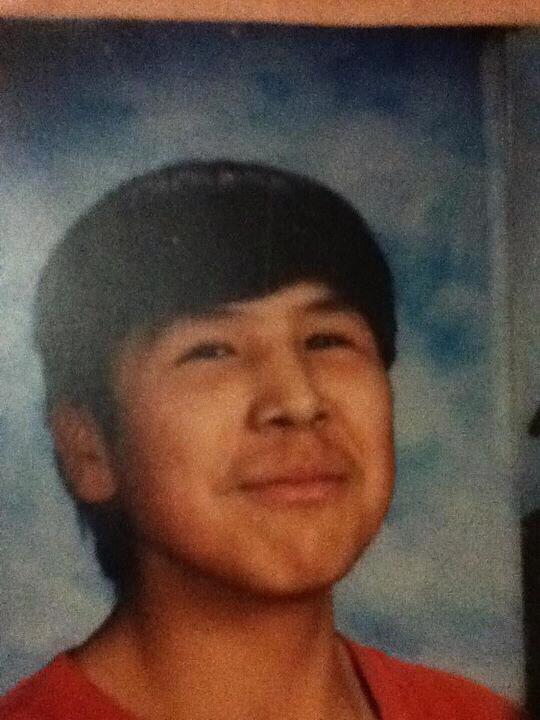
Marvin Roberts. Marvin was 19, had been valedictorian of his class that spring, a basketball enthusiast, a doting older brother to his toddler brother, and best friends with his sister. A gentle person. He was not a drinker, and unlike most of his classmates and friends, had a car.

Eugene Vent. Eugene was 17 that fall and a basketball enthusiast. He was funny guy, always smiling, and kind. He was young, and like many young men he drank too much and too often. He had, just days prior, revived a ticket for drinking underage. Like so many other teenage boys Eugene was finding his way from boyhood to manhood, a road not without challenges, but on the whole was a good guy.


George Frese. George was 20 at the time, and the oldest of the four. He was a doting father to his three year old daughter Tiliisia, and most who knew him at this time will talk first of his dedication to his daughter. George and his partner faced challenges common for teenage parents, but met most of them with grace. George did not drink often, but when he did he drank to great excess


Kevin Pease. Kevin was 19, smart, an athlete, and a kid who was doing his best to transcend hardships at home. His father had been murdered just a short time before this pivotal night. One friend, asked to describe Kevin, said “Fun. Brave. But if I had one word I would say fun. It was hard not to smile when Kevin smiled.” Kevin had had a series of small run-ins with the police. He was the baby of his family.

How they spent that fateful night:

Marvin spent the bulk of the night at a wedding reception, where many tens of people saw him throughout the evening. He was the only one of the four that did not get drunk that night. Earlier in the evening he cruised around aimlessly with a few friends, looking for girls. He gave a few people rides. No less that 10 people insist that they saw him dancing and mingling between the hours of 1 am and 2am.

That night, Kevin and Eugene went to a house party in the hills above Fairbanks. Their friend had the house to himself with his parents out if town, and the predictable party and mayhem followed. A house party full of people of course saw them at the party, drinking and mingling. Both Kevin and Eugene drank heavily; Eugene drank to the point that he blacked out much of the night. A sober driver eventually drove a car packed with teenagers like sardines back toward town. He remembers looking at the clock frequently he says, because he was nervous about getting pulled over with a car full of drunk teenagers out past legal curfew. He says that the arrived in town at about 2am. This is notable because it is a full half hour after John Hartman was attacked.

Once in town, they stopped by the wedding reception, and ultimately went their separate ways, with Eugene heading to a part in a room at the Alaska Motor Inn and Kevin heading home.

George spent the first part of the night at home drinking with some friends and his girlfriend Crystal. Three sober babysitters watched George and Crystal’s daughter while they visited with their company. Another sober friend, the late Patrick Henry, older brother of Edgar Henry, said he was with George and his little brother all night. He says that they left George’s apartment as a group at about 1:30am, and walked as a group first to a friend’ s house, and then to the large wedding reception downtown. He said his brother and George were so drunk he had to “babysit” them, and consequently remembers their actions that night well. He says they arrived a the reception at 2am, and were together until after 3am.

How did they become suspects?

Eugene was arrested first, walking home from the part at Alaska Motor Inn. He ran when the police car pulled up on him, which they considered the first indication of his guilt. In reality, he ran because he was a young drunk kid, and the police were behind him. Clearly, his whole life would be different if he had run faster.

Kevin was brought in next.  When he got home to is mother’s house, they had a huge fight, and he smashed up the house – punched Sheetrock, broke a few things. His mother called the police, a decision that she went to her death-bed regretting. He was a teenage troublemaker, already known to the police. When they realized he knew Eugene, a theory began to develop.

George was the third one taken. He woke up the next day still drunk and with a hurt foot. He was limping around in it complaining, and went to the E.R. to have it looked at. An ER nurse who had treated both the white boy dying upstairs and the Native boy with a hurt foot downstairs decided that the two patients were linked and alerted police. At some point the police did enough research to determine that George had played on the same high school basketball team as Eugene and Kevin. They came to the hospital for him.

Marvin was last. They showed up at his home, where he was sitting with an uncle, and took him in for questioning. During his interrogation he said he was innocent dozens of times, apologizing when an officer accused him of being disrespectful for saying it, and calling both officers “sir” through the entire interview, but never wavered for a moment in his insistence that they had the wrong person. Marvin was in that same yearbook photo, and probably the only one who had managed to get a car since graduation, and for the scenario that the police were building there had to be a driver.

A child was murdered at 1:30am, at which time four Indian boys were dancing at a wedding, walking to a friend’s house, and driving in a car packed like a sardine can. Yet, by the next morning the police are taking a victory lap for the local press, theorizing that these Indians probably killed the kid because he was white, or else that it is simply in their savage nature.

If you have read this far, you are likely left with nothing but questions, most of which boil down to why and how. If what we wrote above is true, and it is, why did they arrest these four men? Why were these alibis discounted? How were they convicted?

The answers can be long, or they can be short. The short answers are that they were arrested by chance, and guilty of being Native before the first question came. That they were drunk, terrified, with no idea what their actual legal rights were since they were not raised in the Law and Order culture, but the culture of Interior Alaska, where in the late 90’s most Native kids understood that once the cops picked you up whatever came next was up to the cops, and that resistance made things worse.

Their alibis were dismissed as not reliable, because their alibis were Indians. The D.A.’s closing argument was that, much like in the “I am Spartacus” scene, that Natives will lie for Natives, take care of their own kind, and can’t be trusted. Similar to the decrees long issued in this country that the savage is different.

They were convicted in puppet show trials by juries not made of their peers, with no physical evidence, and plenty of corruption. And the trials didn’t matter. Despite the fact that no one here had ever seen any prisoner from Fairbanks Correctional costumed that way before, they marched them out chained together and dressed in orange for their arraignment. The public defender of course voiced his shock and called it grandstanding, but it was too late. The picture was snapped of the four chained together in orange, and it would run beside the smiling school picture of a victim that could be anyone’s child in every early article and news story run in Alaska and was the stock image for years to come. And the story, see, made sense. It didn’t have to make factual sense to make sense in the hearts of many. The official statement may as well have been, “Four Indians savagely killed a child, because he was white. No one’s children were safe, but now they are. We are protecting you from a fear you felt but could never substantiate. There will be no further questions.” They didn’t come up with any motivation beyond hoping that the public would assume these four were just senselessly violent people.

The LONG answers? Will be here, in this blog, and are partially addressed in the links below. You do not have to take our word for it, because we wouldn’t expect you to, and because we don’t need you to. All we ask is that you remain, hear this story, and take from it what you will.

If you want to do further reading, please take  a moment to look at the work of journalist Brian O’Donoghue and the UAF Journalism Department Students via their website, or the “Decade of Doubt” series that ran in the local paper.

A Thanksgiving Perspective from Alaska

Alaska. The tourists come here in buzzing clouds, thick and as transient as mosquitos. They are very old. They are in the twilight of their lives. The women have poofs of white hair and wear elastic banded blue jeans. Their husbands carry cameras and wear khaki explorer hats.They arrive on enormous cruise ships and travel the thin highways on guided bus tours and train tracks, led by bright-eyed college students spending their summer working as tour guides. The greatest generation, spending their carefully sequestered Alaska portion of their retirement account, shuffling on the gravel at every highway overlook, scanning the horizons with their binoculars in search of a bear, a moose, their history.  They all buy the same deep blue sweatshirt that says “Alaska: The Last Frontier,” in gold-embroidered letters. It is, after all, why they came  –  to see the Last Frontier. It calls to them because they come from places where the frontier has been conquered and settled and is gone now. Alaska is the last, the very last, American frontier.

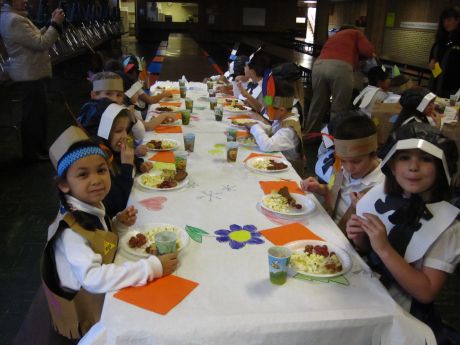
There is a lot of magic in a name; part truth and part spell. The Last Frontier was bestowed carefully, a  tribute both to the land’s untamed expanses and America’s deep rooted nostalgia for the era of cowboys sleeping under the stars and teepees peppering the wide open plains. America misses the Last Frontier. The idea that our ancestors walked bravely into the unknown, carved trails through an unforgiving wilderness, and ultimately weaved from the fabric of drastically different cultures, hard work, and luck the world’s strongest country is a great story. Our story. It is written so deeply into our collective consciousness that we walk with it, always, so intrinsic that we forget it is there. All of those old men and women were children once, together in that November classroom to learn the story. We were all there. When winter began to bite through fall we carefully stapled together the wide brown band of construction paper and pasted bright feathers to our Indian head-dress. We glued the bright yellow paper buckle to our pilgrim hats while the teacher laid out the multi-colored corn and parents arrived for the feast. And there, divided only by our different paper hats, we acted out the story: pilgrims and Indians eating together. Pilgrims and Indians celebrating abundance, welcoming the winter, waiting for the thaw, for the spring when America would begin in earnest. Thankful. So very deeply thankful for not just a meal, but for what was to come.

The story of our bright beginning, the purest freedoms, the wide open plains, that story is deep in our bones now. But we know that it wasn’t that easy. We feel the ghosts of other, less often told stories, lurking in the periphery of that happy story. We close our eyes and see teepees burning. We know that the pilgrims won, and we know how. Sand Creek. Custer’s Last Stand. Trails and trails of blood and tears carved through what was the frontier, paved and perfected so that the wild could become America. We sense it – that when those early November’s frost chased away the last of the leaves and winter was moments away, thousands of children were placed in hard-dug graves, wheels of wagons crashed over tiny bones and ground them to dust, and the division was real. Some of us walk with those stories, too, as deeply written and as impossible  to shed as the first Thanksgiving. But those stories are heavier. Harder to carry.

For most of America, the stories get further away each season, until they are so far in the distance they are forgotten. The terrible ones remain untold until the words are hard to form and people are able to forget. But this is the Last Frontier, and here, the wagons must keep moving if America is to take root properly. Here it is sometimes America of golden arches and great bridges, but much of the time it is still cowboys and Indians.

In Alaska we are plagued with a terrible double vision, one we cannot make peace with. See, this is the America that learned from its past. This is the country that has progressed, where a million men marched, where a woman would not budge from her bus seat, where we can erradicate the past in order to form a more perfect union. And Alaska is part of that America. Yet, we are out of time in some ways. We are not as far along in our story, we are somehow still in the part where teepees must be burned and trails must be carved, even though we know the ending, even though McDonald’s is here before all the bison are dead. We are American enough that we believe ourselves to not be racist, to believe ourselves to be undivided. But when Martin Luther King had a dream, soldiers still came in the night to take Indian children out of their beds and send them away. Not a story from our ancestors, a story from our parents. It’s all wrong. Someone forgot to divide the Indians into reservations and erect copper likenesses of their murdered chiefs in the town squares. Someone forgot to build town squares. We are not divided enough to pretend convincingly that we are undivided. So, we have to play a kind of first Thanksgiving. America lays out the feast and shows us the colorful corn that could never grow in this soil. See here? America says. The proof that this is your story, too. Our story together. And we put on our technicolor feathers and flopping construction paper buckles and rehearse our happy meal. Pilgrims and Indians, cowboys and Indians, make believe until you believe.

Then, sometimes, something happens that breaks it all back open and the other stories come roaring alive. A boy, say, scalped on the streets, his blood staining snow, the last of his hot breath wisping into the late fall sky, life leaving him.

Men in cars with red and blue flashing lights, wearing badges and those black paper hats that were placed onto their heads so long ago that they have forgotten they are there. Still, right away they scan the horizon, begin looking for four Indian boys playing at warrior games, feathers like a shadow. The investigation is over now, before it has begun, because these men remember this story. They know how it ends already.

This story is very old. This is the story of America. This is the story of the Last Frontier, the very last. This is a story that you know already. This story was whispered to you once in the rustling of construction paper and dried corn. This is a sad story. Listen, listen.

Free the Fairbanks Four

The Beginning of Our Story

It is hard to introduce a story so specific yet universal, so young, yet so old. It is not enough to say that this is a blog about four young Native men wrongfully convicted of a brutal murder.

It is not enough to say that this blog is about racism or hate, or faith or hope. This is the story of Alaska. Of America. A story of injustice, a plea for help, for understanding, and above all a story of faith in the power of stories, of the truth. Writing this blog is an act of faith, a testimony to the power of the truth, spoken, read. We may not be experts in journalism, in law, or many other things. But the contributors here come from Alaska, from a culture that has a long tradition of storytelling, and a belief that the truth holds incredible power. This is a long story, and we will have to tell it the old way, the slow way, in pieces as they come.

In telling this story we hope to achieve one small justice for four men, but also to contribute to building justice for all Native people. For all people. In the weeks and months to come we will introduce a brutal murder, a shocking investigation, and the stories of heartbreak, determination, and hope from many people that have all sprung from one terrible night.