The Alibis – Part I

We are in the days, weeks, and months to come going to hear directly from many people who were alibis for the four, interviewed by the police during the investigation, or participants in the trial.

For those readers who were part of this case in a large or small way, we urge you to come forward and tell your own story as well. The community does not know this story, not the whole story. They do not understand that many, many people were affected, that many people KNOW these men are innocent because they were with them that night, that many people had scary experiences when they tried to come forward.

It takes a tremendous amount of courage to come forward with your own face, words, and name. Many people do not want to return to the experiences they had in October of 1997. Somer people can barely speak of it, their experience was so scary, violating, or sad. It is both courageous and important to tell the truth, the whole truth, and stand up against injustice. These four men NEED your courage, your truth, and so does the next generation who, if we are successful, may not have to have an experience like ours. We would like to thank our first two letter-writers, and encourage others to follow their path.

Vanessa Cruger lived and attended school in Galena, Alaska. She moved to Anchorage after graduation and lived there for years before moving to Fairbanks. Vanessa works for a nonprofit in Fairbanks, Alaska in Human Resources. She saw Marvin throughout the night in question and was ultimately called to testify at trial. As she relates in her story, the DA Jeffery O’Bryant approached her there and attempted to intimidate her in an effort to prevent or alter her testimony. Her letter is below:


I was at the wedding reception that night, I spoke to Marvin Roberts as I was returning from the restroom to a table I was sitting at with several other people including Eileen and arry. Marvin was standing with Joel Titus in the entry way and I stopped to speak with them. Marvin joined us at our table and danced with several people. I do not know the exact time this took place as I wasn’t anticipating it being a important factor for future events. What I also recall was seeing Mr. Dayton that night after he had been mugged, Mr. Dayton was being assisted by others as he sat on the stairs. I believe this was some time after I had spoken to Marvin.

The fact that I had spoke with and saw Marvin that night later lead me to be a witness and testify at his trial to those exact facts. During a recess called by the court I was outside the court room and was approached by a member of the opposing side which I believe was the DA, he said you told the court that you do not know the other defendants only Marvin, I confirmed to him that was true. I have never had any contact with none of the others and had not met them before. He insisted that I knew Kevin and I had repeatedly told him I did not. He took pictures out of his suit pocket and asked me to look through them, once I did he asked me again if I knew Kevin, again I insisted I did not. He then insisted that in one photo I was the girl sitting with him on a couch, I told him that was not me and to look at it closer. True we did look similar but it was not me. I believe that he was trying to catch me lying but the fact of the matter was I was telling him the truth. During our conversation he mentioned that I would be under oath and lying was a offense. I am not sure how the trial process works but I don’t think that it seems fair for the opposing side to be able to speak in that sense outside the court during a recess. Regardless of that the honest truth is that I did speak, talk to, and even sat near Marvin that night. – Vanessa Cruger 12/21/11


  • Carry Orrison-Edwin is the wife of Gary Edwin, the two have five children together. She is a homemaker and student, and has kept herself busy raising her kids, who are involved with basketball, cheerleading, and football. She is originally from Rampart and North Pole, Alaska and currently lives in Eagle River, Alaska. She was at the reception at the Eagle’s Hall on the night of the murder and here is what she has to say about Marvin’s movements that night:

     I sat at a table all night with my husband Gary Edwin, Marvin Roberts, Tracy, Cliff Joseph, Carol Ann Newcomer, Shelia Justice, Bill Justice, and four other women I did not know. At one point my Aunt Eileen stood up and said, “It’s one o’clock!” She had been waiting for the time, because she wanted to call her husband who was at a late movie, and knew he would be home at about one. Eileen came back about ten minutes later, then Eileen and Tracy got up to dance. Afterwards we went over to the bathroom where a woman was on the phone and heard her reporting Frank Dayton’s mugging to the police. When I returned to the table Marvin was still there.

Overall, I saw Marvin throughout the whole night and every time I saw him he was with Angelo and he was not drinking. In my interview with the police I told them that Marvin was at the table at approximately 1:15am, and that he sat there for another 30 minutes or so afterwards. I also saw Marvin and Angelo sitting for while with some girls, one of them being Daphne Huntington. – Carry Orrison-Edwin

Dead Man Walking – A Witness and Song Come Forward

“In times of universal deceit, telling the truth becomes a revolutionary act.” George Orwell

In the days and weeks following the murder of John Hartman many, many people who came forward to tell the truth were treated poorly by police, threatened, and terrified by their experiences. In barely veiled threats, some were even made to believe that if they stuck with their story they may become suspects in the murder as well.

“You keep asking me for the truth, I keep telling you the truth, I don’t understand…” cried one fifteen year old being interviewed. Incarnations of her fear, tears, confusion, and BRAVERY when being pressured to give up the truth and accept someone else’s lies are echoed in many, many interviews with the case.

Why? Because by telling the truth in a climate of deceit, these ordinary people were threatening to tear down all that the investigators thought they had built in the early days following John Hartman’s murder.

The police had a lot of things going for them in the moments, hours, and days immediately following John Hartman’s death. They had four men in custody, two of whom relented to some degree to the aggressive and relentless interrogation and had arguably implicated themselves in a murder. They had collected shoes and boots, pants and shirts, jackets and caps, and the alleged getaway car. All evidence was sent to a crime lab, and they likely expected the tests performed there to confirm their theory. Early, brief conversations with the a handful of the people the men claimed to have spent the evening with made it seem at least possible that all four of the men had been at the Eagles’s Hall at 2 am or shortly after. The police theorized that they had met up at that point, taken a short drive down the street, beaten and sexually assaulted John Hartman for being white, then parted ways. Perhaps they expected that as time went on more witnesses would come forward to confirm their theory. They announced that the crime was solved, and maybe they believed it was. A story of the beating appeared on the front page of the local paper, followed the next day by mug shots of the four arrested. And then, the station was flooded with calls. Witnesses did come forward, including one call that would throw the first of many, many wrenches into the case the investigators were building.

The call came from Melanie Durham, a resident at the women’s shelter adjacent to the crime scene. A house where women and children go to escape fists and feet and men that would hurt them. A place women go so that they do not have to hear children plead weakly for help. On the deck outside this place, Melanie heard a murder.

Melanie said that she knew what time John Hartman had been killed. She had been watching the Late Night with Conan O’Brien show that night, and David Bowie was the musical guest of the evening. She is not a Bowie fan. As he began his performance at 1:30 am, she stepped outside for a cigarette. As the door shut behind her, David Bowie played the first acoustic notes of his song for the evening. He played “I’m Afraid of Americans,” and  “Dead Man Walking.”

Melanie could not hear Bowie’s voice haunting the air inside, “I’m gone, gone gone, like I’m dancing on angels. And I’m gone, through a crack in the past…”

Outside the air was freezing cold and dead empty, silent. Melanie lit a cigarette. Then, she heard a smacking sound, a crack in the silence. A familiar sound. Violence had brought her to this place, she knew its soundtrack. She heard one smack, another, another. She heard a small voice plead for help. She heard darker voices respond without mercy. And then, a return to silence.

Melanie rushed inside, told a night shift worker at the shelter what she had heard. The two stood outside together for a moment, listening. They heard nothing. So, they did not call for help.

Inside, perhaps  David Bowie crooned the last of his song, “I know who’s there, when silhouettes fall…… and I’m gone..”

When Melanie saw the article about the boy in the paper, she called the police to tell them her story, to tell the truth. Her timeline was strong, and through it, police established that John Hartman was beaten to death in an assault that lasted the length of a song. 1:30 to 1:35am

This information changed things. All of a sudden, it was crucial to know about time, to the minute. Naturally, these investigators returned to their notes, the others they had interviewed, to verify that the four in custody had no strong alibis during those critical five minutes. But what they found, probably much to their surprise, was that all claimed to have been elsewhere at 1:30am. And initial interviews with the witnesses who had seen them appeared to confirm that claim.

So, they returned. More interviews, more people. People who would continue, by and large, to tell a very simple truth. Only this time they would be treated as criminals. As revolutionaries, threatening the powers that be. Because, when the police heard the truth, a time of deceit had already begun. These small truths were cracks in the theory, threatening to break apart the entire story.

In the days to follow we will provide details of the police interviews that came in the early days of the investigation, and letters from some of those who were interviewed, who have graciously and bravely agreed to tell their stories again.

George’s Last Night – Timeline

George’s timeline is established through his interrogation, alibi interviews, testimony at trial, and his own account. Times are verified by more than one source. One of the biggest problems George faces was his level of intoxication, and inability to be his own alibi for portions of the night.

9:30 pm – George and his girlfriend Crystal Sisto call a cab and head to the Eagle’s Hall for the wedding reception at the Eagle’s Hall. The cab ride takes perhaps 10 minutes. When they arrive there is not much going on, and they only stay a short while.

10:00 pm – George and Crystal leave the reception on foot and walk down to 2nd Avenue.

10:05 pm – A few minutes into their walk they run into Vernon Roberts, Edgar Henry, and John Folger. Crystal decides to head to the Elbow Room bar, while George, Vernon, Edgar and John decide to head to George and Crystal’s apartment.

10:30 pm – George, Edgar, Vernon, and John stop by Thrifty Liquor, a liquor store on the way to George’s apartment. There they buy two cases of Miller genuine Draft and a 750mL bottle of Bacardi rum.

11:00 pm – The group arrives back at George and Crystal’s apartment, where Antonio Sisto and Dawn Carrol are babysitting. Antonio and Dawn visit for perhaps ten minutes, then head upstairs for the night shortly after the group arrives.

11:10 pm – George, Vernon, Edgar, and John begin drinking. They play Up River, Down River (an Alaskan variation on a card drinking game) and Quarters. They drink all of the beer playing these games. George and Edgar drink the most, probably consuming ten or twelve beers each.

12:30 pm – Crystal returns home to the apartment with Patrick Henry. Crystal has been drinking, but Patrick Henry does not drink and is completely sober. Patrick went with Crystal to the apartment to get the group there and return with everyone to the reception. He wants to leave right away, but the group continues drinking for the next hour or so, George drinks several shots of Bacardi. At this point George has drank about 12 beers and at least three shots of liquor. He is 150lbs. Even by conservative measure, his Blood Alcohol Content (BAC) would be about .358 This level of intoxication can actually be lethal, and can induce comas. Blackouts become “likely” at a Blood Alcohol Content of .20. Read about BAC levels and their symptoms HERE Calculate his BAC on your own HERE

1:20-1:30am – George leaves the apartment with John Folger, Vernon Roberts, Edgar Henry, and Patrick Henry, at this point he is extremely intoxicated. He remembers walking for a short time, but blacks out between 16th and 17th Avenue. The group walks toward the reception but decides to stop to visit a friend along the way and warm up. This time was confirmed several ways. Crystal Sisto who was at the apartment estimates that the group left at 1:30. When George arrives at the hospital and is interrogated, he states that he left his apartment between 1:20-30am, and blacked out shortly after. In a police interview and court testimony the late Patrick Henry states they left the apartment at about 1:30. Vernon Roberts confirms they left as a group and cannot remember the time. This time frame is crucial because this was the time when John Hartman was assaulted.

1:30-1:40 – George, John, Vernon, Edgar, and Patrick stop by Shannon Charlie’s apartment on 11th Avenue (George has no memory of this, others involved established this time frame). They stay for a short time and head to the reception.

2:00am – George, Edgar, and Patrick Henry arrive at the Eagle’s Hall. Patrick heads inside while Edgar and George drink with a group in the parking lot. Patrick Henry says the two were so drunk he felt he had to “babysit” them. He stayed inside the reception about 3am.

3:00 am – Patrick Henry returns to the parking lot to retrieve George and Edgar, who are still there. The trio walk to the Elbow Room bar, where Patrick Henry goes inside. Despite being underage, George and Edgar follow him inside. The bartender kicks George out (this is one of the few moments George recollects from these hours, and has a brief memory of being chased out of the Elbow Room).

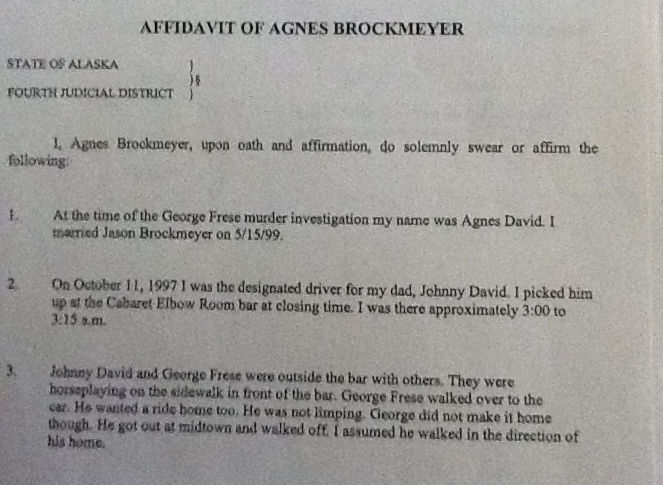
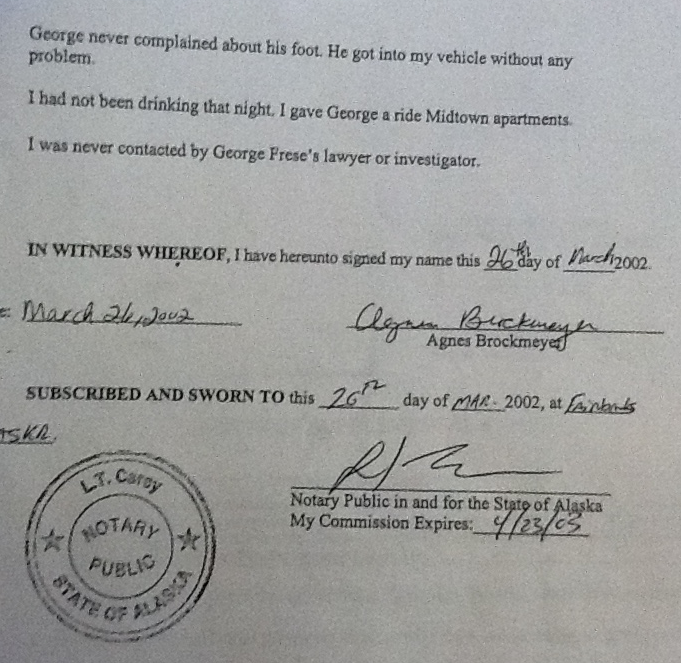
3:00 am  – 3:15 am –  Agnes Brockmeyer arrives at the Elbow Room to pick up her father, Johnny David. She sees George, her father, and a group “horse-playing” on the sidewalk outside the bar. George approaches her and asks for a ride home. She says he was not limping or injured at all. Agnes gives George a ride. He gets out a Midtown inexplicably and walks toward the direction of home. (George remembers getting a ride with Johnny David, and remembers being at Midtown. He references both during his interrogation). Vernon Roberts confirms that he parted ways with George at Elbow Room around 3am. Vernon walks back to George’s apartment with Patrick Henry, John Folger, and Edgar Henry. The three do not know that George caught a ride with Agnes, and are concerned that he is missing, given his level of intoxication. Vernon and Patrick Henry both state that George did not have an injured foot at this time. Three witnesses confirm his foot was not injured. This is important because the prosecution will allege that he had badly injured his foot kicking John Hartman at 1:30am, which would mean he should have been injured at this time.

4:00 am (about) – George arrives back at home where all of the original group are at his apartment (Crystal, Patrick, Edgar, John, Vernon) and have been joined by Crystal’s cousin Rachel, who brought another bottle of liquor. George begins drinking again at the apartment and remembers drinking several shots. He again blacks out and does not remember anything until waking up the next afternoon. Crystal states that during this time, George and Vernon got in a wrestling match over the last cigarette that started lighthearted and became a bit serious. She believes this is how George injured his foot. He has not memory of this time, but presumably kept drinking. (Others state that he continued drinking, slept a brief while, stopped by another apartment for a few beers, and then slept briefly in the afternoon at the apartment).

Afternoon – George wakes up with severe pain in his left foot. So severe he is at first unable to walk, and crawls down the stairs, where many of last nights guests remain. At this point Antonio Sisto asks him how he hurt his foot. Although he does not remember how he hurt his foot, he tells Antonio he hurt it in a fight. “I actually wanted it to be from a fight,” George said, “I wanted some sort of social praise. Little did I know that when I told the same story to the receptionist at the hospital that there was a fifteen year old boy in the Intensive Care Unit.”  After deciding that the pain is extreme and his foot is likely broken he calls for a ride to the hospital.

3:30 pm – George checks into the E.R. with an injured foot. When the receptionist asks him how he hurt his foot, he tells her he hurt it in a fight. Although there is no record of George’s Blood Alcohol Level (a Fairbanks Memorial Hospital Nurse confirms that it is standard practice to take a BAC reading in intoxicated patients), if we assume that he only drank two more beers and four more shots of liquor (his companions think he drank even more), his BAC level would be .314 when he checked into the hospital.

HOW GEORGE BECOMES A SUSPECT

When George checks into the hospital he tells the receptionist the same story he told his Antonio: that he hurt his foot fighting. Pretty tough-Indian thing to say, but not true. He thought it was a cool thing to say, made him seem tough, and certainly cooler than “I was so drunk I don’t know.”

Diane Hill has been upstairs, performing a sexual assault exam on John Hartman. When she comes down she is assigned a patient.. In a happenstance that will change the rest of his life, Diane Hill is assigned George Frese as her next patient. The triage nurse tells nurse Diane Hill when she hands over the chart that a drunk Native kid is in with a hurt foot and says he hurt it in a fight.

She testifies during trial that when she went into room where George was waiting to have his foot looked at she entered and they had the following exchange, which persuaded her that he was involved with the beating of John Hartman “I understand that you were in a fight downtown last night, and kicked someone, and hurt your foot, is that right? And he answered Yes.”

Diane Hill then calls the Fairbanks Police and says she believes one of the murders is there as a patient. George is transferred, according to his girlfriend Crystal, to an odd and secure room. According to Crystal the police show up and begin aggressively interrogating and threatening George for some time before his interrogation begins.

Read about his interrogation HERE, including links to transcripts of the interrogations.

SOME NOTES ON GEORGE’S TIMELINE

When George said he was blacked out of periods of time, the police insist that it is SCIENTIFICALLY impossible to black out and indicate that he will be charged with sexual assault and murder if he continues to insist that it is the case. Read about the science of blackouts HERE. There are plenty of articles about the science or blackouts, so feel free to post any others you find!

In a nutshell, over consumption of alcohol can block neurons and inhibit the formation of memory, meaning that the memories are not there “deep in the brain” as the detectives insist, but actually were never created, so try as a person might, the memories cannot be accessed because they are not there.

George’s level of intoxication was such that he could not be his own alibi. However, his level of intoxication is such that it also seems unlikely he could participate in an assault. There are significant witnesses who were willing to provide alibi testimony. Many were ignored by the police AND defense council (see affidavit of Agnes Brockmeyer below who tried to contact both the police and attorney). Some, most notably Patrick Henry, Edgar Henry, and Antonio Sisto were threatened, lied to, and made to feel that if they continued to provide an alibi that they would be charged with this or another crime. Although George Frese’s attorney did not call any alibi witnesses, Patrick Henry testified to timeline in a different trial.

It is also worth noting that George says he left his house at 1:30am during his interrogation. Crystal also makes this statement to the police, and so does Patrick Henry. They state this time BEFORE even the police knew the time of John Hartman’s beating, and without a chance to speak to each other and “create” a timeline, as the prosecution would constantly hint at trial.

Who’s Afraid of the Big Bad Wolf?

A better question might be who’s afraid of the big bad wolf pack?

The corruption in this case runs very deep. So deep that there is no point in denying that there is a large range of potential risks in writing about some of it publicly. Every stone that is turned over in researching this case reveals more and more indications of corruption, some on the part of common criminals, some on the part of those that we should be most able to trust – police officers, attorneys, and judges. And the idea of making any of them too angry is, well, scary.

But the truth in this case is that fear was used like a tool to repress many people. A lack of courage on the part of many was required for justice to be so far miscarried. In this climate, the courage of some is all the more astounding. The earliest truth-tellers in this situation are people to be admired. It seems simple enough to just tell the truth, but as Orwell said, “In times of universal deceit telling the truth becomes of revolutionary act.” It was scary to stand up then, and many didn’t.

There is a quote so often repeated that it is hard to find its original source – “All that is required for evil to prevail is for good men to do nothing.” It is a powerful idea, and one that applies here. Many, many, many people did not come forward as alibis, or as informants to the actual perpetrators while this case was active because they were afraid. It is understandable, it was a terrifying time, but to move forward we must let go of that fear. Many good people did nothing when this case occurred. That is the past, and we must learn from it, but we must also let it remain the past and walk bravely into a new future.

So, here is a new quote to for a new era:

“Power is of two kinds. One is obtained by the fear of punishment and the other by acts of love. Power based on love is a thousand times more effective and permanent then the one derived from fear of punishment.”  – Gandhi

We possess a power greater than those that oppose us because we act from love. On that note, here are some of the highlights of corruption in this case. Sadly, this is the tip of the iceberg:

When the labwork came back and there was NO physical evidence against the Fairbanks Four, the investigators did not pursue other leads. They went “shopping” for jailhouse snitches. One was a woman who claims that she overheard an incriminating statement while she was in jail at FCC the same time as the four. Even though male and female inmates are separated even in general population. Even though the four were being held in isolation, where they made comments of any nature to absolutely no one. The star witness was a man who received leniency in his own crimes (and whose criminal record would make you sick) who agreed to testify that he had seen the four together. From 550 feet away. In the dark. Drunk. High on drugs. Standing with a group of people, some who were sober, who saw nothing. (To be fair, perhaps he got into radioactive goo or something as a child and has super powers).

In the absence of any physical evidence to take to trial, Detective Aaron Ring and Prosecutor Jeffery O’Bryant got together in their hotel room and made some. Don’t bother reading that sentence twice, you did indeed read it right the first time. With young men’s entire FUTURES at stake men sworn to uphold justice, to serve and protect us all, made exhibits for court during a hasty craft hour held in their hotel room. They took a lab-made ink print of George’s boot that was printed on clear overhead type paper. They selected a few slides that did not show all of the tread. They then layed it over a photo of John Hartman’s face. The photo had no scale. It was scientific garbage, but the lab logo would lead the average person to see it as legitimate. With no scale, a picture can be adjusted until its size roughly corresponds with any shoe. The exhibit was not made by a forensic lab, but by a police officer and prosecutor in their hotel room.

In an affidavit filed by John Cayton, the forensic expert the defense employed at the trial, filed post-trial, Mr. Cayton calls the exhibit “extremely misleading,” “troubling,” a “misrepresentation,” and states that, after repeatedly asking the defense attorney for a chance to review the evidence (remember, the defense attorney should have WANTED his expert informed), he was eventually told to get it directly from Aaron Ring, who sent poor quality copies and copies without any scale.

George’s first attorney, Bob Downes, made some other remarkable choices during trial. In addition to not supplying the expert the information he would have needed to testify properly, he did not call any of George’s alibis as witnesses. He also DID NOT OBJECT to the homemade bogus boot exhibit.

Bob Downes had worked with the prosecutor, Jeffery O’Bryant in the past, and knew him personally. After the trial was lost Bob Downes became a judge. He used Jeffery O’Bryant as a reference, and got the job. You can read his application/resume HERE.

No other suspects were investigated. Even though John Hartman’s brother had received a phone call warning him that his brother might be in danger the same night that he was killed. Even though Chris Stone, the person last seen alive with the victim, had astounding inaccuracies in his statement. Even though the victim was found wearing his pants. Even though he had suffered a similar beating a few weeks earlier and had refused to name his assailants. Even though there was never ever any evidence that any of the accused knew the victim or would have had any reason to harm him. Even though Chris Stone left a disturbing message for a friend that night, even though that friend asked police to get a copy, even though she went to the police station that day to make a statement that she thought Chris Stone was not being honest. EVEN THOUGH THERE WAS NO PHYSICAL EVIDENCE.

All interrogations in Alaska are required by law to be taped. George insists, and Crystal Sisto also insists, that his interrogation began long before a tape recorder came on. Read transcripts of the interrogation HERE and decide if that seems to be the case. You can also read the post about his interrogation HERE.

Eugene Vent was a minor and had the right to have a parent present. They told him that, but read about his interrogation HERE and ask yourself if they really believed he had understood all of his rights.

There is no recorded Blood Alcohol Level for George Frese on record anywhere. Interesting, considering that he had drank beer and liquor all night, hard liquor all morning and into the afternoon. Unusual, since it seems that an intoxicated underage patient would typically have a blood alcohol test. It makes you wonder…..is there a blood alcohol content at which a person must receive medical treatment and cannot be interrogated? Is there a blood alcohol content at which a person is considered legally incompetent and their statements could be voided? If there was one taken, how did it disappear?

The key players in this case received serious promotions following the “successful” outcome. These boys made the list of his notable accomplishments when Jeffery O’Bryant’s promotion to Fairbanks District Attorney was announced. Check that out HERE

Add to that the MANY PAGES of details that we will need time to write down. Add to that controversies that we are still afraid to write down. Add to that corruption we have not unearthed. And add this final quote to your mind for times when you want to blend into the flock because you are afraid:

“Make yourself sheep and the wolves will eat you.” Benjamin Franklin

There are many people in our community who know who committed this crime and have remained quiet out of fear. To you we say, muster your courage. Put your faith in the idea that to act from love gives you great power. Remember that fear does not make you safe, it makes you sheep. And the wolves are out there.


Eugene’s Last Night – Timeline

Below is a detailed timeline of Eugene’s motions on the evening of October 10th and early morning hours of October 11th. John Hartman was assaulted at 1:30am. Through a series of bizarre events, Eugene becomes a suspect at about 4:30am. You can read a timeline of John Hartman’s night HERE.

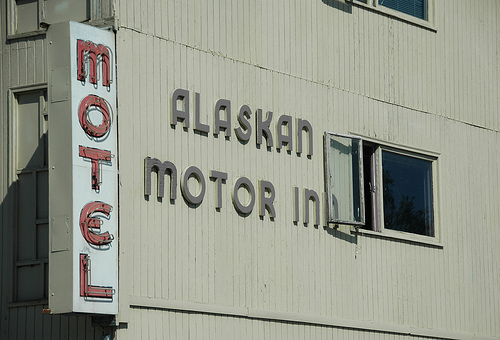
Eugene Spent the evening getting drunk with friends of his from school at a house party. He made his way from the house party to the last bit of a wedding reception at the Eagle’s Hall, and eventually continued partying into the early morning hours at the Alaska Motor Inn.

10:00 pm – Eugene gets a ride with Christy Moses, who drives Eugene, Kevin Pease, and several others to Kevin Bradley’s house off of Chena Small Tracts. Since the van was full, he left his friend Daniel behind at his house. A very small decision, but one Eugene says still haunts him. Of course at he has no idea as he heads to the party that this night will change his life. Kevin Bradley’s parents are out of town, and he is throwing a house party. The drive from downtown to the Chena Small Tracts home takes them 20 minutes or so.

10:30 pm –  The group arrives at the house party. There are a dozen or so people drinking and partying at Kevin Bradley’s house, including Joey Shank. They listen to music, drink, drink, and drink for the next several hours.

1:30 am – Joey Shank, who was the only person not drinking at the house party and was the designated driver, says he left Kevin Bradley’s house at about this time with Eugene Vent, Kevin Pease, and a group of other friends (Shawna, Allen, Dana, and Nathan). He is driving a blue Nissan owned by Kevin Bradley’s parents. He takes the Johansen to the College Road Exit, then takes the Wendell Street Bridge toward the Eagles’s Hall.

1:50 am – Joey Shank arrives at the Eagles Hall. Joey Shank says he remembers the timeframes because he was nervous, sober, and conscious of the time. He was driving a car packed like sardines full of drunk teenagers, and the car belonged to Kevin Bradley’s mother, who was out of town. Once there they only stay for a few minutes – long enough to figure out that Conan, who they had hoped to meet there, was not at the reception.

1:55 am – After Dana determines that Conan isn’t at the reception, the group all jumps back in the car. Eugene hopped in the front seat even though Kevin had called shotgun, so Kevin got Eugene to move and Kevin rode in the front, Eugene squeezed in with the rest in the back. They left to drive  to Conan Goebel’s house.

2:05 am – The group arrives at the Goebel Residence, but Conan isn’t home. Shawna Goebel, Kevin Pease, Eddie, and Nathan get out at the Goebel house. Joey Shank drives the rest of his passengers (Eugene Vent, Shara, and Allen) back to the Eagle’s Hall.

2:15 am (approx) – Eugene attends the reception. The band at the wedding reception was supposed to stop playing at 2 but the audience takes a collection and pays the band to keep going. Eugene spends some time dancing and mingling with the crowd at the reception.

2:50-3:00 am (approximately) Eugene and others leave the wedding reception sometime near 3 am and head to the Alaska Motor Inn to continue partying in room 107. There is a small group of core people there, and others are trickling in and out. The party is making a lot of noise, and the frustrated hotel clerk Mike Baca tries unsuccessfully to break it up. He calls the police to report the loud underage drinkers, but they do not respond. They are, of course, very busy with a rash of crimes, including the recently discovered assault victim John Hartman.

4:19 am –  Alaska Motor Inn Clerk Mike Baca calls 911 and reports that he has had a confrontation with the young partiers, who refused to quiet down or leave. Eventually, he says that he maced a few of them after one pulled a gun on him. In reality, he did mace at least one of the kids, but no one had a gun. He made that up, hoping the police would respond immediately and break up the loud party. The police do respond within minutes, and the kids from the party scatter, running off to avoid getting in trouble for underage consumption of alcohol. Among those running are Conan Goebel, Gilbert Frank, Harley Semekan, and others.

4:30 am – Police catch one of the kids that fled the Alaska Motor Inn Party – Eugene Vent. They find him at the intersection of 5th Avenue and Barnette. They tackle him violently and arrest him for minor consuming. Although he is unarmed and shows no signs of having been maced, they think he may be the gunman from the hotel clerk’s report.

4:40 am –  (approximately) The police drive Eugene to the Alaska Motor Inn and have clerk Mike Baca look into the back of the squad car at Eugene Vent, and ask him if Eugene is the gunman. Baca identifies Eugene as the gunman (although it was soon learned that there was no gunman). While they are there, they show Mike Baca a picture of John Hartman’s clothing and ask the clerk  if John Hartman had also been at the party in room 107. Mike Baca says he is “sure” that there was a kid there in those clothes (it is determined within a day that John Hartman was not there, and that Mike Baca once again was falsely reporting).

5:00 am – Eugene’s questioning begins as soon as he was arrested, but begins in earnest sometime around 5:00 am. He is processed at Fairbanks Youth Facility, where he registers a blood alcohol level of .168, a level known to indicate extreme intoxication and blackouts, confusion, disorientation, difficulty walking, slurred speech, and a myriad of other symptoms. He is interrogated into the late afternoon.

Eugene’s interrogation lasts, with a few breaks, approximately eleven hours. You can read about the interrogation and read transcripts of the interrogation HERE

The Truth About Courage – Marvin’s Interrogation

If you live to be 100 and half as many people have half as many nice things to say about you as the people who lived alongside Marvin for his short 17 free years, you could be proud of your legacy. His supporters are remarkably confident in his nature, and adamant that he could have never committed such a senseless act of violence. And if Marvin’s interrogation is a window into his character, it is easy to see why he suffers from an abundance of supporters.

Marvin, unlike the other accused, was not intoxicated the night of October 12, 1997, and was not intoxicated at the time of his interview. His state of mind was likely clearer, and it would have been much harder to cast doubt into his mind about his movements that night. Clearly, he had advantages that the others did not, and in many ways the differences between the interrogations help us to understand the difference between confronting this type of pressure in a weakened state versus a strong state.

Marvin’s interrogation transcripts tell his story perfectly and need little introduction, except to say that much like in Eugene’s interrogation, the police were relentless. They lied. They tried every angle. Many, perhaps most, men falter when they are tested to such a degree. Marvin did not.

CLICK HERE TO READ MARVIN’S INTERROGATION

“Courage is resistance to fear, mastery of fear, not absence of fear.”  – Mark Twain

The Truth About Fear – George’s Interrogation

 George did not confess.
  He did, after hours of pressure, make incriminating statements.
 George was so drunk on the night of October 10, 1997 that he couldn’t remember much of the night, and was perfectly primed for deception.
    The police lied to him about evidence, lied and said his friend’s said he was at this crime scene, lied and said blackouts are scientifically impossible, lied and gave him two choices: admit you were there, or be framed for a brutal beating and sexual assault of a child.
.
   Please, read the post about Eugene’s Interrogation, and use the links in it to educate yourself about false confessions. Much of what is said regarding false confessions is of huge significance in George’s interrogation as well, but for brevity do not want to rehash it in this post.
   George’s interrogation began at the Fairbanks Memorial Hospital. Although it is required by law that interrogators record all of an interrogation, George’s transcripts have some glaring issues. First, logic makes it seem that the interrogation began long before the recording began. Secondly, mid-way through George says “I want to go home.” If, in fact, he had asked to go home the police would have HAD to let him go. But they allege that the detective stepped out of the room, George said that to himself, and then the detective re-entered. His police interview following the statement “I want to go home” was deemed inadmissable in court, which means that the incriminating statements he made toward the end were not used to convict him.
   George, like Eugene, was incredibly intoxicated during his interview. He began drinking the night before and drank through the morning and into the afternoon. He came to the hospital with a hurt foot. Crystal Sisto, his girlfriend at the time who spent the night with George says he hurt his foot when a wrestling match between he and his cousin over the last cigarette went from lighthearted to a bit too intense. George did not remember how he hurt his foot. He told the nurse he hurt it in a fight. The nurse decided that his hurt foot was connected to the victim dying in ICU and alerted police, who established that he knew Eugene Vent (already being questioned) and came to the hospital to question him.
   Through much of the interrogation he is confused. For example, he thinks that Eugene is actually the victim, and person in ICU. He denies involvement for most of the interview. For hours they insist that his friends have said he was there at the crime scene and kicked John Hartman. When he tries to call one of the named friends, they tell him he cannot. Like in Eugene’s interrogation, the police lie about the evidence, they tell him that there is blood on his boot, that his footprint has been matched to the victim’s wounds. George had been blacked out drunk for much of the night, and in reality knew little of his movements after about 1:30am.  After the detective comes in and says they have Marvin Roberts, he finally relents and agrees to the scenario the police have been laying out for may hours. Perhaps it was a tipping point – Marvin was well known as an honest, sober kid. Believing that Marvin had said he was there may well have convinced him that he was.
     The premise the police use through George’s entire interrogation is saying that a claim of being blacked out drunk was a lie, that it is scientifically impossible (this, of course, was itself a lie). George asks for a hypnotist to help recover the memory. He tells them repeatedly that he is scared. For hours he insists he does not remember much of the night. The interrogators insist that his options are to admit having kicked the victim a few times, or continue claiming that he has no memory and have them “assume the worst.” They insist that the others are pointing fingers at George if he claims to have no memory. They insinuate that he will be framed for a brutal beating and sexual assault of a young boy if he doesn’t admit to having been there.
      After hours, George caves and agrees that he was probably there, and probably kicked the person. Immediately following admitting that he was there, he recants and says “I don’t f**king really remember all that sh*t.”
     As the interview continues he answers most questions with “I don’t know” or “I don’t remember.” The tape then cuts out again, and when the recording begins again he answers a series of questions. Ultimately, he is given two scenarios. One is bad, one is worse. He picks the lesser of two evils.
      When I read this interrogation, I hear the voice of a terrified incredibly drunk friend navigating the worst experience of his life, and know now what he probably feared most at that time – that this interview was the first in a series of events that would separate him from his family, from the daughter he loved perfectly. That type of fear is a tactic, the truth is that fear can be used like a weapon to break a person down. The truth is that a drunk, confused, manipulated, scared kid will say about anything to get away from that kind of fear, even if the reprieve is brief.

The Truth About Experience – Kevin’s Interrogation

Kevin Pease was not a stranger to the Fairbanks Police Department. His juvenile record was not exactly shocking, but showed a pattern of trouble-making. In short, this was not his first rodeo.

Kevin’s previous experience with the police, and his clear disdain for them, comes through loud and clear. Kevin had something that none of the other four had – he had some understanding of his rights. He asks if he can leave, and because they have no legal right to continue holding him for questioning, he gets to leave.

Kevin is not respectful or polite in his interrogation. However, if the other three had known a little more about their rights, and felt less obligated to bow to authority, the investigation likely would have ended there.

Kevin’s interview is a quick read. It is worth noting that Kevin lies to the police about his whereabouts. He tells them he was with his girlfriend, when in fact he had spent the night partying at various locations. It is also worth noting that the blood on his shirt, which he says is his own from a nose bleed, was in fact shown to be his blood in lab tests.

CLICK HERE TO READ KEVIN’S INTERROGATION

The Truth About Deception – Eugene’s Interrogation

The true definition of con·fes·sion is: Noun. A formal statement admitting that one is guilty of a crime.

The truth is Eugene did not confess. But he did make incriminating statements after many hours of interrogation.

The truth us that the police, media, and prosecuters led all of Alaska to believe in those first days that he had confessed.

The truth is that the issue of false confessions is one of the hardest elements of this case for most people to understand, but we are not going to avoid it. We are going to address it right away.

The truth is, police can lie to a person they are interrogating. Period. It is legal, and it is common practice.  Their right to do so has long been protected and upheld in the highest courts of this country.

The truth is, the average Native kid from Interior Alaska, especially before this case, had no idea that the police can lie to you.  We were raised to believe that police should be honest.

The truth is, the police can tell some pretty compelling lies. They can, for example, tell a drunk seventeen year old who was blacked-out drunk for half the night that there is blood on his shoes. That his friends say he kicked someone. Lies that are hard to imagine. The truth is that they can use lies like weapons, to take someone’s mind apart.

The truth is, they did that to Eugene. It took over eleven hours.

The truth is, eventually, he fell for it.

The truth is, the interrogation technique the FPD used on Eugene is not used anymore, because it turns out it is a good way to trick someone, but not a good way to find out the truth.

The truth is, false confessions may be the single leading cause of wrongful convictions in homicide cases.

The truth is that more than two-thirds of the DNA-cleared homicide cases documented by the National Innocence Project were caused by false confessions.

The truth is that 93% of false confessors are men. 65% are under 25 years of age.

The truth is, multiple false confessions to the same crime were obtained in 30% of the cases, wherein one false confession was used to prompt others.

The truth is, the majority of people polled believe that a person would “never” or “almost never” confess to a crime they had not committed.

The truth is, most of us are blessed enough to have never had our psyche tested to that point. We are lucky that we do not know firsthand what it feels like to be interrogated for murder, and in reality we do not know how we would respond.

THE TRUTH IS OUT THERE, JUST LOOK FOR IT.

READ EUGENE’S INTERROGATION HERE. For most of the interview, Eugene thinks they are trying to bust him for hooking a friend with weed, and doesn’t actually know what they are questioning him about. Remember that the “evidence” the police are citing is fictional, that Eugene is extremely intoxicated, and scared. Do your best to put yourself in HIS shoes.

READ WHAT EXPERTS HAVE TO SAY ABOUT FALSE CONFESSIONS HERE, HERE, and HERE, in their sites dedicated to the topic. Also, read HERE in Scientific American, HERE in the Economist, or HERE in the Huffington Post.

If that is not enough, Google it. Look it up on Wikipedia. Look anywhere – what you will find is the suprising truth about lies. Stay tuned to hear what Eugene himself has to say about the experience.

Can DNA Evidence Set the Record Straight?

Many prominent exonerations have come after Innocence Projects re-tested DNA evidence collected from a crime. Unfortunately, that is not an option in this case. The summary of physical evidence connecting George Frese, Eugene Vent, Kevin Pease, and Marvin Roberts to the murder for which they were arrested and convicted is contained below:

That’s right – nothing. No physical evidence. Zero, Nada, Nothing. There are many points of this case on which people disagree and can present a compelling argument. The point of physical evidence is not one of them.

Perhaps, if we assume the best of the investigators, they may have believed during the earliest points of the investigation that they had the right men. Kevin Pease, for example, had blood visible on his shirt when he was questioned. He claimed that the blood was his from a nosebleed. Labs would confirm that was the case.

Police collected the shoes and clothes that George, Marvin, Eugene, and Kevin were wearing the night of October 12, 1997 and sent them to a forensic lab, most likely hoping or assuming that some physical evidence would link them to the victim. Nothing did. No blood, no DNA, nothing.

Police dismantled Marvin’s car looking for evidence that would at least place the four young men together in the vehicle. Nothing.

Despite the accusation that these four men had spent the evening together on an unprovoked spree of violence, culminating in the kicking/stomping murder of John Hartman, no physical evidence of any kind has ever linked them to the victim, the crime scene, or each other.

According to the national Innocence Project, eye-witness misidentification, snitch testimony, and false confessions are often the key ingredients to wrongful conviction. All of these elements would be used to build a case against the four. Missing from this case is physical evidence of any kind, the most reliable form of evidence, and in a crime of this nature, the most obvious type of evidence to look for in the search for the responsible parties.

It seems logical to assume that there was indeed physical evidence on the people who committed this crime. Unfortunately, such evidence was never collected. No other suspects were ever pursued in this case. The physical evidence of this crime probably existed in those crucial hours following the murder, on the shoes, vehicle, and clothing of the actual perpetrators. And it was probably washed away a decade and a half ago.

These four will have to proceed toward exoneration without physical evidence, a notoriously difficult and complex fight.

 DON’T FORGET TO LIKE FREE THE FAIRBANKS FOUR ON FACEBOOK!