Day 11 – Testimony of Kevin Pease and Eugene Vent

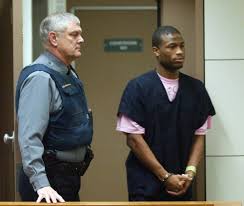
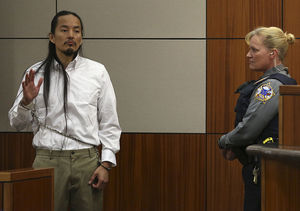
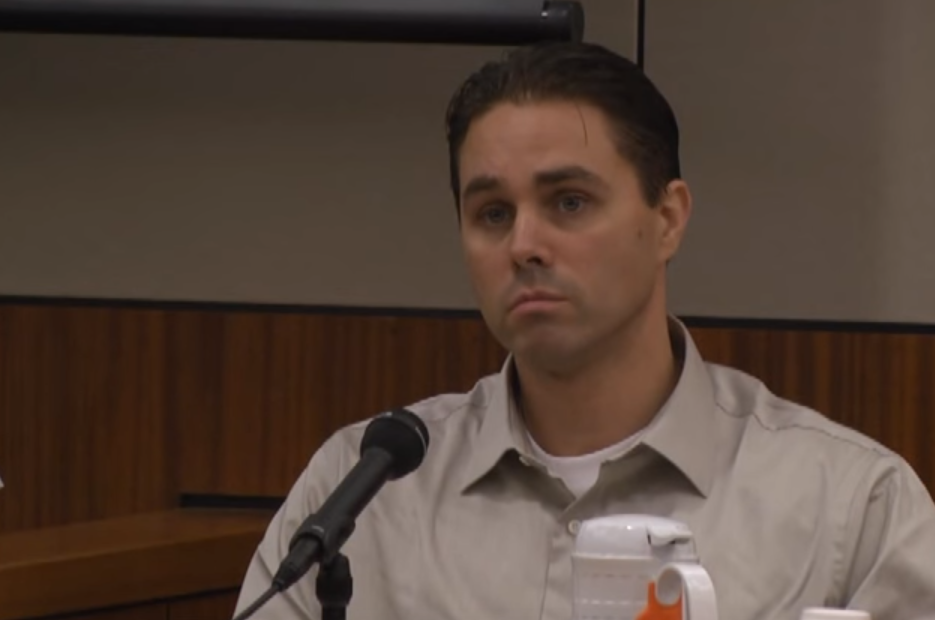
KevinCourtTwo of the Fairbanks Four, Kevin Pease and Eugene Vent, took the stand during the 11th day of proceedings. The two men spoke to a packed courtroom and recounted the events of the night of October 10th, the early morning of October 11th, and the series of interrogations and events that lead to their wrongful arrest and conviction for the murder of John Hartman,.

Pease and Vent joined Marvin Roberts at the petitioners table, dressed in street clothes and flanked by attorneys. It was clear the three were happy to see each other, but the mood quickly turned somber. Pease and Vent were chained at the waist, and barely able to lift their hands high enough to be sworn in. They are aged. Both men look old enough now to be the fathers of the boys pictured in the photographs the last time they appeared in a Fairbanks Courtroom some eighteen years ago.

Pease took the stand first and described, as his alibi witnesses described in initial 1997 police contact, the original trials, and recently on the stand again, a night spent mostly at a party across town. Pease also described his background, life in 1997, and the police interrogation.

In initial questioning about family background Pease testified that he is an orphan. His father was murdered some six months before Kevin was sent to prison. His mother passed away while he was in custody. In 1997 he was living with his mother in downtown Fairbanks and both of them were grieving the sudden loss of his father. The mood in their house, he said, was tense. Different. Kevin was spending most of his free time with girlfriend Jessica Lundeen, who had to babysit the night of October 10th. So Kevin agreed to attend a party with friends, among them Eugene Vent, Kevin Bradley, Shara David, and Joey Shank. Kevin testified, as have many others, that they remained at a party in the Bradley residence until near 2:00am, then returned to downtown. Kevin was dropped off at home. When he went inside he woke up his mom, who was angry at him for making noise, and even angrier when she saw he was drunk. In his testimony, Pease described an argument that escalated into yelling, with Pease eventually punching the wall. He took off on his three-wheeler and his mother called the police on him. It was this call that led police to bring Pease into the investigation.

Pease described riding the three-wheeler to the home of friends Conan and Shawna Goebel, who both testified to the same series of events and the police behavior during their eventual questioning.

A large amount of testimony and cross-examination was spent on Kevin’s interrogation – specifically his initial choice to lie to detectives. By the time the police picked him up late on October 12, 1997, Pease had already heard rumors that Vent had been implicated in the a serious crime and that police wanted to speak to him about it as well.

“I was scared. I didn’t know what time I came back to town, I didn’t know what time this happened to that kid, I didn’t know what time it was when I walked home alone,” said Pease, his voice cracking into tears. “I was scared.”

It was fear, Pease testified, that motivated him to lie and deny having been out drinking or driving around that night. His girlfriend Jessica Lundeen had suggested he say he was with her all night, and he did. She testified to as much just days before Pease took the stand. Much of cross-examination focused on what State Special Prosecutor described as Pease’s “big whopping lie.” Pease remained adamant that he had lied to detectives out of fear, knew right away it was a mistake when he understood the seriousness of the charges, asked for an attorney, and corrected it.

As cross-examination continued, Pease was asked if he knew a James Wright. Pease testified that he did not, but that he saw that he was aware of his reputation as a snitch due in part to the words “James Wright is a snitch” being carved into the wall of Fairbanks Correctional Center.

Bachman used this line of questioning to accuse Pease of understating his understanding of prison politics.

Pease countered that he understood but preferred not to take part in prison politics, and that it was “common knowledge” that snitches are thought poorly of in prison culture. The line of questioning was interesting in that it likely points to an upcoming snitch witness for the Sate. Perhaps they found him after reading of his snitching abilities on the prison walls.

Kevin Pease was followed by Eugene Vent. Vent was seventeen and had a blood alcohol content of twice the legal limit when Officer Aaron Ring interrogated him for nearly 12 hours. Vent eventually agreed that he “probably” assaulted Hartman. Eugene Vent’s interrogation was the focus of cross-examination by Bachman.

EugeneVentCourtVent testified that a lack of confidence in his memory due to intoxication, police insistence that his “footprints were in the blood” and fingerprints at the scene, that witnesses placed him there, and other lies police used in interrogation eventually persuaded him he could have been there.

“I was listening to everything he told me. And eventually, I just believed him, Vent said. “I was feeling terrible, guilty.”

“Why?” Vent’s attorney, Whitney Glover, asked.

“Because I believed I had done something real bad,” Vent said, breaking into tears.

Vent went on to describe in greater detail how the Reid Method interrogation he endured led him to a state of such confusion he didn’t know what happened. Although he maintained innocence for many hours, he said, by the end of the process he was confused, felt obligated to help the officers any way he could, and ultimately followed their lead in agreeing he had “probably hit and kicked” a young John Hartman, and that he “guessed” he had been with George Frese, Kevin Pease, and Marvin Roberts.

“I’m responsible for dragging Marvin and Kevin and George into this and there’s not a day that goes by I don’t think about that,” Vent said, again becoming emotional.

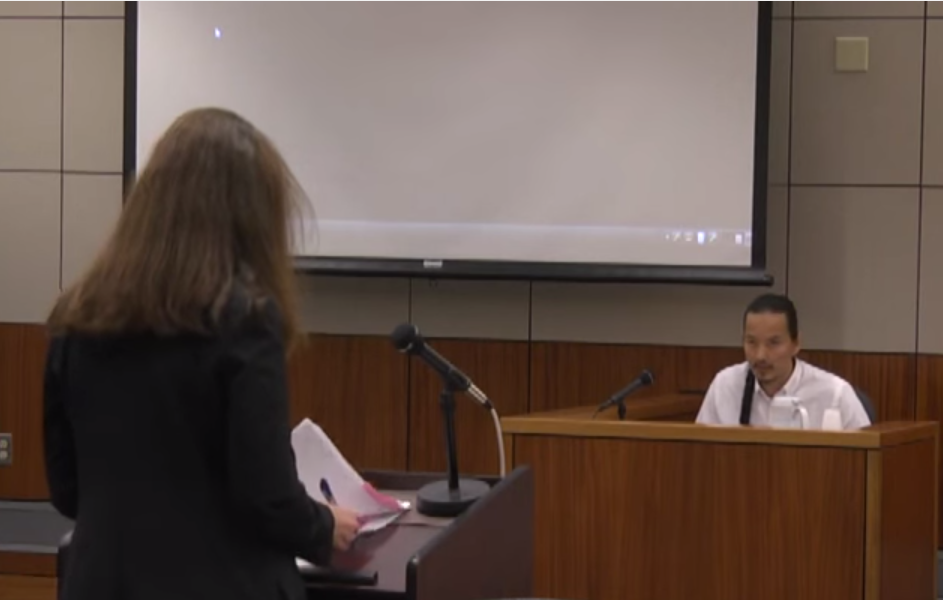
Adrienne Bachman made it clear that she expects his cross-examination to be long and continue through the twelfth day of proceedings.

Although Vent’s eventual acquiescence to the police officers and subsequent implicating statements are often touted by the State of Alaska as the smoking gun in this case, experts in false confessions have called his statements a “textbook false confession.” Experts on the Reid Method, the method of interrogation used on Vent, caution that the method should not be used on minors, people who are intoxicated, or people who have any gaps in their memory. Under any of those circumstances, of which Vent had all three, the method is known to lead to false confession.

Vent’s attorney is expected to call a false confession expert to testify as to the psychology behind Vent’s statements. Continued cross-examination of Vent and the false confession expert testimony are likely to consume the twelfth day of proceedings.

Although revisiting imperfections and bad decisions is embarrassing – discussing a decision to lie to the police, a decision as a teenager to drink, and all the small sins that surface in this case – it is necessary. Because the whole truth is that no one is perfect. The whole truth is that being drunk, poor, Native, and in the wrong place at the wrong time made this possible. The whole truth is what needs to be told, even in moments that it makes the Fairbanks Four or their alibis look imperfect, because the whole truth is that no one is perfect. It is high time for the courts to recognize the truth, for the family of John Hartman to receive the truth, and these men to have opportunity to tell it. Nothing but good will come from that.

truth

Jason Wallace Granted Immunity in Hartman Murder

devildealThe State of Alaska has offered Jason Wallace immunity in the murder of John Hartman in exchange for his testimony as a witness for the state. According to Adrienne Bachman, the Attorney General’s office simply sent a letter to all parties to the case stating that Wallace had been granted immunity and would be testifying, although the conduct of those involved hints to a more complex series of events.

“The attorney general forwarded a letter to the parties, the lawyers, that Mr. Wallace will be granted immunity for his important testimony in this case,” Bachman said.

Wallace has been implicated by many, including his former attorney, high school classmate, and William Holmes, who confessed to his own role in the 1997 beating death of Hartman and fingered Wallace as the primary aggressor. William Holmes passed a lie detector test and provided chilling but credible testimony under oath to the details of the killing. Public Defender Investigator Tom Boles testified that he would “never forget” the tearful confession Wallace made to him about having killed Hartman. High school friend Scott Davison described how Wallace confessed to him as well just days after the murder, and reiterated that although he was relieved that he came forward, believed his testimony against Wallace would ultimately cost him his life. Considering that those who have testified against Wallace believe the retribution may be death, it is likely that there are many more witnesses opting not to come forward.
jason wallacWallace currently sits in maximum security prison for stabbing a friend with a screwdriver, charges related to his part in the conspiracy that left two men dead, the interrupted plan to kill an entire family, and the murder of Teacka Bacote. Wallace beat and bludgeoned her to death with a hammer, then returned to her apartment to set her body on fire in a fully occupied apartment complex. Murder victim Mahogany Davis‘ family believes he may have killed her or participated in her murder. Wallace’s pattern of past behaviors and crimes indicate that he suffers from psychopathy and is a true danger to society. He is already serving an extremely lenient sentence because he has been an informant and testified for the state in the past. It is morally reprehensible that the State of Alaska would offer him immunity. Multiple individuals have testified that he killed Hartman in a frenzy and went on to laugh and brag about it. If any of the individuals involved in Hartman’s death were to receive immunity, Wallace seems like the last pick. He should never be out of prison. John Hartman deserves justice, and denying that in pursuit of anything in this case is not okay.

In a perfect world, Wallace would confirm his role in the Hartman killing, implicate Rashan Brown, Marquez Pennington and Shelmar Johnson as William Holmes did, the State of Alaska through the attorney general would dismiss charges and release the Fairbanks Four and charge every single one of the men who actually killed Hartman with the murder. That would be the RIGHT THING TO DO. It would also represent an illogical and sudden reversal of the State of Alaska’s position, and we think the intentions with Wallace are far more likely to be sinister.

nepotismThe attorney general for Alaska, Craig W. Richards, is our Governor’s former law partner. He did not come to the position through experience or promotion, and certainly owes his appointment to his close relationship with Governor Walker. Walker perpetually hints that he knows the Fairbanks Four were wrongfully convicted but doesn’t know what to do about it. Given Walker’s close relationship to the sitting attorney general they have likely discussed the case and options. Walker recently commented to Anchorage station KTUU, “I really am anxious to see what comes out in the testimony under oath, it’s really what they’ve been fighting for, their day in court. So for me to reach in the middle of a process and sort of influence that process inappropriately, I’m gonna wait until the end of next week and see.”

Walker has been hinting in commentary and rumors abound that he is waiting for the Wallace testimony. Based on that we can hope that Wallace gets on the stand, repeats the confession he has been repeating to others since he killed Hartman in 1997, the Governor and/or Attorney General take action, and the case is over. That would represent an absolute turnaround of the state’s position. However, we tend to see a lot of business-as-usual from the state, and no meaningful indication that we will see anything else.

Captain_ObviousIf the state tactics continue as they have since 1997 it is easy to guess how Wallace will be used. The State may not have honesty, ethics, or the law on their side, but they really shine in predictability.

Our prediction?

  • That Jason Wallace is going to provide “snitch testimony” – information given in court to bolster the case of the prosecution which is received in exchange for some kind of reward for the witness, often sentencing leniency or immunity.
  • That the State of Alaska has been in below-board negotiations with Jason Wallace directly and through his attorney and has negotiated exactly what Wallace will say for that incentive.
  • That when Adrienne Bachman sat through the deposition of Wallace and was gag-worthy sweet to the killer as he answered “I plead the 5th” over and over, effectively providing no information beyond an unwillingness to incriminate himself, she already knew what Wallace was willing to testify to in court.
  • That Wallace will not be made available for deposition to the petitioner’s attorneys.
  • That Gazewood, as the Wallace attorneys before him, has shopped Wallace’s testimony around for a while hoping to broker a deal.
  • That the State of Alaska would rather make a deal with a psychopath and set him free knowing that more people will be killed than admit they made a mistake in this case.
  • That Wallace will have very rehearsed and groomed testimony that deflects as best as possible the testimony of the witnesses who have already spoken. He will have a story that attempts to dodge every piece of information which incriminates him – a reason Holmes would lie about him, a rehearsed denial of confessing to the high school friend, a denial of confessing to the public defender, his investigator, the other witnesses, and all others.
  • That what Wallace gets out of this is immunity in this crime (already given), that he has been assured that his cooperation with authorities will help him come parole time, and that ultimately his psychopathy which put him in jail, enables him to lie convincingly and with small incentive, and will propel the violent crimes he commits when free again, will again assist him in securing minimum punishment for his crimes. That a system where bribing child killers with the offer of time, and the opportunity to kill again, is business-as-usual needs to be brought to its knees and overhauled.
  • That the state is desperate and delusional enough to think this will work.

We are sitting here hoping and hoping that our prediction is dead wrong. Perhaps the State of Alaska as had an incredible change of heart for the first time in eighteen years and are offering immunity to seek the truth not an advantage at any price. Time will tell. Whatever story Wallace tells on the stand, he would have to be very creative to outrun the evidence of his involvement. Below is a timeline of the evidence against Wallace.

  • October 11, 1997, Wallace attends a party at a high school acquaintances apartment with Bill Holmes, Marquez Pennington, Shelmar Johnson, and Rashan Brown. Epperson testimony, Holmes testimony, Duty testimony, Nutt testimony.
  • The five youth leave the party to “beat up drunk Natives,” commit a few attempted assault, but ultimately find and beat Hartman instead. Wallace goes into a frenzy during the assault and stomps the young boy to death. Holmes testimony
  • 1:30 am October 11, 1997, Hartman is beaten into brain death at the intersection of 9th and Barnette.
  • October 13, 1997, Wallace shows Holmes a newspaper story about Hartman’s death, and they see that their victim has died and that “four Natives” have been arrested. Holmes testimony.
  • October 13, 1997, Wallace and Holmes approach the others involved in the Hartman killing at school (Marquez Pennington, Shelmar Johnson, and Rashan Brown) and threaten to kill them if they ever discuss the Hartman murder. Holmes testimony.
  • October 13, 1997, Wallace confesses to killing Hartman to high school friends Matt Ellsworth and Scott Davison. Davison testimony.
  • December 2002, Wallace is arrested for murdering Teacka Bacote, attempted murder of Corey Spears, his involvement in the murder of two more men, the conspiracy to murder a family, and setting an occupied apartment building ablaze. State of Alaska v. Jason Wallace
  • Spring 2004. Wallace snitches on his co-conspirators and provides snitch testimony against them. He turns informant on many other past criminal associates. In an attempt to trade the information for leniency, he confesses to killing John Hartman to his public defender. The public defender sends his investigator, Tom Bole, to interview Wallace. He confesses again. Bole testimony.
  • September 2013. Innocence Project files a post conviction relief on behalf of the Fairbanks Four. It contains a sealed element for consideration of the court that contains “statements made by Wallace” about killing Hartman. With the assistance of attorney Jason Gazewood, Wallace fights the release of the statements for two years. Attorney Gazewood accidentally  leaks the statements to the press. Roberts, Pease, Vent, Frese v. State of Alaska
  • September 2015. Wallace is deposed and refuses to answer any questions, invoking his fifth amendment right against self-incrimination. Wallace deposition.
  • October 15, 2015. Midway through proceedings for exoneration in the Fairbanks Four case and on the eve of the State’s opportunity to present, Adrienne Bachman announced for the state that Wallace had received immunity and would be a state witness.

Although Wallace could muddy the water, it is hard to imagine coming up with an excuse for all of that. Prayers and good thoughts as always for all involved. May a desire to tell the truth for redemption and the sake of the truth strike Jason Wallace and the leadership of Alaska’s justice system. Until that day comes, may the truth ever find a way to shine through the clouds cast by lies.

Day 10 – Bootprint Exhibit from Original Trials Debunked

October 16, 2015

On the tenth day of proceedings in the Fairbanks Four bid for exoneration, George Frese again took the stand to finish cross-examination. Frese was followed by former State crime laboratory forensic expert Lesley Hammer.

Frese22Special Prosecutor Adrienne Bachman asked for early recess the previous day and to recall George Frese in the morning so she could “que up audio” to complete his cross-examination. When Frese was back on the stand for a large part of Friday’s proceedings Bachman did not play any audio, despite having cited her need to do so as the reason for recall and delay. Instead, she relentlessly asked Frese about the false confession he made to investigators and his level of intoxication that night. Frese, who had provided very emotional testimony the previous day, was very composed and clear on the stand during cross-examination. Frese testified, as multiple witnesses testified to in the original case and as he stated during all original police contact, that he drank heavily with friends the night in question and that although he can thoroughly account for his whereabouts until around 2:00 am, his memories of the last hours of the night are compromised by blackouts and extreme intoxication. During original interrogations officers capitalized on his level of intoxication, and after hours of questioning and threats from detectives that if he failed to acknowledge some involvement they would use his lack of memory to ascribe more severe involvement,  Frese eventually admitted that it was possible he had been involved. On the stand, Frese reiterated claims of innocence and rehashed the events October 10 and 11, 1997 through a prolonged and aggressive cross-examination.

bachmanvfreseBachman focused heavily on the same tactic as original investigators, insinuating throughout her cross-examination that because Frese could not account for his movements during the entire night, he could not make a claim to innocence.

“Because you didn’t know what your motive was that night, did you?” Bachman demanded.

“Because there isn’t any, because I didn’t do it.” Frese countered.

“Well, you don’t actually have a memory of whether or not you did it, do you?” Bachman said.

“I know the facts of the case, I know this boy was attacked between 1:28 and 1:33 am, and that I left my house at 1:30.” Frese replied.

Bachman also focused on the original interrogation and the statements made by Frese implicating himself.

“What you are trying to say is that I broke down and started confessing to something,” Frese said to Bachman’s leading line of questioning. “I just started agreeing to whatever they were telling me the entire time…I just started agreeing to it.”

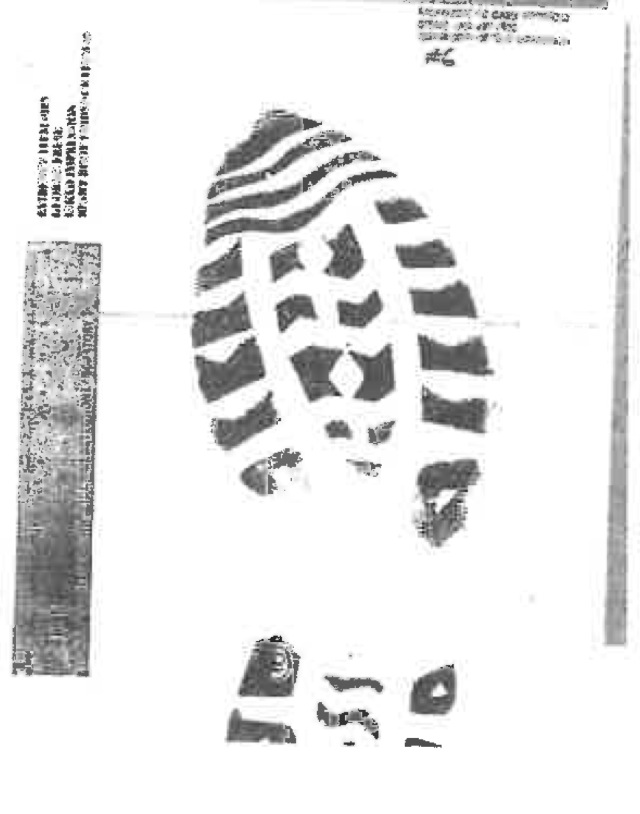
bootpost1Frese was followed on the stand by Lesley Hammer. Hammer is a forensic scientist, and expert in causative instrument forensics. Her testimony related to a court exhibit used to convict the men in their original trials. The exhibit, created not by a crime lab but by Detective Aaron Ring and Prosecutor Jeff O’Bryant, has long been in question, and reporter Brian O’Donoghue’s investigative reporting on the case unearthed significant issues with the exhibit in 2008. Hammer confirmed that the original exhibit was totally unscientific. Dr. Falico, the state medical examiner at the time of the original trials, bolstered the perceived validity of the exhibit used to obtain convictions. Hammer testified, however, that Falico did not appear to understand “even the most basic” tenants of forensic science, including the importance of scale, the elastic nature of skin and basic examination of markings, and was entirely unable to evaluate the nature of the victim’s injuries. “There didn’t appear to be some of the basic understanding of the discipline itself,” Hammer said.

Hammer went on to discuss the nature of footwear impression comparisons to injuries and her own evaluation of the case evidence. She pointed out that skin’s elasticity and the motion involved in kicking or stomping make it generally impossible to identify the causative instrument in as simple a fashion as was described in the original trials (holding a boot up to a face).

Hammer’s testimony then focused on the injuries sustained by Hartman and what caused them. She testified that the “I found no correspondence between the injuries I observed, the feature shapes of the injuries, and any of the shapes of the shoe lugs on that partial impression.”

Hammer was able to entirely debunk the original exhibit, plus testify definitively that none of Hartman’s injuries matched the footwear of the Fairbanks Four. The original prosecutor argued that the exhibit proved the injuries to Hartman had been caused by Frese’s boot, but Hammer testified that not only were the injuries not caused by Frese’s boot, they were not caused by any boot. Tennis shoe type footwear could not be excluded.

Hammer was a longtime employee of the State of Alaska Crime Lab and now owns an independent forensics consulting firm. Her testimony, much like the brave testimony of the Alaska State Troopers, represents some significant dissention in the rank and file of the prosecution’s own people. Hammer has made a long career testifying FOR the State of Alaska, which makes her testimony all the more compelling.

Kevin Pease is expected to take the stand Monday, October 19 2015, with Eugene Vent and Marvin Roberts to follow in the days afterward. The case was originally scheduled to only take a month, but as prolonged cross-examination and procedural bickering instigated by the state continue it is becoming clear that proceedings will last longer than anticipated. It is also worth noting that the State has a standing objection on record to the admission of Lesley Hammer, based on the idea that the information presented is not new, and that the exhibit was already questioned during the original trials.

The Friday proceedings were interrupted twice for closed hearings on an undisclosed matter, though likely related to the testimony of Jason Wallace. It was disclosed this week that Wallace was granted immunity and is expected to testify for the state. We will make a separate and more detailed post about the unusual developments surrounding Wallace, a man and an issue long surrounded by secrecy in this case.

Day after day, the proceedings in the exoneration efforts of the Fairbanks Four function as not only a resounding demonstration that four innocent men have been imprisoned for perhaps the most infamous murder in Interior Alaska, but also as a scathing expose of the misconduct and conspiracy on part of agents of the State of Alaska both then and now that led to the wrongful convictions. It is strange, although in the end perhaps a good thing, to see the State of Alaska continue to flounder so desperately to defend the convictions. The movements of the State, precise and exacting during the original trials, are as seemingly random and impossible to pin down as a fish out of water. Indeed, in a court where truth has been admitted, purchased witnesses exposed, and misconduct unearthed, the State does find itself in foreign territory. They are clearly accustomed to operating with less transparency and accountability. However poorly positioned the State seems now, the case is far from over, and if the past is any indication we can expect a flood of snitches, pretend science, and plenty of smoke and mirrors in the weeks to come.

Newsminer article

Day 8 – These Are OUR Streets – Alibis Return

October 14, 2015

On the eighth day of proceedings in the Fairbanks Four case, alibis returned, or appeared in court for the first time.

bookertwashingtonConan Goebel came from his home in Washington to testify for the first time in this case. Despite having seen three of the four accused that night, and his very solid police interviews, Goebel was never called to a previous trial. Goebel reconfirmed the information in his police interviews – that Eugene and Kevin had been paging him from Kevin Bradley’s house party until they left Bradley’s near 1:30am. Goebel recounted having seen Frese, drunk but uninjured, late in the night, as well as Vent. Kevin Pease slept at Goebel’s house that night. Goebel discussed the police interviews at length, describing how he was threatened and bullied. “I realized that what I said really didn’t matter, that there was something he specifically wanted me to say, and if I didn’t I felt like he was threatening me,” Goebel said.

Goebel remains one of our favorite witnesses because he is a bit of an anomaly. The Reid Method of interrogation, by and large, works on almost everyone. Very occasionally it simply does not work, and creates this emperor’s new clothes situation. Conan Goebel’s police interviews demonstrate that the method is failing to work on him, and he remains very clear. His testimony was simple and clear as well – he knew that Eugene Vent and Kevin Pease were at the Bradley residence until between 1:30-2am. He saw George Frese after 3am and he was not injured. Kevin Pease slept at his house and likewise there was no indication he had been involved in a fight. When Detective Aaron Ring interviewed a teenage Goebel he threatened him, threatened his family, turned the tape recorder on and off, and said, “if you don’t tell me what I need to hear, I’ll see to it that you are arrested,” as well as insinuated that Goebel’s baby sister and mother could come to harm.

(Read portions of Goebel’s police interview HERE)

Kevin Bradley, now a civil engineer based in Montana, corroborated the other alibi testimony and confirmed that Pease and Vent had spent the critical hours of the night at his home. Bradley’s parent’s were away for the night, and the teen hosted a small party. He confirmed that Joey Shank, who testified the day before that he had driven Vent and Pease home from the party near 2:00am, was sober and driving Bradley’s mother’s vehicle. He also described being terrified at questioning and threatened by police officer Aaron Ring, and that the police were turning the recorder on and off.

Shawna Goebel, sister to Conan Goebel and attendee of the party, was fourteen in 1997 and testified to the details of the night as well and confirmed that Vent and Pease were at the Bradley party during the time the Hartman murder was committed. She described the threats and terror she encountered being questioned alone in her bedroom with no parent present.

Christy Moses testified to the same effect – the threats of investigators, the traumatic experience of being threatened and attacked by officers alone at the age of sixteen, without a parent, and confirmed the details of the night.

The witness testimony regarding police misconduct was corroborated by troopers McPherron and Gallen, who conducted the 2013-2015 investigation into the original case and convictions, who in earlier testimony confirmed that it appeared the confirmed that the officers turned tape recorders on and off, interrogated and threatened alibis instead of using standard questioning practices.

housepartyArlo Olson also testified in person at the state’s request, but maintained that his original testimony had been both entirely fabricated and the result of pressure and threats from Officers Aaron Ring, Jim Geier, and Prosecutor Jeff O’Bryant. Despite the prosecutor’s many attempts to get Olson to say he had been threatened by the Fairbanks Four or their supporters, he maintained that he had not.

Cross examination accomplished little except to reveal that the witnesses did not have precise times, but estimations – ie., “between 1:30 and 2:00 am” instead of “1:42am.” The witnesses maintained that their timeframes, given in 1997 and reiterated under oath in court, were honest and accurate.

All witnesses testified that they were with the men accused at the time of the murder and that the police threatened and bullied them when they came forward.

We hope that seeing these witnesses can underscore their humanity to the community of Fairbanks. These are not “Natives lying for other Natives” like Spartacus, as original prosecutor Jeff O’Bryant argued in the original trials. These are regular people – engineers, waitresses, counselors, homemakers, teachers. These are citizens of the United States of America who, as children in 1997, had their most basic rights denied and were threatened when they stood up against injustice by accident. Today they are adults who understand more about what this means, but they are no more believable. They should have been seen and heard in 1997, and they should have been protected from men who sought to use or harm them. Eighteen years of being dismissed, not seen individually but as a stereotype or group, and eighteen years of attack have left each of them somehow just as kind, calm, and willing to speak up as they were as children. Our community owes them an apology, and we owe the next generation of children better.

Day 8 News Coverage:

Testimony Focuses on Night of Killing

Listen to Testimony – NPR Coverage

Day 7 – Eyewitness Expert and Alibis

October 14, 2015

Alaska InnocenceThe seventh day of testimony in the Fairbanks Four proceedings featured the completion of the trooper testimony and several witnesses who also testified in the original trials. The Fairbanks Four were represented by the Alaska Innocence Project, Office of Public Advocacy attorney Whitney Glover, and the renowned international firm Dorsey and Whitney, who have acted with amazing generosity and dedication in their pro bono representation of George Frese. As this case unfolds it is important for readers to understand that an eighteen year old wrongful conviction case with no DNA and heavy political opposition is about as close to mission impossible in the legal world as an attorney can get, and every day of testimony demonstrates a level of quality and dedication in the work of these attorneys that deserves admiration. Because of this work, as in previous days, the proceedings heavily favored the alternate suspect theory and bolstered the evidence for the innocence of the Fairbanks Four.

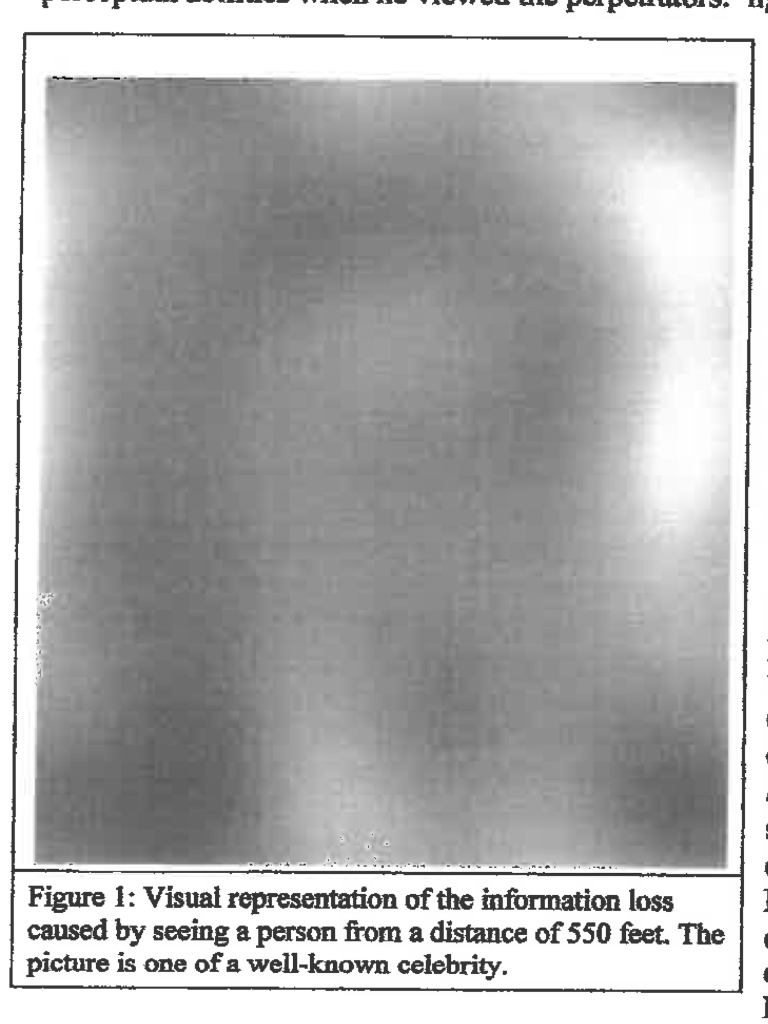
Well known celebrity as they would be seen from 550ft

Well known celebrity as they would be seen from 550ft. Want to see the original? click HERE

Dr. Geoffrey Loftus, a University of Washington psychology professor, testified in the 1999 trial of Eugene Vent. During that trial he testified that a typical person would not be able to make an eyewitness identification from 500 feet away, as Arlo Olson claimed he had in his original trial testimony. Olson has since recanted multiple times and testified during these proceedings that his fabricated testimony was the brainchild of Officer Aaron Ring and Prosecutor Jeff O’Bryant, memorized by Olson at their request, and given under pressure and threats. In the Vent trial, Olson’s testimony trumped Loftus’, and Vent was convicted. In 1999, Loftus testified based on what he called “common sense,” but his testimony did not result in a not guilty verdict. This loss inspired Loftus to conduct more detailed research into visual perception in relation to distance, and he returned to court these many years later with significant peer-reviewed studies and empirical evidence that confirmed what in the original trials many, including Loftus, believed common sense should have confirmed on its own in 1999. Loftus is now responsible for the leading research in the world into the way factors like distance and light impact visual perception. In short, Loftus did millions of dollars worth of research into the concept that has long brought the Olson testimony into questions – how far can the human eye see well enough to identify someone? Loftus’ findings confirmed that a person with normal vision could not identify anyone from 550 feet away, and likewise could not do so in the dark.

Loftus, who has testified at nearly 300 criminal trials, endured hours of disjointed questioning under cross-examination. The premise of cross-examination carried out by Bob Linton on behalf of the state was difficult to find a thread or strategy in but in that it had a theme was twofold – the state argued that it may be possible to identify someone without seeing their face, and that Loftus was biased, or at least not considering elements of the case not related to eyesight. Given that Loftus is specifically an expert on the limitations of human sight and any other elements of the case are not related to his testimony, he understandably was only familiar with eyewitness portions of the case, but the State asked about his familiarity with much of the original trials. Loftus indicated over and over that he was not familiar with the rest of the case, and was there to testify about the abilities Loftus had focused too much of his research and testimony on the face, and that it may be possible to identify someone from that distance because of recognizing body characteristics. Loftus countered that factors like arm length or build are not sufficient for identifying an individual. The state also argued that Loftus did not have testimony specific to Olson – Loftus acknowledged that his research and testimony focus on the human eye, and that he did not know if Arlo Olson had unusually good eyesight.

Two notable alibis also returned to the stand. Joey Shank confirmed the testimony he gave during the original trials. Shank was the driver of the car that drove Eugene Vent and Kevin Pease from a house party across to downtown Fairbanks and appears on Vent and Pease’s timelines. Shank was sober in the night in question and long before police had determined a time of death for Hartman provided a solid alibi for Pease and Vent from late evening to after 2:00 am. These many years later he affirmed is certainty on the time and that he was with both Pease and Vent across town when Hartman was killed.

Frank Dayton, who was assaulted the same night Hartman was killed, and whose assault Olson claimed to have seen from some 550 feet away testified that he was unable to see his attackers. His testimony reaffirms his account, as summarized in an earlier blog post.

The state objected to the admission of witnesses who had appeared at the original trials. Generally, the State of Alaska has largely objected on procedural grounds to the admission of evidence, experts, witnesses, and information in general on the case. The state made clear in opening arguments that they did not even want the hearing happening now to proceed, despite their original position that they were in favor of the hearing, because although they were certain the convictions were just fine felt the community needed closure.

In the end, four witnesses took the stand on the seventh day of litigation. Trooper McPherron completed his testimony. McPherron was one of the two cold case troopers who worked under Bachman in the case and ultimately came to court to verify that she hid information from them, instructed them not to collect exonerating evidence, and terminated the investigation before its end, apparently displeased that their investigation turned up information indicating the four are innocent and the alternative suspects are guilty. Joey Shank confirmed that he was with Pease and Vent across town when Hartman was killed. Frank Dayton reaffirmed his testimony. Eyewitness expert Loftus confirmed that the Olson testimony was a fabrication.

Sometime during all of this testimony, less than a mile away from the courthouse, supporters of the Fairbanks Four held a fundraiser and raised $17,000 for the Alaska Innocence Project selling Indian Tacos. Every time the State of Alaska makes it clear that they simply do not feel like dealing with wrongful conviction, the truly amazing people of Alaska appear in droves to make sure they will have to face the innocent now and in the future. If you would like to join them in their beautiful and humbling efforts you can donate here online or here. Or, light a candle, take a walk, appreciate things, think good thoughts, do something nice for someone else, keep an open mind, question the powers that be, vote, kiss a baby, adopt a dog, visit someone lonely, smile, remember someone who felt forgotten – we will gladly accept any of these in-kind donations because we depend on people who let the darker parts of life remind you to shed some light in this world.

Day 6 – State Cold Case Troopers Turn on Prosecution

October 12, 2015

troopersThe first witness in the court proceedings supporters and attorneys believe will free the Fairbanks Four was William Holmes, who calmly took the stand and confessed to the crime for which the four men have served the last eighteen years. He was followed by a litany of powerful witnesses who bolstered his claim. It was difficult to imagine a witness that may prove more damaging to the state’s case than Holmes. But perhaps the most powerful testimony, and the testimony most damning to the state’s insistence that the Fairbanks Four are guilty may have come today from two cold case detectives who set out to investigate the case on behalf of the state.

Troopers Gallen and McPherron worked directly under prosecutor Adrienne Bachman from late 2013 until their premature dismissal in January 2015. Both took the stand today and provided absolutely damning testimony. They disclosed that their investigation turned up serious defects in the original investigation, significant evidence to support the claim that it was William Holmes, Jason Wallace, Rashan Brown, Shelmar Johnson, and Marquez Pennington who killed a young John Hartman in 1997 – the very crime for which the Fairbanks Four were convicted and have maintained innocence for and fought 18 long years to bring back to court. Frese attorney Jahna Lindemuth asked Trooper McPherron if their investigation produced any evidence that the Fairbanks Four were present when Hartman was assaulted, McPherron simply answered, “No.”

But the two investigators testimony about the deficits in their own investigation cast harsh light onto the current approach and practices of the State of Alaska and the prosecutors who are defending the faulty convictions. Gallen and McPherron revealed that Special Prosecutor Adrienne Bachman instructed them not to collect a specific and exonerating statement from a witness who had heard a confession from Marquez Pennington, a man named as one of the fellow Hartman killers by Holmes. They also testified that prosecutors and police hid the Torquato memo and the fact that they had received and failed to respond to a confession from Holmes in 2011. Bachman, they claimed, refused to hand over emails between herself and Officer Jim Geier, a man heavily involved in the original investigation as well as alleged efforts to downplay or hide significant exonerating evidence that emerged from the time of the initial investigation through 2015.

A particularly cringe-worthy exchange between Bachman and one of her former investigators occurred when the trooper described how he, Bachman, and McPherron had tested the Olson testimony by attempting to identify each other from the distance Olson described in his testimony. Gallen stated that they had been unable to distinguish even the most basic identifying details of appearance at that distance. Bachman remarked that the troopers failed to indicate in their report that she had been able to make an ID from that distance.

“You did not indicate that to me,” Gallen replied.

Bachman only scoffed in response, and Gallen continued, “all you said was ‘O my God, oh my God, and I didn’t know what you meant by that.”

Gallen and McPherron also testified that they were removed from the case before their investigation was complete. Their demeanor toward Bachman was palpably hostile, and accusations of inappropriate conduct on behalf of the special prosecutor were peppered amongst the testimony condemning the convictions of the Fairbanks Four.

liar2Bachman had indicated during opening statements that the state’s investigation confirmed the original convictions. Testimony from her own investigators today not only failed to confirm that, but undermined absolutely every facet of the case, from the integrity of the original convictions, the police work that led to them, the prosecution of the original cases, bolstered the alternate suspect theory, and cast significant doubt as to the intention and honesty of the State effort led by Bachman to defend the convictions. These should have been the state’s star witnesses, and instead they proved catastrophic to the state’s case. The local reputation of Alaska State Troopers is indeed one of independence, and in general they are locally perceived as more trustworthy than other branches of the Alaska justice system. Today’s testimony certainly affirmed that the troopers reached their own conclusions without inappropriate consideration to the politics of the case, a welcome first for supporters of the Fairbanks Four.

There remains absolutely no indication that the State of Alaska has changed their strategy, and it appears that they will move forward with attacking the post conviction relief proceedings based on technicalities and hopes to declare much of the exonerating evidence inadmissible. Alaska State Governor Bill Walker has remained conspicuously silent as the State spends untold millions on a conviction even their own investigators believe is wrongful. Meanwhile, two known child killers are free on the streets of Fairbanks, presuming they have not fled, which may be Alaskan’s best hope for safety from the men, and there is no indication whatsoever that the State plans to pursue them despite the growing mountain of evidence that they committed one of the most heinous crimes in the history of the “Golden Heart City.”


Read this story in our local news!

Troopers Refute Prosecution Claims

Day 5 – A Star Witness Recants

October 9, 2015

The last day of the first week of proceedings in the Fairbanks Four case featured critical witness Arlo Olson recanting the testimony he gave at all three of the trails that led to the convictions now in question.

The importance of Arlo Olson’s testimony in the original convictions of the Fairbanks Four is best described by the prosecutor who relied so heavily upon it:

Simply put,” Jeff O’Bryant told jurors, “if Arlo didn’t see what he saw, and you throw out some of the state’s evidence, the state doesn’t have a case. No doubt about it.”

Olson himself confirmed that he did not see what jurors believed he saw, and that in fact he would not have been able to identify anyone.

“No, it was far. It was dark,” he said, “I was drunk.”

Marvin Roberts from 300 feet away, a photograph taken 10/12/13 at McKenzie Point Correc

Marvin Roberts from 300 feet. Olson identified him from 550 feet away, but now claims that testimony was fabricated.

Jurors from the original trials have described in press interviews how heavily they relied upon Olson’s testimony to reach a verdict. Yet, the testimony on which four men were convicted of a brutal murder has come under significant scrutiny for many years. In the original trials, Olson claimed to have seen all four men together that night, and witnessed them commit an assault against Franklin Dayton. Olson claimed to have seen this from 550 feet away, drunk, in the dark, even though the crowd of people he stood among saw nothing of the sort. The testimony itself was predicated on the idea that one lone person in a crowd had been able to see for a distance and in conditions that greatly surpass the known limitations of the human eye, and the details of the testimony were equally suspect. Olson testified from prison on a videotaped deposition that his original testimony had been fabricated, and coached by Officer Aaron Ring and prosecutor Jeff O’Bryant.

Olson described being interviewed by Officer Ring, and testified that the officer slowly shaped a story to fit the case, supplied him with details, took him to the police garage to see Marvin Robert’s car, and only recorded an interview once the story had “shaped up.” Investigative notes created by Officer Aaron Ring confirm some aspects of Olson’s account, including the trip to the garage and the only partially recorded contact. Olson claimed to have been both afraid and persuaded by the officer’s assurance that the men were guilty. Olson went on to describe how he would sit in the D.A.’s office to practice and memorize the testimony.

“I kept memorizing it and memorizing it and after a while, you start believing it,” he said.

Despite the State of Alaska’s original position that the Olson testimony was critical, there is no indication that it has impacted their strategy of rigorous defense of the original convictions. Under cross-examination Olson largely held his head down and answered “okay” or “I don’t know.” During the deposition he confirmed that he is on medications and struggles with mental illness.

We have long maintained that Olson’s testimony was false, inappropriately influenced, and came from a troubled young man. His testimony, unsurprisingly, confirms all of that.

Arlo Olson was followed by testimony of public defender investigator Thomas Bole and former public defender investigator Richard Norgard. Bole recounted how in 2004 Wallace’s public defender sent him to see Jason Wallace, incarcerated at FCC in connection with the beating death of a young woman, the brutal stabbing of another man, arson, and a conspiracy to take over a drug ring with partner William Holmes that culminated in the Christmas Eve murders of two other victims. When Bole interviewed Wallace, the inmate confessed to the killing of John Hartman. Bole described Wallace as extremely emotional and related how the inmate broke down in tears repeatedly.

Thomas Bole, 2015

Thomas Bole, 2015

The investigator heard and believed the claims, and according to his testimony was burdened by the information but also unable to come forward, constrained by rules of confidentiality. Bole ultimately discussed the Wallace confession with fellow investigator Richard Norgard, a public defender’s investigator who would eventually go on to found the Alaska Innocence Project. It was Norgard who passed the Bole account to the Alaska Innocence Project, sparking a series of sealed and secret filings, hearings, and a long legal debate over who broke the confidentiality owed to Wallace, whether it mattered, and most importantly, whether or not the information would ever be admitted to a court of law, or if it would remain forever sealed and secret. The statements of Wallace were ultimately revealed through an accidental leak by Jason Wallace’s attorney Jason Gazewood, published by the Fairbanks Daily Newsminer, and republished here. The publication of the statements, according to Judge Lyle, for all practical purposes broke the court seal, and allowed the testimony of Bole and Norgard to be open in light of the breach.

Attorneys for the State attempted to dispute the testimony of Bole based, in part, on the psychology theory of confirmation bias. The idea of confirmation bias is that human beings have a tendency to inadvertently seek confirmation of their preexisting notions and ignore contradictory information. Confirmation bias is likely to have impacted many involved in the original case, but did not make logical sense when applied to Bole. The theory is not applicable in Bole’s situation, as there is no indication that Bole had any preexisting notion to confirm when he walked blindly into an investigative interview with Wallace in 2004. The line of questioning baffled Bole, who reiterated that he hadn’t “known Jason Wallace from Adam” when he went in to interview him. “There is the possibility, sir, is there not, that when you spoke with Wallace you heard what you wanted to hear?”

Bole appeared momentarily speechless, shook his head and laughed in apparent disbelief, and said, “No.”

“Not possible?” Bachman repeated.

“No,” said a stunned Bole. “Not possible at all.”

“Jason Wallace told me what he told me, and I am never going to forget that,” Bole stated.

Under continued cross-examination Adrienne Bachman for he State of Alaska asked Bole whether he feared for his career in light of the fact that the now disclosed statements made by Wallace were subject to confidentiality. He immediately confirmed that he did fear for his career, but said that he was ultimately glad that the information had come out, as it weighed on him.

Amid many procedural losses and victories, depositions and examinations, there was the weight of a terrible secret lifting from many shoulders this week inside the Fairbanks Superior Court. we applaud all who have courageously told the truth in this case, especially those who did so in fear for their safety, their careers, of humiliation and more. Courage is not the absence of fear, but bravery in the face of that fear, and it took real courage to do the right thing in this instance.

Some News Links:

Arlo Olson Says His Account Was Fabricated

Fairbanks Four Trial week in Summary

Day Four – Scott Davison vs. Adrienne Bachman

October 8, 2015

Scott Davison, Newsminer Photo

Scott Davison, Newsminer Photo

The fourth day of proceedings in the Fairbanks Four case focused largely on the testimony of Scott Davison, who testified that Jason Wallace confessed his role in the Hartman killing just days after the murder to Davison and another student.

According to Davison’s testimony, he and a friend were sitting in a car in the Lathrop High School Parking lot just days after Hartman was murdered when Wallace jumped in and the three ditched school to smoke weed. When they were parked near the bowling alley a few blocks away, Wallace produced the local newspaper and told Davison and driver Matt Ellsworth that he and his friends were the ones truly responsible for killing Hartman.

Davison talked about his struggle to come forward, and that he believed Wallace’s threat to kill him if he did, then and now. In previous videotaped deposition, Mr. Davison said he felt blessed that the Innocence Project had tracked him down and allowed him to unburden himself of a secret that had tormented him for years. Davison  also outlined other attempts to come forward, most notably when he disclosed the Wallace confession to Officer Avery Thompson, who failed to record only that portion of the interview and did not pursue the information. Thompson blowing the information off, Davison said, was discouraging.

Officer Thompson took the stand briefly and denied much memory of the Davison statements, but came up stammering when the Fairbanks Four counsel produced a string of emails between he and his supervisor (as well as original investigator) Jim Geier to counter his claim that the one-time conversation was never expanded upon. He defended the failure to record the interview its entirety.

Davison’s former girlfriend and mother of his children took the stand as well to confirm that Davison had told her about the Wallace confession during their relationship, which spanned the late 1990’s and early 2000’s.

During cross-examination, State prosecutor belabored Davison’s inability to remember small details of his day or life in 1997 – how many credits he was taking that semester, for example, or small inconsistencies in his story – in one interview he described a man he confided the confession to as a friend, in another he described the man as an acquaintance. Davison defended his inability to remember such distant minutia, stating simply that perception is like that – that he had forgotten small details of the day but that Wallace’s confession was “tattooed into my mind.”

Bachman has previously attacked Davison from all angles, including rather dishonestly in the initial state response to the post conviction filing, and during questioning Davison was frank at his distaste for her tactics. “How is that relevant?” he asked when questioned about his children. He was consistently vocal about her questioning, and at one point when referring to a previous meeting with Bachman he stated that he hadn’t recognized her because she “had her nice face on” then. Judge Paul Lyle had to quell laughter from the public at the remark. In the end, Davison acknowledged his inability to remember some details, but was adamant about his testimony regarding the Wallace confession.

“I am not lying. He confessed to me.” Davison reiterated.

Judge Paul Lyle is taking the approach of hearing everything and considering admissibility when proceedings finish. This leaves his decision solidly unpredictable, as it is possible that any of the witnesses will have testimony excluded from the decision. However, for the time being it allows for the testimony to be heard and as such become public, and Davison proved a powerful addition to the discourse.

A few links for news coverage:

Newsminer

Day Three – Assaulted Man Comes Forward, Wallace Pleads the 5th

October 7, 2015 –

SHpostergrayOn the third day of the legal proceedings which the Fairbanks four believe will lead to their exoneration, the court heard from witnesses who corroborated the Holmes account that he met up with Rashan Brown, Shelmar Johnson, Jason Wallace, and Marquez Pennington, and that the five went on from there to fatally assault John Hartman, from the elderly Robert John who was assaulted by Holmes, Wallace, Brown, Pennington, and Johnson the night in question, and viewed the Wallace deposition, where the convicted killer invoked his right against self-incrimination on nearly every question.

The first witnesses all discussed the events of the high school party where Holmes and the others met up. Regent Epperson testified that she had thrown the party in her mother’s apartment. The party was typical high school fare – with a parent away on a business trip, high school students flooded in and out of the small south side apartment. Epperson denied that Holmes would have been at her party, as she distinctly remembers disliking him for dating two girls at once (although he did not begin dating either of the girls named until some months later) but acknowledged that he could have been in the other room our outside. Two of Regent’s part guests confirm having seen Holmes at the party.

Jennifer Nutt placed both Holmes and Brown at the party, additional witness Phil Duty placed Holmes, Wallace, Brown, and Johnson there. One small detail that is confirmed across witnesses are the undergarments of Rashan Brown, which apparently attracted a great deal of attention. According to Epperson, Holmes, and Duty, Rashan Brown was extremely intoxicated and while he was on the floor his leopard print underwear were visible to other party goers. This was a source of great amusement for the teenager, and is a detail some eighteen years later that remains consistent and fresh.

The Fairbanks Four counsel elicited significant information about the departure of the maroon ford tempo Holmes was driving and claims in his confession was the car used in the assault of Hartman. Philip Duty testified that he wanted to catch a ride with Holmes, but wasn’t able because the car was full. They were, according to the Duty testimony, “riding five deep.” He was able to identify Holmes as the driver, and the passengers as African-American men. The witness testimony confirmed the presence of Holmes and the others he named on the night in question, and placed Holmes leaving with a full car. Bachman, special prosecutor for the State of Alaska focused on the lack of time-specific information. It is absolutely the case that most of the witnesses can testify to the order of events, confirm the events and the date, but eighteen years later are not clear on time.

The party-goers were followed by a feeble and ailing Robert John, an elderly man who persisted through clear physical discomfort to relay the assault he suffered on the same 1997 night that Hartman was killed.

Before we knew that Holmes would confess, had heard his name, knew who really had killed Hartman, or any of the details which have now become central to the case, we knew that there had been a significant number of similar crimes committed that evening. One of the assault victims was Robert John, who was attacked outside Past Time Card Room in Fairbanks. John’s assault was witnessed by a man named Raymond Stickman, who did not know who John was, but reported the attack to Fairbanks Police. In his police statement, Stickman described an “older” Native man attacked near the card room by four African-American youth. He described their car as a four-door full size car, perhaps a Ford.

Robert John testified that three African-American youth attacked him, hitting and kicking him, but ultimately retreated when he fled for the card room. In Holmes’ confession he described an identical assault, and described how as they drove away the group saw “twenty drunk Natives” down an alleyway, and joked that had they chased the man into the alley they would have “got their asses whooped.” Past Time Cards was next to a long alley, and it was into that alley and Past Time cards that John escaped.

Jason Wallace, 2004

Jason Wallace, 2004

Jason Wallace, implicated by his own 2003 confession and the 2011 and 2013 confessions of associate Bill Holmes, made his debut as a witness in the case as well. A videotaped deposition of Wallace showed the man blithely answering various versions invoking his fifth amendment right against self-incrimination. He did answer questions unrelated to the Hartman crime, including confirming that he is in prison now after bludgeoning a woman to death with a hammer, driving across town to stab a friend with a screwdriver many times, then returning to the first crime scene to light to woman’s body and fully occupied apartment complex ablaze. The only thing that was made clear by Wallace’s answers to the questions in deposition was that Wallace cannot answer any questions about the murder of John Hartman without incriminating himself, which bolsters the argument that he is criminally responsible for the killing.

liar2The day’s proceedings ended with multiple requests from the State of Alaska to suppress testimony regarding Wallace’s 2003 confession to his public defender and the public defender’s investigator. Judge Lyle struck down the effort, citing the leaked information as an obvious breach of sealed proceedings, and reiterating his desire to consider admissibility only after hearing information in the case. Judge Lyle also declined to keep testimony of the public defender and the public defender’s investigator closed, citing the same reasons.

“I couldn’t stop the press from publishing what 18,000 people had already seen. This information is out in the public, and if the only place it cannot be public is in this courtroom, in this case, where it’s relevant, then there has to be something wrong with that law,” Lyle said.

Adrienne Bachman, on behalf of the state, cautioned the judge that he should warn the witnesses about their potential criminal liability should they choose to testify. Judge Lyle challenged Bachman to validate the threat with either law or through the constitution, and she was unable to do either. So, to clarify, Bachman made a thinly veiled threat of prosecution toward these witnesses once they were admitted against her wishes, despite clarity on their testimony not being illegal. If that doesn’t sound familiar, revisit any of the original witnesses who gave testimony against the state’s interest and were threatened with criminal prosecution. It is a trick, but not a new one.

The prosecution’s theory is that the Holmes confession is entirely fabricated. For this theory to hold water, that would mean a lot of people secured a time machine and went back to 1997 to fabricate corroborating details and police reports to match the Holmes account. The petitioner’s attorneys continue to argue steadily and convincingly that George Frese, Eugene Vent, Marvin Roberts, and Kevin Pease are, as they have claimed to be since their arrests, innocent of the murder of John Hartman, and that William Holmes, Rashan Brown, Shelmar Johnson, Marquez Pennington, and Jason Wallace are responsible for the crime. The proceedings to present the evidence for each theory will continue until the end of October, and the ultimate outcome will rest in the hands of Superior Court Judge Paul Lyle.

Day Two – A Prison Guard Bolsters an Inmate’s Confession, State Denies Courtroom Access

October 6, 2015 –

During the second day of the Fairbanks Four hearing, two witnesses and one argument over the right of the petitioners to attend proceedings dominated the day.

torquatoCalifornia Prison employee Officer Torquato and his supervisor’s video taped depositions were played in the courtroom. Torquato is the correctional officer, working as chaplain and educational officer in 2011, who first alerted authorities to Holmes’ involvement in the Hartman murder. Holmes confessed to Torquato, but vowed he would never name names or come forward with the story. Torquoato described in his testimony attempting to persuade Holmes to come forward to no avail, then seeking the guidance of his supervisor. Both correctional officers remember writing out the Holmes account and sending it to Fairbanks Police Department, after first making contact with officer Nolan there. The FPD ultimately did nothing with the confession. Torquato further described how he encouraged Holmes to come clean over a period of months, and how eventually Holmes wrote out his confession and sent it to the Alaska Innocence Project.

The two men, uniformed in khaki, spoke matter-of-factly about the Holmes confession and the events that followed, although at one point Officer Torquoato became more emotional in explaining his motivations for taking action, and that he could not live with the idea that four innocent men were in prison. The officers were a stark contrast to the law enforcement community in Alaska, who have roundly denied even the potential existence of wrongful conviction, and their testimony was believable. Adrienne Bachman objected to admissibility premised on hearsay, but Judge Lyle overruled her objection, reiterating that he would take in testimony and determine later which portions he was able to rely upon in his decision.

The correctional officer’s depositions served to bolster the testimony of Holmes, who took the stand the previous day to testify to his role in the 1997 murder for which the Fairbanks Four have been imprisoned for nearly 18 years.

The Fairbanks Four attorneys also focused on refuting the State’s claims that Holmes came forward to enact revenge on Jason Wallace. Holmes and Wallace committed not only the Hartman murder together, but also four other killings, and ultimately Wallace took the stand against Holmes to receive leniency in his own charges during their respective trials. Judge Lyle appeared to agree with the Fairbanks Four’s counsel that Holmes did not appear to have anything to gain, and had he been interested in revenge would have taken the opportunity during their murder trials.

A procedural issue which has ignited outrage amongst supporters of the four men was also prominent in proceedings. Superior Court Judge Lyle had previously ordered the State of Alaska to transport George Frese, Kevin Pease, and Eugene Vent from their prisons hundreds of miles away to the local jail for the evidentiary hearing. The state did so but refused to absorb the cost of transporting the men the few miles from the jail to the courthouse during proceedings and keep them there under guard. After being pressed for a dollar figure associated with the men attending their own exoneration proceedings, the State supplied the figure of $500 per man per day, for a total of $1500.00 per day. The community of Fairbanks, outraged at the idea that individuals were being prevented from attending the proceedings which would determine their future, raised nearly $10,000.00 in a matter of days to help the men appear in person.

John SkidmoreWhen attorneys for the men revealed that the money for them to attend had been raised, John Skidmore with the Alaska Department of Law initially stammered over the phone from his Anchorage office, then asked for time to determine a response. Shortly thereafter he announced that in light of the defendants “having funding” the total cost had been raised to $4,800.00 per day, that the men would be guarded by two troopers a piece, remain handcuffed, and that the troopers would be flown in from Anchorage each day and flown back, despite there being nine designated Judicial Services troopers in Fairbanks. In addition to the outrageous and more-than-tripled dollar figure, the State went on the say that to meet their own demands would be to taxing and that they did not want to do it all. John Skidmore is a favorite lackey of the state, and is pictured above in a Alaska Daily News photo explaining a 2014 missing-drugs-scandal where he neither confirmed nor denied anything with remarkable adeptness at saying a lot of nothing and taking no accountability, a party trick he repeated for the October 6th proceedings.

In his ruling, Judge Lyle acknowledged the importance of the request and explained that it was outside the power of the court to order the state to bring the men to court. He was apologetic as he denied the motion for the men to attend.

Although supporters of the Fairbanks Four are outraged by the transparent and absurd effort to keep the accused out of court, and it is indeed outrageous, we have resolved to be grateful. The Alaska Innocence Project was not awarded a Department of Justice grant that they have depended on as their major source of operating funds. The State of Alaska’s rather disgusting attempts to dodge facing the innocent in court should be a motivation to us all to be sure they face the innocent in court over and over. The $10,000 raised to send the men to court will now be donated to the Alaska Innocence Project, and we hope to triple that figure by the end of the month. The answer to darkness must always be light. So, thank you Ms. Bachman and Mr. Skidmore, together you have inspired us to make sure you continue to face the innocent. Next time, we will be prepared to assure that involves looking them in the eye.

To donate to the fund to support the Innocence Project CLICK HERE! If everyone who saw this post gave just $1 we would have $30,000 in a matter of a few days.

Below are a few links to coverage of day two:

Newsminer – Judge Denies Motion for Attendance

KTUU Day Two – VIDEO