
*The third installment of a three part interview with the Fairbanks Four. A fund exists for the men and can be donated to HERE.
The last chapter of the Fairbanks Four story has only just now begun. This is the beginning of ever after, where George, Eugene, Marvin, and Kevin have the freedom to chose what comes next. Life without bars is new to the men, who discuss both the joys and challenges of life in a whole new world.
“You are waiting so long for freedom you are ready for it every day,” Eugene says. “But, you’re really never ready. You can imagine it but there’s no way to know what to expect.”

Newly licensed driver Kevin Pease
Kevin just got his driver’s license, and shows it to George as he speaks about some of the hardships of adjusting to life outside.
“One big thing, that’s a hard thing, is the generation gap, ” Kevin says. “There is a whole new generation of people that have been born and grown up since we went away. Everyone I knew is older, they are the adults. I go to jail, and I was a teenager. It’s almost like arrested development. I used to think of aging as the passage of time, but it isn’t that. Aging is experiences. My peers have kids, families, jobs, car payments, relationships that happened and ended, careers, bills, life, and I feel like we weren’t allowed to have experiences. We didn’t learn from these experiences because we didn’t have them. So we are almost forty and part of me feels that and part of me is still nineteen years old. When I left we were the kids. Now we are the parents of the kids. We have moved up this like whole generation, and nothing prepared us for that.”
Marvin notices the adjustment most when interacting with people as well.
“The hardest part of freedom for me is interacting with people,” Marvin says, “I may make it look easy, I try to, but it’s really difficult. I have a lot of anxiety. I am so grateful for all people have done and for my path but there are times I wish I was just a regular person who this had not happened to.”
For Eugene, people have been a refuge. He has dedicated much of his time since release to babysitting, quiet visits, and time with his grandmother. It is the process of making daily decisions that overwhelms him,

Eugene Vent reunited with his Grandmother Annie, who raised him
“Choices,” Eugene says. “The hardest has been making decisions about things I am not really, I feel like I am not prepared to make or qualified to make. And it is only day to day life. What to buy from the store, what do I want to do today, what kind of groceries, what kind of job would I want. These may seem small to most people but going to a restaurant and ordering food, just waking up in the morning and opening a door, right there it’s more decisions than I was able to make in all of these years. I didn’t have the liberty to make decisions when I was incarcerated, and there are so many now.”
“I was in the store last night,” Kevin adds, “And like stuck in this aisle for an hour. I was buying jelly, but there were dozens and dozens of choices, for just jelly. What kind of jelly should I get? What do I like? Careers, training, what to do with a day, it’s like constantly we have all these choices.”
George laughs, “Man, I was doing that too, but now I just look at the prices. Things got expensive!”
Kevin sees the myriad of sensory input and choices as a kind of speeding of time, and wishes that things would slow down.
“It goes too fast,” Kevin says, “One thing that is hard is how fast everything is moving. Everything is at a higher speed than I am used to. In prison things are slow. Every day the same thing happens, with a set number of people, the same people every day, wearing one color. Now it’s cars, sounds, every color out there, people behind you, in front of you, new faces all the time, endless possibilities. It’s the hardest thing to get used to and sometimes I just want everything to slow down so I can take it in.”
Eugene agrees. “Everything is such a rush, so fast. I wish I could slow it down too.”
“I love it,” George says of the frantic speed at which free life is moving.
“Sometimes I feel like I have too much time on my hands,” Kevin adds.
“Well I feel like I don’t have enough,” says George. “But i know what you mean, like there have been a few times I was alone for a minute and thinking you know, now what?”
Now what? That is the question that dominates the minds of the four and comes up most often from those who supported them. For now, adjusting to life outside is enough.
“It’s very hard to trust people,” Kevin says. “In prison it is unhealthy people employing unhealthy tactics. Criminal tendencies and ulterior motives are the norm.”
“That’s super rough,” George agrees. “Prison – I will put it this way – in there the average educational level is high school dropout, with the occasional A student gone corrupt. It is is not the easiest brightest group of people. In there you are usually not dealing with trustworthy or aware people. Everyone in prison refuses to be vulnerable. That is the primary motivation.”
“And now we are out here with people we love, and we have to relearn what that means in an everyday way. To have relationships built on trust with people you love,” Kevin says.
“Who can you trust?” Eugene agrees, “that is a real question. What a blessing to not know because the answer used to be ‘no one.”

George and his mother, Veronica
“Exactly,” says George, “that’s what I’m talking about, because now we are out here with people that we are supposed to love and care for and cherish. In there, it’s different. Inmates. Numbered people. To be out with people is good and overwhelming. I’m taking care of my mom, and we are both getting stronger.”
Kevin gazes out the third floor window that overlooks the neighborhood he grew up in. Between the trees he can just make out his childhood home. “I have these moments when I realize I am free. When it just hits me. You can’t absorb it all at once, it is just too much, so it comes in these little pieces. But it will hit you, like it’s hitting me now.” He shakes his head in disbelief. “I am standing right here, looking out this window. I. Am. Free.”
George cannot get over how freedom announces itself in every moment of the day. “The sensation of freedom is constant,” he says. “Sitting in this chair right here right now, it’s so comfortable. Something as simple as that. Not sitting on steel. Freedom is everything.”
They reflect on all that has changed in their home town, and the people who live there. George sees the changes most in his daughter. She was three years old when he was arrested, and on his homecoming she is a twenty-one year old mother of two. George is matter of fact about how hard it was to lose those years, but seems genuine in expressing his peace with it.

George holding his grandchildren on his birthday as his daughter Tiliisia looks on.
“I don’t think about what is lost through change or time I think about what is gained,” he says. “How I relate to that is I see the grandchildren as the second chance. The bright side is I left this little baby girl, but came home to two grandbabies. One for two – that is a prison term, – one for two. In prison when someone wants say a candy bar the exchange is one for two. Commissary takes weeks, everything in prison is about waiting. So you give a guy one candy bar today, and in a few weeks, he repays you two. One for two. I feel like I gave one by losing those years with my daughter and came out to two grandchildren. I got two. God finds a way to set is straight. I lost more than you ever thought I could bear, and then gained more than I could have ever imagined. And that is how I see the whole experience. One for two.”
In the end, the men agree that their story is a happy one, where love conquers.
Kevin has long found a particular quote from another wrongfully imprisoned man the best encapsulation of their experience. From prison he quoted Rubin “The Hurricane” Carter, saying “hate put me in prison, but love is gonna bust me out.”
“Love,” Kevin says – his one-word answer to the question of what freed them.
Marvin agrees.

Marvin embraces his mother Hazel moments after his exoneration. Newsminer photo.
“Love, first and foremost love. Love is always what motivates us to do something for someone else,” Marvin says. “I believe that the information, the story, of our case and how we came to be in prison interested people. Brian O’Donoghue wrote about it, Innocence Project took us on, and then this huge shift from the blog. Once they heard the story the truth became obvious, and people saw themselves I think in us. Their sons. I was not surprised that people were drawn to our story. I was surprised at how fast everything transpired after the blog.”
Eugene believes it all comes down to love as well.
“People root for the underdog, for one,” Eugene adds. “But really, love. The movement to free us was based on love and truth simple as that, and the efforts to lock us up was hate and lies, and love and truth are stronger. Of course that won out, you know? It always does. Man, it’s awesome. And we are just, totally grateful.”
The issue of of gratitude looms large in the minds of all four men and in their thoughts of the future. The only time in the interview that the men are overcome with emotion is when the topic of gratitude comes up. Marvin says he thinks of it often.
“I just, I am overwhelmed with gratitude. I always feel that,” Marvin
“Something I do wonder,” George says, “is why us? For us to be deserving of this love we have received, it overwhelms me. I feel so obligated to everyone.”
George stops his sentence short as he is overcome, and Kevin is quick to offer some comfort.

Marvin and Fairbanks Four Pro Bono Legal Team
“Well don’t feel obligated to everyone, George,” Kevin says, “that’s not possible, you will be raking leaves and babysitting and trying to do every little thing for thousands of people for the rest of your life. Feel that hardcore obligated to what all those people added up together are. And we need to put our lives there, just into the good. Being good people. So be obligated to yourself first and learn to be okay because that’s what people want from you anyways. They want a redemption story, they want a happy ending. They want you to be okay. They want someone to survive because it gives them hope. So that’s what I am doing, I am starting with taking care of myself so I can be okay, so I can just have the strength to be a person who can do more eventually.”
Eugene says he, too, is often overwhelmed when he thinks over what he considers an obligation to those who helped to free him.
“I think a lot about,” he says, “how do we ever repay them? Every single person that did right by us, the attorneys, just regular people, they are all such a huge blessing. And it makes the people that did bad by us so small. Like nothing compared to the good. I don’t know how we will ever repay the kindness we were shown.”
George shakes his head at the magnitude. “Eighteen years,” he says, “it’s almost incomprehensible. People, most of them strangers, who fought eighteen long years for us. It’s amazing.”

Hazel Roberts at 2007 protest. She actively protested her son’s imprisonment for 18 consecutive years.
The sheer amount of time that elapsed while the men waited behind bars for justice is hard for them and their friends and families to grasp. Marvin says that simply wrapping his mind around eighteen years remains an elusive task.
“Time is a hard one,” he says, “because yes sometimes it feels like more than eighteen years, and sometimes just yesterday.”
“No,” George interjects, “it feels like exactly eighteen years. Because that’s how long it was, and this is what that feels like.”
Kevin says that there are times that he feels the weight of lost time.
“Seeing people that I used to know, looking at the life that has happened. That’s when you realize how much time has gone by,” he says, “when you see how it changed people. And when you actually have to face, man, I was in prison for something I didn’t do long enough to age people this way, change things, when you really wrap your head around eighteen years, it’s rough.”
George agrees. “It’s crazy when the moments hit and you can absorb how much time was lost, he says. “Looking at your family. Nieces and nephews, I have so many, and I didn’t even know them. How people have aged. Yes. it’s the people. When you think about what you lost, it’s people. What does time mean? Relationships. ”
“Time,” Marvin adds, “just time. It’s simple in one way, and complicated in another, because time is everything. People, experiences, relationships. Time. And it’s the only thing you can’t get back. I know what we lost.”
George believes it is as impossible to number their losses as it would be to enumerate their possibilities. He speaks with an unchained excitement about the future.
“I want to experience everything I can,” George says. “Business. Travel. Everything. Just talking, reaching out to the next generation of kids, that is how I think we all see ourselves paying this forward. Teaching them the power of their words, the power of their own creativity, advocating for basic education and life skills, a higher self-worth. It’s very important. It’s everything. When I was growing up there was a strong sense of community, the it takes a village, and I felt like that. How can we get kids to maintain that into adolescence, into adulthood, to develop a sense of self worth despite the obstacles and take it into a healthy lifestyle?”
The conversation returns often to what the men describe as a mind-boggling number of choices available to them on all levels – from groceries to life dreams. Their personality differences shine through sincerely on the topic of choices. George is ready to choose everything, all at once, regardless of practicality. Marvin is diligently pursuing the choices he has made. Kevin and Eugene are cautiously evaluating the seemingly endless possibilities.
“For now,” Kevin says of the future, “I am busy just realizing I am here, looking out the window. Waking up to an unlocked door. Adjusting to freedom. We haven’t even been out a month yet, so the reality is I don’t know yet what the future holds. But I know I will know eventually, and I am so happy to be free and get to decide.”
Eugene is taking his new found freedom as well. “I don’t know what we will do yet,” Eugene says, smiling, “But I am so grateful that I can be here, free, to experience whatever comes next.”
Marvin, ever the engineer, has a future more carefully mapped out. But in general, he says, he wants to “make a career, have a family, just do what I can to rebuild. To build. Have a happy life.”
George continues with enthusiasm, “People, all kinds of people, are stuck in cycles of hopelessness, focused on bleak outlooks, totally unaware of the prospects out there. We have been there to the places of hopelessness. I have. And now we are just blown away by the opportunities within reach. If we can come back and even a small amount show this next generation that this world is not bleak, it is full of hope and opportunity, then this whole experience made sense. I have been living a fantasy for 18 years. For me this world is the dream. What I learned and what I want to share, is this simple life we all have – it’s everything. This is the dream.”
For the time being, Eugene is content to simply enjoy the freedom he dreamed of for eighteen years.
“I wake up happy that I am free,” he says, “That’s what I do.”


 Prison is just a few short weeks in the past for the four men who served eighteen years for a crime they did not forget. With freedom has come the opportunity to begin what will surely be a lifelong task of reflecting on their experience. They like to focus on the victory and its blessings more than the difficulty of enduring eighteen long years of incarceration. But today, the men discuss what it felt like to be locked up.
 “Yeah,” Kevin interjects, “But it didn’t take no two weeks. It took years and we had to force ourselves to get used to it. So we wouldn’t go crazy. When you’re in there innocent it’s all unreal.”
 “And then to think, ” George continues, “I had to face another eleven years, or more, it almost did me in. The attorneys meant well but once they lose they are gone too, during the appeal process they were people I spoke with, they provided hope and I relied on this hope, and it fell through, and they disappear. Just extreme isolation. The hopelessness. But I know why I pulled through – easy. My daughter. I didn’t want to hurt her, and that was my only reason. It was enough for me at that time I was willing to keep going, even if all that was ahead was suffering, if it spared her. I read about suicide, and it discussed the impact suicide has on other people and the psychology that fuels you. It underscored that my actions could affect her. So I stayed. I survived.”
 The average citizen of the free world tends to understand and accept that attacks on freedom of speech happened unabated through history, yet still believe that such attacks are part of the past. That is because the average citizen goes to work, comes home to catch some prime time television, throws the occasional political meme up on their Facebook wall, and expresses their more radical beliefs at their own tables. In short, the average citizen does not live in a state of oppression, and does not speak out in high visibility situations about the oppression or unjust actions taken by the government that they observe. And thus, tales of attacks on civil rights leaders, corruption, abuses of power, are relegated to the history channel documentaries on the 60’s or Richard Nixon and the like.
 In July of 2015 the State of Alaska served a “subpoena duces tecem” on this blogger for testimony and collection of my personal AND work emails, letters, communications of all kind, writings, and more. The full scope of the subpoena is pictured here. A subpoena duces tecem is used to take property and information into the custody. It is a Latin phrase which translates as “you will bring with you under penalty of punishment.”
 It is worth noting that the questions were not relevant to the Fairbanks Four case, and were stereotypical attacks of a power figure against a woman. Revelation of deviant past behavior, attacks on maternal identity, and sexual relationships or sexual history, though certainly not relevant to the case, are a classic targets when attempting to discredit any woman. And we should all be concerned at the idea of the government slut-shaming outspoken women. That said, look backward, and look forward. There has always been an organized overkill response to women who are too outspoken or who possess political power that makes the powers that be uncomfortable. The Salem Witch trials come to mind. Scarlet letters. Stolen children. The many thousands of land owning widows who faced execution, wrongful conviction, displacement. The woman, who, right now as you read this, is being hung or stoned to death or beheaded or otherwise silenced by death for failing to accept the terms of her specific oppression,. Beheaded and deposed is a far cry from one another. Yet, we cannot regard any action on the spectrum as acceptable without condoning the ideology that fuels attacks on the outspoken. And my specific experience is worth talking about only because it is universal, and because I am so ordinary. If the government can go through all of my stuff and ask me those questions, they could do that to anyone. And I was far from the only person under scrutiny in this case.


 One piece of evidence was introduced, and then rejected by the court, as “evidence” of my gang affiliation. It was a letter from Eugene Vent some years ago. In a six-page diatribe about the evils or racism and how the prison system encourages the internalization of racist stereotypes as a means of control, how that same prison system is a microcosm of society, and racism and identity by ethnicity is a construction of the majority to oppress the minority, Eugene used the word “brotherhood,” and once he capitalized it. He also capitalized words like “defense,” “potential,” and “tomorrow.” To my sincere frustration, Eugene does not use capital letters or quotation marks appropriately all the time. Yet, that does not mean I am in a gang, only that I was correct when I warned him that alternative grammar has unintended consequences (or “Consequences” as he might say). Nor does it mean that anyone was assaulted.




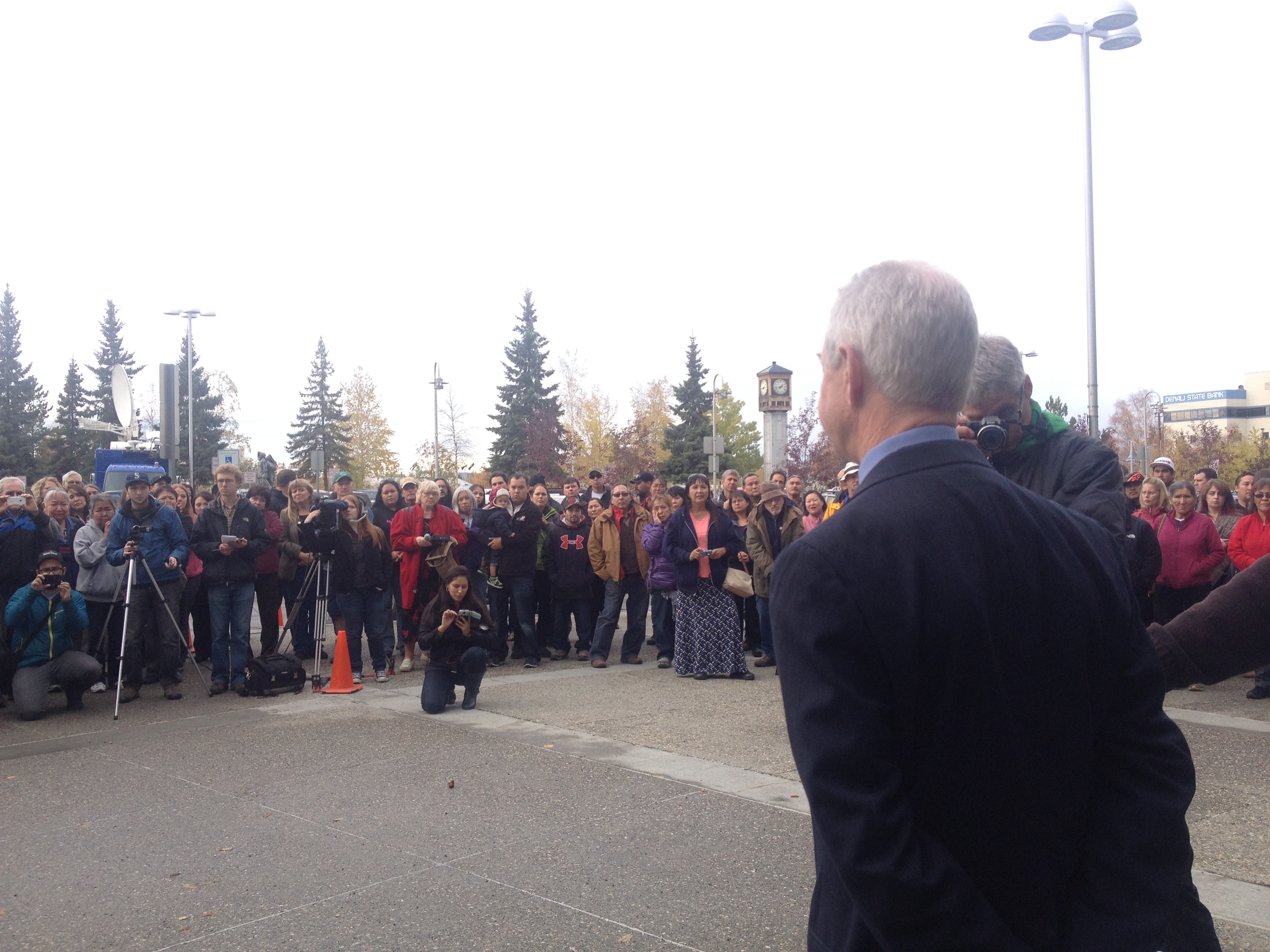






 The Fairbanks Four