State of Alaska Responds to Fairbanks Four Claim of Innocence

clockTick, tock. Tick, tock.

Life is about time. Time is all we have, really. And time is what the State of Alaska has stolen from so many, and what they are always wanting more of.

In the last hours of the last day remaining of the six month extension the State of Alaska was granted to review the Alaska Innocence Project’s motion for post conviction relief based on actual innocence for the Fairbanks Four, the State of Alaska has finally responded.

In September the Alaska Innocence Project and attorney Colleen Libby filed motions claiming that George Frese, Eugene Vent, Marvin Roberts, and Kevin Pease were innocent of the crime for which they were convicted. The state responded to that claim (which spanned some 131 pages) with a 23 page response which focuses largely on legal technicalities and little on the inherent accuracy of the claim that the Fairbanks Four are innocent, and that five other men are actually responsible for the violent beating death of John Hartman.

In general the response by the state reads like a typical attack by a prosecutor made on the arguments of opposing counsel. The response appears to be hastily written, with typos and a very conversational tone. It is not an thorough nor is it an independent review of the case and the claims of innocence by the Fairbanks Four, which is what the State of Alaska assured the Alaskan public is what they would receive at the end of the long extension (HERE).

In fact, the complexity of the case and the need to be thorough were cited as primary reasons for the long extension request. Senators Begich and Murkowski both wrote open letters to the governor (HERE and HERE) stating the importance of a thorough and independent review. Murkowski demanded that “no stone be left unturned.” In response, the State of Alaska overturned no stones. In fact, they only attempted to bury the stones. Begich asserted that “there can be no excuse for not having acted quickly in pursuit of justice and fairness for all involved.” In response, the State of Alaska acted slowly in pursuit of vague and poorly crafted arguments that this case should be kept out of court, with no indication that these arguments were in the interest of justice nor fairness.

We will highlight some of the most important and striking statements made by Alaska Prosecutor Adrienne Bachman on behalf of the State, and respond to them here. In this post we will focus on a few of her most important and central arguments. In the days to come we will continue to provide specific responses to the many statement made by the State. For tonight we will highlight the principle attacks on the Holmes confession. Quotes from the filing are in bold.

“As reported at the court’s last status hearing, investigation into the allegations made in the petitions is not complete.”

Let us begin by clarifying the roles of the State and Innocence Project. The Innocence Project is a legal non-profit. They function as a neutral third party who conducts independent reviews and investigations of cases that are referred to them and pass the initial screening process, during which it is determined that there exists a credible indication that the case may be one of wrongful conviction. They then complete a review and investigation and produce findings. In the case of the Fairbanks Four there has only ever been one independent investigation. That investigation was done by the Innocence Project, and the findings of that investigation were made public through the filing of a post conviction relief motion.

The State of Alaska was tasked only with reviewing and verifying the information in the PCR filing made by Alaska Innocence Project. The Innocence Project is staffed by one attorney, run by a volunteer board, and funded through donations and grants alone. They investigated a case that originated in 1997, reviewed all original materials, investigated the assault of Hartman, procured at least one direct confession, and filed their findings in less than eighteen months. By contrast, the State of Alaska has scores of attorneys at their disposal, access to the use of Alaska State Troopers, police, Alaska Bureau of Investigation, and millions of dollars in their budget for this fiscal year alone. Yet, they were unable to thoroughly review the work of one attorney in an eight month period. This is cause for concern. Furthermore, they failed to even scratch the surface of the task given them, which was to complete a review of the Alaska Innocence Project findings and investigate the evidence contained within. Instead of investigating the information to verify its accuracy they simply crafted an argument to keep the information out of court.

Let us also clarify what exactly the Fairbanks Four are asking for. They have filed a motion for post conviction relief that asks the state to vacate their convictions. It does not ask for immediate exoneration and release. It asks for convictions that were obtained with incomplete information, fictional information, fabricated testimony, coached and bribed testimony, and junk science to be vacated. The state could comply with that request and proceed into a trial. If the State of Alaska could convict them today with all available information admitted into trial, they could vacate these convictions and return to court to have an honest and fair trial, kinda like the one promised to all Americans in the constitution. It is not the release of the Fairbanks Four the State of Alaska is arguing against, it is their right to have a jury of their peers determine their guilt or innocence in a court of law. For eight months the State of Alaska has, with its virtually limitless resources, produced a document that not only fails to fulfill its expressed purpose, but is by their own admission “not complete.”


Bachman makes numerous and vigorous assertions that the testimony of William Holmes (HERE) is not in fact a confession, but hearsay.

“What the petitioners present amounts only to hearsay allegations that a third person, Jason Wallace, made incriminating statements about assaulting John Hartman…and hearsay is not admissible evidence.”

Webster Dictionary defines the two words in question here as:

Hearsay. noun. information received from other people that one cannot adequately substantiate; rumor.

Confession. noun. a written or spoken statement in which you say that you have done something wrong or committed a crime.

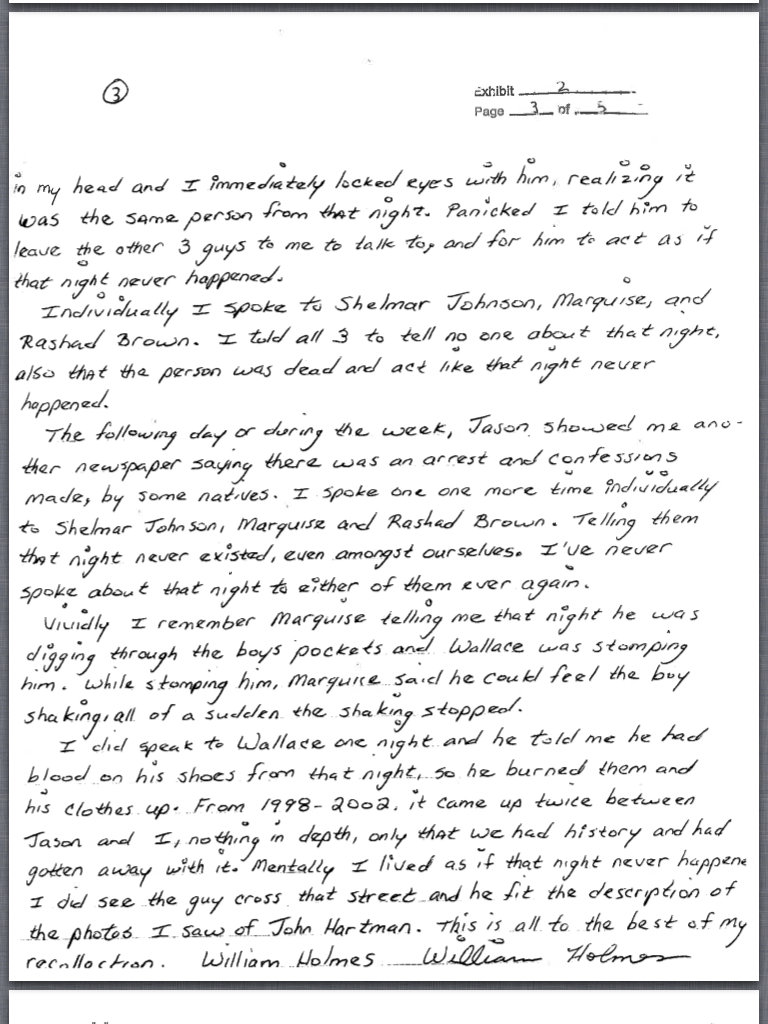
The confession by William Holmes is a firsthand account of his actions, motivations, intentions, movements, and observations the night John Hartman was killed. He confesses to driving into downtown Fairbanks that night with a group of friends for the express purpose of assaulting someone. He expresses that he intended to harm someone, and to drive the car necessary for all parties to flee the scene of these assaults. He further states that after learning John Hartman had died from the assault that he told his accomplices to not talk about the assault.

William Holmes confesses his crime. He confesses his sins. In fact, Holmes first attempted to provide this confession to the Fairbanks Police and through them, the District Attorney and state. They then hid the information and did nothing with it. Read about that HERE.

When the State of Alaska interviewed William Holmes about his involvement with the Hartman murder he maintained his guilt and the guilt of the other parties named. Without the ability to disprove his claim it appears that Adrienne Bachman chose the only method left to her in attempting to uphold the Fairbanks Four conviction, which was not to address whether or not the confession was true, but simply to craft an argument that it was technically not a confession.

The legal definition of hearsay is more complex, but in essence the same in spirit and application. Bachman’s assertion that the Holmes statement is purely hearsay is absurd. If her version of hearsay were to be applied that would mean that essentially a person could agree to drive their friend to go stab someone. They could wait outside until the friend came back out, bloody with a knife in hand, and said “I just finished stabbing so-and-so, let’s get out of here,” and that person’s testimony would not be allowable in court. I am not attorney, but I don’t need a legal degree to tell you, that is stupid. And if it is the best that the combined brainpower, money, resources, and attorneys at the department of law can produce in eight months, we should all be very concerned.

Bachman goes on to poke holes in the credibility of Holmes and Davison’s statements by explaining that they should not be believed because they did not come forward to get any leniency for themselves. As in, they had nothing to gain by coming forward, so we should not believe them.

Um…….okay, I officially have a headache.

In reality, the fact that neither Holmes nor Davison had anything to gain in coming forward lends credibility to their statements. If they had been offered some kind of leniency or reward or personal gain their statements would be less credible. But apparently at the department of law doing the right thing simply because it is the right thing to do is unheard of. Somehow, I am not surprised. They themselves seem much more interested in taking action for personal gain or to avoid responsibility for their actions than in doing the right thing. Which is disturbing. Because that means that the State of Alaska is apparently less ethical than a petty criminal and a triple murderer.

Perhaps the most interesting element of this filing is not what is in it, but what is NOT in it.

Bachman makes many personal attacks on Davison. Apparently when she was unable to dismantle the factual nature of his statements she opted to take a stab at intimidating and humiliating him to weaken his will. Remember, this young man had nothing to gain and everything to lose. She attacks him over and over as a person, yet does not bother to attach evidence that her claims are factual.

Bachman makes many comments about interviews and evidence that she does not introduce or include.

Bachman insinuates that she has ‘many’ witnesses, yet does not name even one.

What this filing fundamentally contains is a lot of grasping at straws, and very few facts. It is heavy on attempts to attack the truth through technicalities and light on any actual truth of its own.

Funny thing about the truth – it outlasts us all. Time reveals it. Funny thing about darkness – light banishes it.

The State of Alaska had an opportunity to seek justice instead of ego. Fundamentally, it is disappointing that they did not take that opportunity. No matter how hard they try to make this case go away, it will remain. No matter how hard they try to bury the truth, it will emerge. It is not disappointing because their approach will destroy the truth – it won’t. This battle will be long, but truth will prevail. It is disappointing because life gives human beings opportunities to choose between what is status quo and what is right. Those opportunities are gifts, and they failed to receive it. And at the end of the day, that is sad, because there is nothing so rewarding in life as to listen to your better angels and take a stand for good.

justiceAdrienne Bachman is only a person. In all reality she is just a person with a job, following rules, and taking orders from department heads and bosses. Orders from above.

We are taking orders from above, too. Perhaps it is time that she seeks a power higher than the one whose orders she followed today.


State Prosecutor Bachman’s Astounding Interview With Indian Country Today

truthWe have been pleased to see the story of the Fairbanks Four debut onto various national media outlets, but have been perhaps most gratified to see the case appear on Indian Country Today. This story has universal meaning and all Native rights issues are, at their core, human rights issues. That said, history indicates that progress is rarely made on Native issues unless and until the indigenous people of America join forces. So, we have been especially pleased to know that the story of the Fairbanks Four is reaching across tribes. This story is new to most Native people only in its specifics. Mistreatment and dismissal at the hands of the American government is, of course, a very old and familiar story to people of all tribes.

Indian Country Today’s latest article on the Fairbanks Four case is an interview with state prosecutor Adrienne Bachman, who is responsible for heading the state’s review of and response to the recent Alaska Innocence Project filing. Nothing would please us more than to tell you that the window this interview provides into the state’s perspective gave us a hope that the state intends to lead a fair and balanced investigation in the interest of justice. However, in this interview Adrienne Bachman reminds us a great deal of her predecessors – the interview contains a few politically correct general statements and an awful lot of detailed statements which indicate that Adrienne Bachman stands firmly where Jeff O’Bryant stood before her – determined to uphold a prosecution through any means necessary. And the devil, as they say, is indeed in the details.

Read the interview for yourself HERE. Below, we would like to highlight some of the more fascinating lies it contains.

“All of the arguments currently made in the petition were made during the original trial, except the Holmes affidavit. Only the Holmes allegations are new.”

This particular statement is one of the most bold, baffling, and patently false of them all. The Alaska Innocence Project filing contained over 130 pages. Less than ten were dedicated to the Holmes confession. Some other highlights? The eyewitness expert who determined that the testimony of Arlo Olson was scientifically impossible. The causative instrument forensic specialist who debunked the state claim that George Frese’s footwear matched the victim’s injuries. The affidavits by half a dozen others, including one that outlines a detailed confession made by another of the five perpetrators Jason Wallace, and language which strongly infers that the contents of the sealed brief contain yet another confession. The statement that the only new allegations contained in the filing are contained in less than 10% is outrageous. We will hope for the best here and assume that perhaps the prosecutor was only able to read the first few pages on her month-long vacation. Read the entire AKIP filing for yourself HERE. Read about SOME of the additional new evidence HERE, HERE, HERE, HERE, HERE or even, HERE.

“The petition characterizes the original evidence, but a review of the actual trial testimony shows that there were many additional pieces of evidence that are never mentioned by either the petition or the newspaper articles that seem to form the basis for much of the public opinion that lingers about this case. Examples include the various admissions or confessions made by three of the four.”

Well, this is not so much a mischaracterization as it is an absolute lie. Bachman states here that an example of evidence that has never made it into the newspaper or the AKIP filing includes “various admissions or confessions made by three of the four.” The interrogations and police interviews can be read HERE, HERE, HERE, and HERE and just in case you want to be sure you can find them in the press, take a look HERE and HERE.

Eugene Vent, after 11 hours of interrogation in total, made incriminating statements. Read about his take on that HERE. The method used to obtain the statements HERE. George Frese also made incriminating statements in the case, after hours of interrogation, and sandwiched between insistence on his innocence, a request to go home, and statements that he didn’t”actually remember any of that shit.” George’s statements were not allowed into trial after the court determined they were ILLEGALLY OBTAINED.

For readers who struggle as much as the prosecutor with counting in the single digits, that makes for TWO people who made highly questionable statements but certainly statements it would be reasonable to classify as “admissions or confessions.” Her assertion that she is in possession of three admissions is patently false.

“The state is committed to conducting a prompt, thorough and thoughtful investigation of the Holmes allegations. It is a top priority.”

Sigh. Here is a statement we WISH was true. In reality, the state waited almost a month into their 45 day response time to even begin work on this case, and in an initial interview with the Daily News Miner Bachman made it clear that her first priority in regards to the Fairbanks Four case was for the state to review the original case. You know, THEIR case, which is apparently quite unfamiliar to them. In her response to the AKIP filing Bachman made it clear that her actual first priority during the beginning of her review was her “long-standing” vacation plans. Don’t take our word for it, read all about that HERE.

No one on the jury thought there was a reasonable doubt about their guilt based on all of the evidence presented at trial.

The first jury to hear a case against George Frese ended in a hung jury.One juror, convinced the accusations were the result of a conspiracy, locked themselves in the bathroom and refused to come out. It has always seemed, to us, that juror had doubts.


The interviews of both men were fair and above board. The police did not supply the details of the beating, Mr. Vent did. He named his co-defendants as involved in the beating, not the police. As a further example, Eugene Vent told the police that he’d given [John Hartman] some gum. Since the police had not mentioned chewing gum, but did find a small pack at the scene, Mr. Vent’s own words told the world that he had been there – no matter how much he now attempts to back away from those statements.

Okay, she does know we can read, right? I am going to skip quoting anything related to gum from Eugene’s interrogation, and use a quote I find more suitable from Eugene while being interrogated: “I can’t believe what you’re saying right now.”

Like, really. I can’t believe what you’re saying right now. Sadly, that is not true. In 1997 being tricked and lied to by people meant to protect you and uphold justice seemed unbelievable. Today, it seems routine. Live and learn.

We would like to encourage all of you to read the interview with Bachman for yourself, and any and all of the case materials she refers to. We would further encourage you all to let your elected leaders know whether or not you think this case was handled properly in 1997, and whether or not much has changed since then. Although it would be possible to pick this interview apart line by line, we will leave off here with a quote from us, and a quote from someone far wiser.

At the end of the day, only one of two things can be true: either Bachman lacks the ability to read and understand the material that she is responsible for reviewing, or else she has a full grasp on the information and is choosing to lie. Neither is acceptable. We have said for the last sixteen years without abating that the State of Alaska has demonstrated a lack of ability and propensity toward dishonesty in this case that indicated it should be removed from their jurisdiction, handled by a federal agency, and that each indication of corruption, perjury, bribery, racism, and civil rights violation should be investigated thoroughly by a federal body as well. We think we have done a good job laying out our extensive reasons for taking that position; we would like to thank prosecutor Bachman for taking the time to do several press interviews that demonstrate state bias more effectively than we could ever hope to do on our own. – Fairbanks Four Blog, today, right now.
Woe to those who make unjust laws, to those who issue oppressive decrees, to deprive the poor of their rights and withhold justice from the oppressed of my people, making widows their prey and robbing the fatherless. – Isaiah 10: 1-2

Rise From The Ashes – Audrey George – Albis and Witnesses XI

Audrey“Love one another and you will be happy.  It’s as simple and as difficult as that.”  ~Michael Leunig

Location became central to the investigation into the night of October 10, 1997. No location is mentioned more frequently in study of the case than the wedding reception that took place at the Eagle’s Hall that night.

A wedding is a time for celebration. The joining of hearts, of families, of paths. The beginning of children, futures, sorrows and happiness unknown – and a promise by two people to stick together through whatever may come. A wedding is a a time when people gather to witness love, to share in love, to be a part of that hopeful moment when two lives are woven into one.

We have spoken before about the pain and the shame that came with this case and how it touched so many in our community. When the Fairbanks Four were wrongfully accused, investigated, interrogated, and convicted of the murder of John Hartman, what should have been a night remembered as all brides remember their wedding was transformed into a criminal investigation. One wedding guest, while being interrogated for hours and hours, answered simply when he was being pressed about why he wanted to attend the reception, “Because Audrey is my family – because, I love her.” And it should have been love, after all, that was remembered of that night, without the shadow of pain and a complicated web of deception and hardship.

For Audrey McCotter and the late Vernon Jones, whose wedding became central to the Hartman investigation, there would always be something in the background of those happy wedding photos. No one knew, as they danced and laughed, smiled and cut cake, reunited with friends and family gathered there to celebrate – no one knew that this night would change lives. That a series of events was about to be set into motion that would change the Native community of Fairbanks and force the examination of society, of the concept of justice, and ignite a struggle to assert a place in it. That night, it was just a wedding between two people who loved each other dearly. Yet by morning, things had changed. In the police theory the Fairbanks Four were accused of having met up at the wedding reception, left briefly to commit a murder, and return to dance as if nothing had happened. On the day that her wedding announcement should have appeared in the local paper, Audrey’s wedding reception was referenced over and over in articles about a brutal killing.

Audrey speaks out below for the first time publicly about how her life intertwined with this case, about her wedding night, her personal struggle with the events that unfolded, and the heartbreaking loss of her late husband Vernon Jones.

We applaud Audrey for her courage. She is taking a brave step onto a new path. Knowing her personally I can assure all of our readers that Audrey’s hardships have made her a person of incredible strength and compassion. The gifts she has given to those around her after rising from the ashes of her own pain are incredible. We are grateful for her support, and humbled by the strength it took to share this deeply personal part of her life with the world. Here is her story, in her words:

My marriage began and ended in blood. Our wedding was in Fairbanks but we lived in Unalakleet so it was hard to plan long distance but we did it. A lot of special family members were there that are passed on now such as Teddy Luke, Morris and Thelma Thompson, and James Grant, Sr. My whole family and my husband’s whole family from the Koyukuk River area were there. We planned it during dividends so our family could afford to fly into Fairbanks to celebrate our happy day. It was precious to us, but that day has been remembered for something entirely different. It was October 10, 1997 the day John Hartman was murdered and subsequently when the Fairbanks Four were found guilty of murder.

One year and eleven months later my husband committed suicide. Life is not fair. I started a battle the day he died. I battled depression, alcoholism and thoughts of suicide. I’ve been sober eleven years now, I’m remarried, my two children are happy and healthy. I consider my life to be blessed and I’ve not only survived trauma but I’ve excelled.
I want the Fairbanks Four to rise from the ashes of loss and destruction and be blessed and excel as well, but they are still in the battle. I am no legal eagle, so my support of the Free the Fairbanks Four Movement will have to be my weapon.

Public humiliation and shame will now be turned around back on the courts. We did nothing wrong. I got married and my guests were happy young people celebrating with us. An important and less known fact is that Marvin Roberts, one of my guests at the reception, had a reputation as a responsible young man who was sober that night and he wasn’t known to get into trouble the way kids occasionally do.  We will continue to celebrate when they all walk again as free men. I’m tired of death and injustice when it’s within our power to stop it. Treat others as you wish to be treated and we have not treated these four men well.
~Audrey (McCotter/Jones) George

We know this much is true: the story of the Fairbanks Four will ultimately be remembered as a story of the power of love and truth. Someday, a story of the enormity and power of love will be the one in the background of those wedding photographs, as it should be. It is love we fight for and with. Thank you Audrey for being part of the fight.

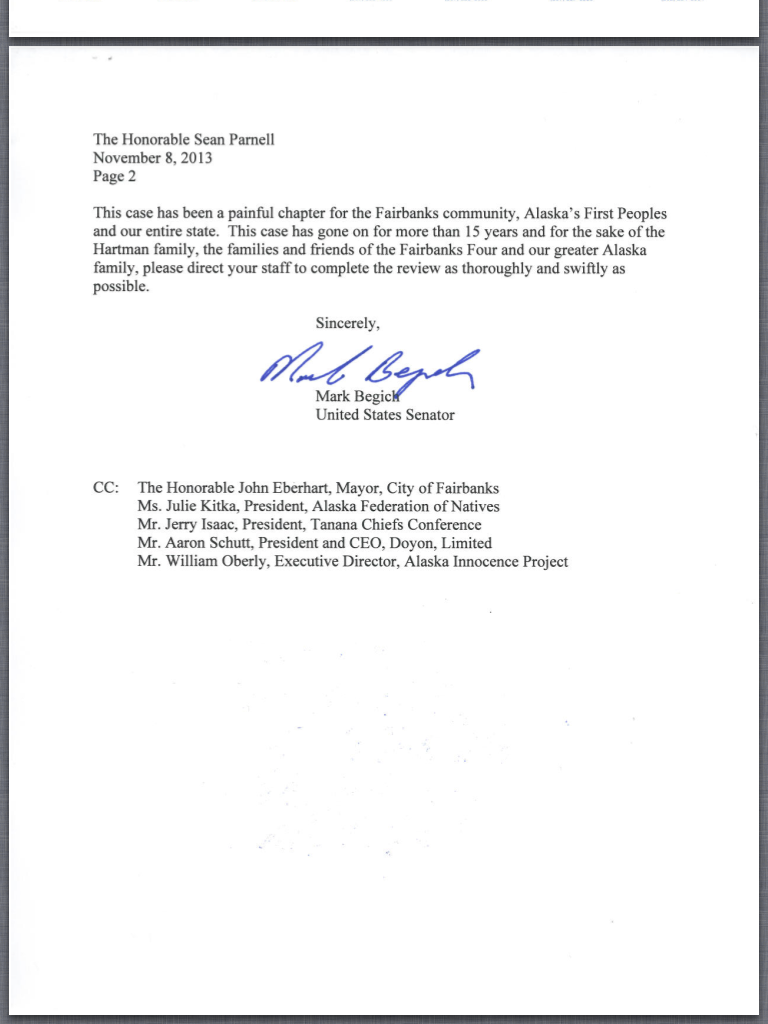
No Excuse – A Letter from Senator Mark Begich


363Following in the footsteps of many ordinary citizens, local leaders, and more recently Alaska Senator Lisa Murkowski, Senator Mark Begich released a letter to Alaska Governor Parnell asking for swift justice in the case of the Fairbanks Four.

We applaud Senator Begich for advocating for justice. Leaders take a stand when the good of their people is at stake, regardless of the political cost or benefit. Both Begich and Murkowski have taken a risk and demonstrated that they have what it takes to lead.

We hope the Governor is getting the message from above and below: this case is a test of the transparency, ethic, functionality, and intent of the justice system under Parnell. So far, Parnell’s administration and the Attorney General are failing this test.

When state prosecutor Adrienne Bachman announced that the state had just begun its investigation 37 days into their allotted 45 days, the prosecutor’s dismissive remarks were followed in short order by this letter from Senator Murkowski.

Following the state’s request for an extension until May 15, 2014, the letter below from Senator Begich was released. It speaks for itself.


BegichPage1


BegichPage2


BE encouraged by these letters. This fight has been long and in some ways has only just begun. There remain forces of darkness inside the justice system, but the truth will soon prevail and clear a path so that others will not experience the same injustice. The light is coming.

The Light Is Coming

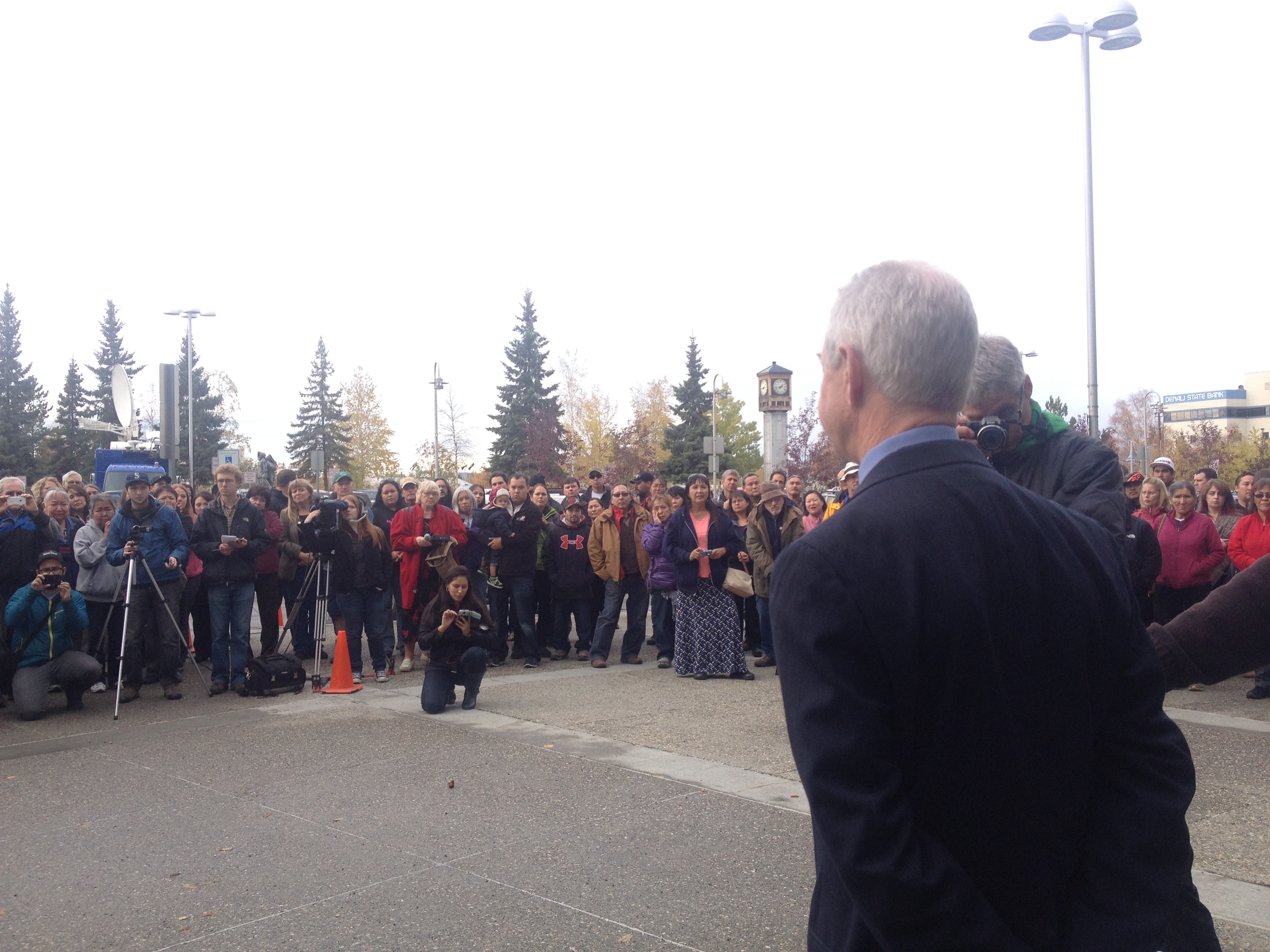
BillFilingWhen the Reverend Scott Fisher prayed with the crowd gathered in front of the Fairbanks Courthouse on the day the Alaska Innocence Project filed their court motion claiming the innocence of the Fairbanks Four, the hundreds gathered under a cold and gray sky fell silent and listened. It was that strange kind of silence – the absence of noise where sound should be. It was as if we all just knew that this prayer should be alone in the air, its path upward completely clear, the words free to travel unaccompanied into the heavens.

Just a few hours ago, it was night. Yet, the sun rose. Morning came. The light made its way over the horizon, and now we stand in the light. For sixteen years we have waited. For sixteen long years these young men in prison have waited, in darkness, with only faith that light would come. We call upon the soul of this young man John Hartman, who was taken by darkness, and promise him, morning is on its way. We remember that with only faith in the darkness we stood, we prayed, we waited for the light.

The preacher’s voice was soft. This was a lamentation, a laying down of grief. This was the painful recollection of so many prayers said and left unanswered. Yet in the long pause that followed these heavy words, hundreds of heads remained bowed. Everyone knew this prayer was not over. When he resumed it was in a voice of power, a proclamation.

But now, there is light on the horizon. We can see it, we feel it, and we know the light is coming. To those of you who have waited, with only your faith, who have feared and gone forward, who have fought for justice in a dark, dark world, let me assure you: THE LIGHT IS COMING. To those young men in their prison cells, fear not: THE LIGHT IS COMING. To those of you who have hidden in the darkness, kept yourself and your secrets there: THE LIGHT IS COMING. And it is time. Step into the light. Seek the light. Because it is seeking you, and soon there will be no dark place left to hide. We have walked through darkness these many miles and we have many miles left to travel, but there on the horizon we can see a glimpse of morning and we know THE LIGHT IS COMING.

courthousecrowdIt is hard to say when the clouds parted and the sun shone down on those people holding hands, heads bowed. But when we looked up, it was a blue-sky day. The summer found its way into the autumn, the sun touched everything, and the looming gray marble of the courthouse faded into the background, insignificant amongst the brilliant red and gold leaves on the trees and the blinding white sun shining off of the river. The clock tower and church bells rang out at once in a strange and serendipitous orchestra, and people broke out into song.

Nuchalawoyya

Nuchalawoyya

The song was Nuchalawoyya, a song many hundreds and maybe thousands of years old, from the people and the place on the river that these wrongfully imprisoned men dream of returning to. A word that means in literal translation, where two rivers meet. But, as many words, loses meaning in a simple translation. The word is a place where rivers meet, a place where people from many places met. A place where, long ago, people discussed things like treaties and territories. A place of common ground, a destination, and now, a celebration. A song.

The song began with a small circle of four men. The men who were singing were boys once. Just kids in 1997. Theirs were the first voices to ring out that day, a powerful song from this small circle of four men. All of them were interrogated in this case. Each of these men, in their mid-thirties now, have carried with them these many years a burden we rarely discuss – the shame that came with this case. The shame of feeling and believing that if they had been stronger and louder; that if their voices had somehow been heard that their friends would not have been taken. They have walked with the guilt of survivors, never knowing why it was they were not taken. They have understood the grief of Eugene and George, who buckled under pressure and have had to live with the shame and the belief that if they had been stronger perhaps they would be free, their friends would be free, they would be there as men should be, at home to care for their families, and now, that perhaps the next victims of the men who killed Hartman would be alive and home as well. These men have carried with them a thousand shades of shame, the pain unique to those who spoke the truth and were not heard.

The list of names of the men who were given this shame as boys and who have carried the weight of it through the years grows shorter with the passage of time. Beside them in that circle was the space where others should have been. People who are gone now. Many of the young people who were interrogated, questioned, who testified in those dark years, who lived through a time when they spoke as strongly as they knew how and were not heard, have been buried. Some have died at their own hand. Yet, as these remaining men broke into song you could see some of the burden – a burden which will never leave completely – lighten.

This time they were heard, and their voices were joined by many others.

For far too long a time this case has been about darkness. This injustice has thrived in shadows and fed itself on secrets. Injustice draws strength from the evils of humanity – shame, fear, trickery, corruption, pride, denial.

That time is over.

For those of you who have information in this case, step into the light. The sun is on the horizon, morning is on its way, and if you don’t seek the light, it will find you. The light is coming.

For those who have walked with a heavy heart, who still carry the shame and grief and fear and pain, set it down. Let that darkness go. The light is coming.


*photo of Nuchalawoyya above is by “FairbanksMike” whose lovely pictures can be seen on Flickr

William Holmes Confession in Hartman Murder Supported by Others, Evidence

decadeSince the moment the Fairbanks Four were arrested for the murder of John Hartman in 1997 the case has been plagued by questions, community concern, and accusations of corruption. As the years passed the movement to exonerate the men convicted in the locally notorious beating death has not faded, but grown larger and more persistent. These efforts have raised funds for rewards, appeals, litigation costs, awareness campaigns, and to support the work of the Alaska Innocence Project. Many events, speeches, news articles, television specials, and rallies have been held over the course of the sixteen years that the Fairbanks Four have been incarcerated, and the case has long been a line dividing the residents of Alaska’s “Golden Heart City” between those who believe the four are innocent and those who do not. In all the years that the case has worked its way through the Alaska court system and the court of public opinion, there is no question that the most explosive development in the Hartman murder and plight of the Fairbanks Four has been the confession of convicted killer William Holmes, who names himself and four other men as the true perpetrators of the murder of John Hartman.

Holmes ConfessionThe handwritten confession, received by Alaska Innocence Project in late 2011, is the most shocking revelation of the application for a post conviction relief file on behalf of the “Fairbanks Four” on September 25, 2013. However, the handwritten three page confession is only a fraction of the contents of the 138-page filing. (READ CONFESSION).


Following the filing the State of Alaska’s representatives, Jason Skidmore on behalf of the Attorney General’s Office and Fairbanks Police Chief, were dismissive of the confession. Their criticism was essentially that the confession was not credible given the source – that the character of a known murderer was suspect and Holmes had nothing to lose. In this post we seek to counter that position and give a brief overview of the supporting statements of others and documentation that bolster the validity of Holmes’ confession.

In the days and weeks to come we will take a more detailed look at each of these piece of the Alaska Innocence filing. But for now, we want to outline the contents of the filing that corroborate the confession.:

1.) The affidavit of Scott Davison, who provided a statement to Alaska Innocence Project in 2008. In his sworn affidavit Davison details the confession that Jason Wallace gave to him in 1997 in the days after the murder of John Hartman. The details of the confession Davison recalls and the confession of Holmes, each given without the knowledge of the other and some 14 years apart, match closely. Scott came forward with no motivation (reward was not yet in place) beyond doing the right thing.

2.) The DMV records supporting that Holmes in fact owned and was driving the vehicle he describes in the confession. When a confession is not credible, small details are incorrect. For example, a person fabricating a confession often does something like name a car that they owned, but not at the time of the crime.

3.) Records from the FNSB School District affirming that the five accused were, as Holmes claims, classmates. They all attended Lathrop Highschool, as did EJ Stevens and Chris Stone, the last two people to see Hartman alive. Again, this is the kind of small detail that a false confession often misses.

4.) The filing also indicates that sealed statements made by Jason Wallace likely corroborate the confession of William Holmes. Reporter Brian O’Donoghue recently wrote an article that addressed this sealed statement in detail. His speculation, backed up by jailhouse interviews with Wallace and some thinly veiled comments from a few local public defender’s, is essentially that Wallace confessed to the Hartman murder sometime around 2002-2004 to his public defender, but that the attorney has kept quiet under the guise of attorney-client privilege. Unless and until a judge orders the “sealed” evidence to be opened, its contents cannot truly be know. But O’Donoghue’s work provides a strong hint to the contents of the evidence under seal. Read the article HERE.

5.) The details in the confession of William Holmes closely match what is known about the crime, victim’s injuries, and crime scene. Holmes describes spotting Hartman as he turned off of Barnette Street. He describes how Jason Wallace stomped Hartman over and over, despite the protests of the others present. He describes how, as Marquez Pennington rifled through the contents of Hartman’s pockets, the boy was shaking and then went limp. Hartman was found with the contents of his pockets scattered about, his wallet missing, laying face up with his knees on the curb, torso in the street, his baggy pants down near his knees, and other clothing in place. Hartman was displaying deceberate posturing, a body state that is indicative of severe brain injury, and often brain death. It is likely that the moment when Hartman stopped shaking was the moment of brain death. His belongings were scattered as they rifled through his pockets. His position was consistent with the assault type.

6.) Holmes does not mention a sexual assault. There was early police speculation and a “satanic panic’ style community belief that Hartman was sexually assaulted. In reality there was no determination of sexual assault by anyone besides one under-qualified nurse who likely mistook the anal dilation associated with brain trauma for a sign of sexual assault. The state medical examiner and other experts brought in to look for indications of sexual assault found none. The fact is that the physical evidence of the crime never supported a claim of sexual assault, although the press and community clung to it. Given that there is more evidence that Hartman was not sexually assaulted than that he was, there is credibility in a confession that does not contain this element.

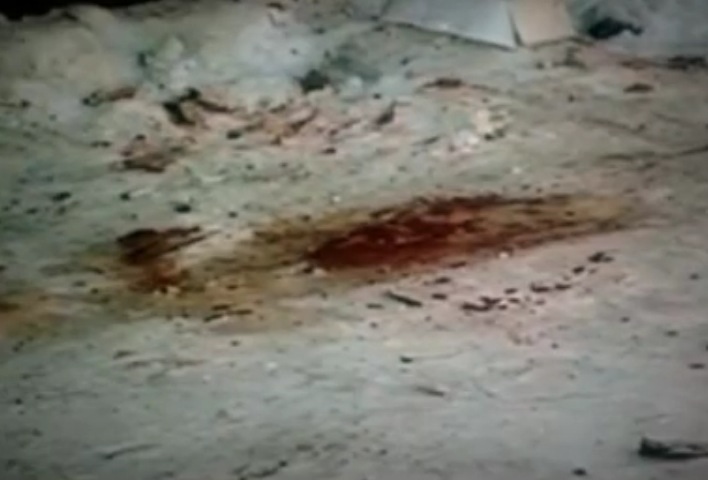
7.)  Holmes states that Jason Wallace, the ‘ringleader’ in the account give by Holmes, had a substantial amount of blood on his clothes and shoes. Although the crime scene was described as bloodless by police, and had not been seen until the image on this blog was unearthed (HERE), the nature of Hartman’s injuries, statements by the people who found him, and recollection of responding EMTs always lead most who considered it to assume that whoever committed the crime would have had a substantial amount of DNA evidence on themselves and any getaway vehicle.

8.) The Holmes confession meets all litmus tests used to determine if a confession is legitimate. He provides details on location, the victim, the motivation, and shares the chilling details that have remained with him through the years. He does all of the talking, and is not prompted with leading questions or supplied details to repeat. No one forgets a murder. Holmes has spent the last eleven years without access to the internet, to news about this case, with no contact with the others he names, and had to draw his confession from memory alone, and memory that was a decade and a half old. That he was able to provide so much detail is indicative credibility. The experience of participating in a killing as a teenager would be traumatic. Even though he says “mentally, I lived as if that night never happened,” the details were likely so clear and accessible because they were so traumatic and remained vivid.

The filing corroborates every independent and verifiable statement made by Holmes. However, the State of Alaska has still chosen to question the credibility based on the character of William Holmes as well as the “nothing to lose” factor (Holmes is serving a double life sentence for unrelated killings). We would like to address both attacks on the credibility of the confession.

First, let us say that the ONLY credible confession of murder comes from a murderer. When a false confession of murder is elicited it is, in fact, not particularly credible (read about that HERE). It is a sad irony that the Fairbanks Chief of Police would make the statement that confessions of murder by known murderers is not the kind of confession he finds credible, in light of the fact that the FPD was quite willing to take confessions in this case from innocent men that were clearly not credible. It is impossible to receive a credible confession of murder from anyone except a killer. That three of the five men named have committed other murders does not detract from the credibility of the confession, it strengthens it. It is a tragic revelation. The moment that John Hartman stopped shaking these men became killers. Three of the five went on to become serial killers. That these men are capable of the crime is clear. We find this unimaginably sad, but also very true.

The second attack on the credibility of the confession is that Holmes has nothing to lose by confessing. He is serving a double life sentence, so it is absolutely true that the threat of additional time is probably not the kind of disincentive that it would be for a free man. That said, Holmes lives in a maximum security prison in California, which has the highest rate of murder of incarcerated men by incarcerated men in the country. It is well-known that in prison culture the most hated and attacked prisoners are snitches and child molesters (there are thousands of killings and articles and studies to underscore that, look on your own if you like, HERE is a relatively random one if you would like to read about snitching in prison).

William Holmes, 1997

William Holmes, 1997

The reality is that William Holmes has nothing to gain, and everything to lose. He has put his life on the line, and although we will not defend his character, he has risked the only thing he still has – his life. Assuming he is not killed for snitching, he has certainly sentenced himself to a life of isolation, fear, and assault.  It is impossible to say what motivated Holmes, but the most likely one is perhaps the most simple – for 16 years he has lived knowing that innocent men are in prison for a crime they did not commit and he chose to right that wrong. He has committed the sin of murder, and there is nothing he can do to bring the people he killed back to their families. But he does have the ability to do what he can to end his part in the ongoing victimization of the Fairbanks Four. For all of these many years people have hoped, prayed, and dreamed that the hearts of whoever killed John Hartman would be called to come forward. We choose to believe that those prayers certainly can permeate concrete and pass through prison walls, and that they reached William Holmes and called him to do the right thing.

If Holmes came forward just to clear his conscience, he would hardly be the first. Many wrongful convictions have been resolved after the true perpetrator confesses (read those stories HERE and HERE). Sadly, initial reactions to the confessions that eventually freed the innocent in those cases were met with the same predictable response that the State of Alaska has expressed in the Fairbanks Four case.

It is extremely uncommon for a prisoner, even a lifetime prisoner, to arbitrarily confess to a crime he did not commit. Voluntary false confessions are rare as well. It is reasonably common for the wrongfully convicted to be cleared or unsolved crimes to be solved when a perpetrator voluntarily confesses years later. These confessions usually come from prison cells, because the perpetrator went on to commit similar crimes and were eventually caught.

William Holmes’s confession is credible. And, contrary to the sentiment expressed by the state of Alaska, no one has to take his word for it in isolation. The confession is backed up by hard corroboration, the matching statements of others given at other times without collaboration, and mounds of anecdotal evidence that indicates that this is what a credible confession looks like. (Read about credible confessions HERE).

Regardless of his past misdeeds, William Holmes made a decision to tell the truth. And, as we have said many times, the truth will prevail. The truth will FREE THE FAIRBANKS FOUR.


*Footnote – it remains necessary, although painful, to write about the details of the last moments of John Hartman’s life. To those who knew and loved him, we are sorry if our words bring you pain. We have posted about that HERE and encourage all of our readers to pray for John, his family, and remember to honor his memory as best you can.

Alaska Innocence Filing Exposes Flawed Eyewitness Testimony

Marvin Roberts from 300 feet away, a photograph taken 10/12/13 at McKenzie Point Correc

Marvin Roberts from 300 feet away, a photograph taken 10/12/13 at McKenzie Point Correc

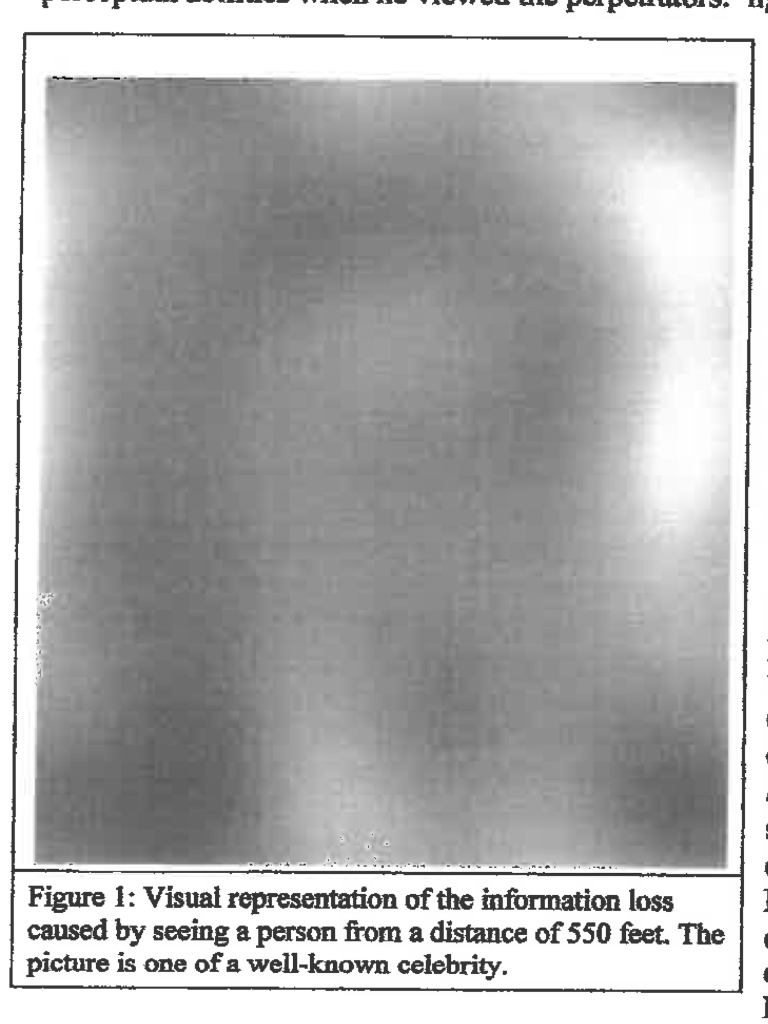
The Fairbanks Four were convicted primarily on the eyewitness testimony of Arlo Olson, who testified that he was able to identify the four men, two of whom he had never seen before, from 550 feet away in the dark.

We recently posted the details of Olson’s testimony, audio recordings of his multiple recantations, discussed his motivations, inconsistencies, recantations of recantations, and his personal criminal history. (READ THAT HERE) We have also discussed how Olson’s testimony about the assault of Frank Dayton was not even consistent with Frank Dayton’s recollection. (HERE)


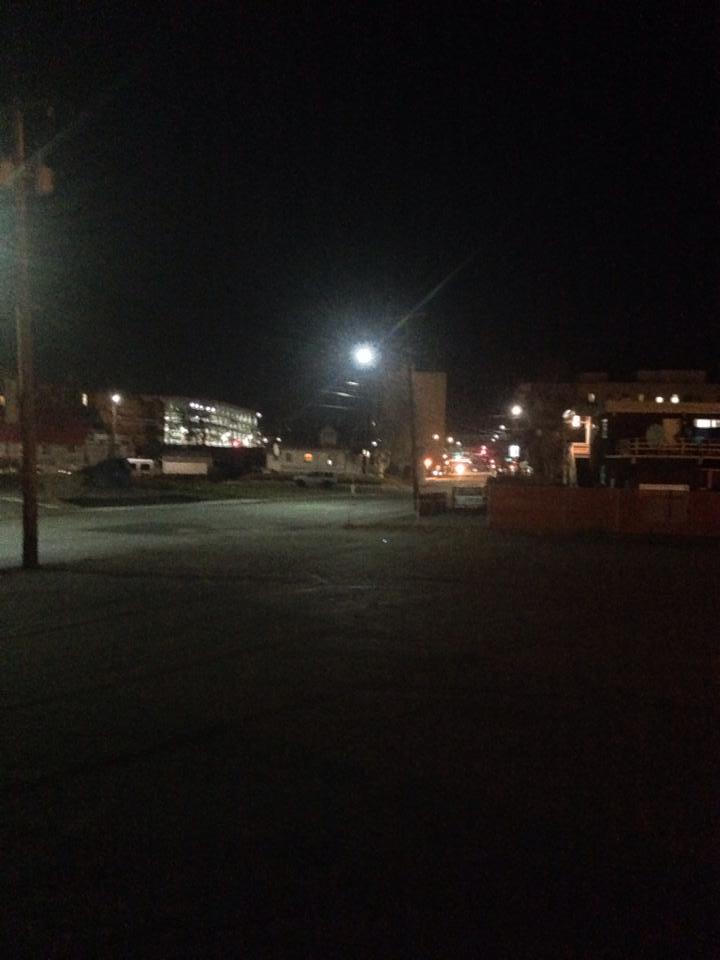
This is a photograph taken 16 years to the date eaglesand time of the night Frank Dayton was assaulted. Arlo testified that he identified the Fairbanks Four from this vantage point and in this lighting. According to his testimony he identified they would have been essentially next to the furthest visible building on the left, there is a parked car with headlights on at the exact location to mark the spot. We have discussed this multiple times. Those posts and conversations have their place. It is important to understand HOW and WHY a wrongful conviction occurs. But the reality is that discussions of how or why Arlo Olson lied in his testimony don’t really matter anymore. The filing by the Alaska Innocence Project filed for post conviction relief of the basis of innocence for the Fairbanks Four contains expert scientific review of the testimony that makes a very simple and indisputable claim: it is impossible for Olson, or any human being, to identify anyone from 550 feet away.

Well known celebrity as they would be seen from 550ft

Well known celebrity as they would be seen from 550ft

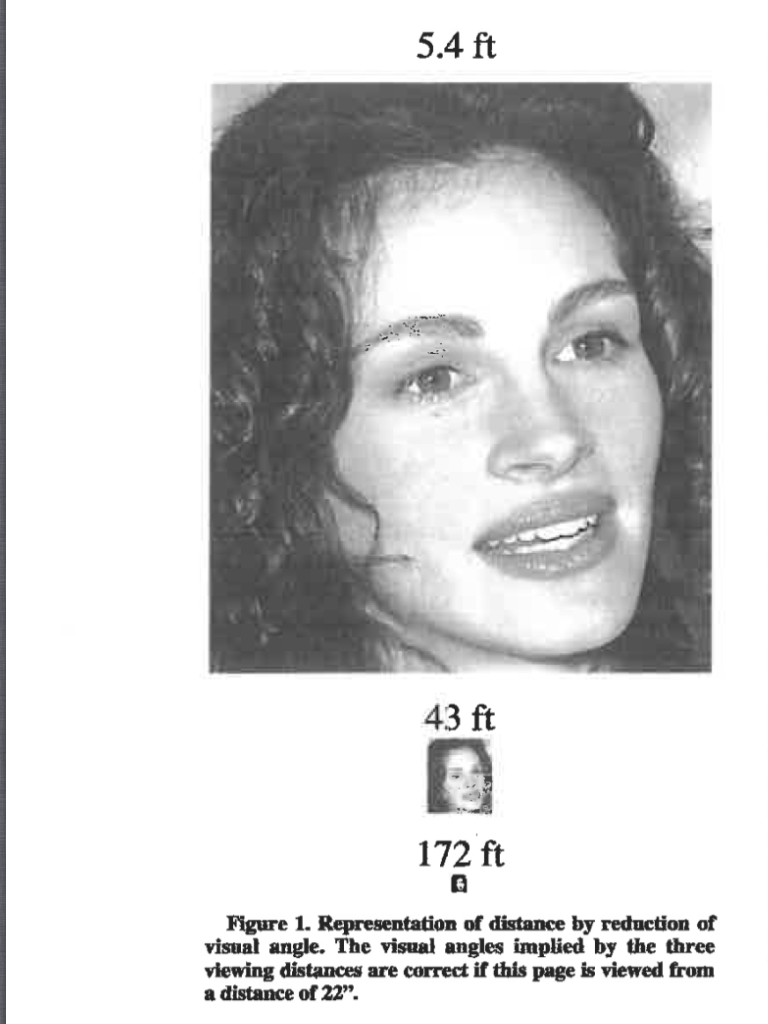
The evaluation of Olson’s testimony was completed by an extraordinarily well qualified  scientist who uses this photograph of a well-known celebrity to illustrate what the eye can see from 550 feet away in optimal conditions and daylight.  Can you recognize the face? Obviously, no, you can’t. No one can. Plainly stated, no human being can identify a face from that distance.


Julia RobertsHere is the photograph, with a representation below of the loss of perception and size at varying lengths. This issue is settled. The sky is blue, grass is green, and Arlo Olson lied in court, simple as that. There was a time when many believed to world was flat. Science sometimes answers these questions, and logic has once again prevailed.

The testimony was absurd to begin with. The idea that four men were sent to prison based on it is astounding and unforgivable. Yet, the state of Alaska considered this their most important evidence, the very prosecutor who convicted them said that without the testimony they had “no case,” and to this day imprisons the Fairbanks Four on the strength of that claim. The entire expert statement is contained in the filing we link to below for readers to review on their own.

The Fairbanks Four were not sent to jail on accident. They were not unlucky bystanders in an unfortunate misunderstanding. We believe they were the victims of irresponsible work at best, and more likely corruption. The lies of Arlo Olson were purchased by police and prosecutors with an offer of leniency in his own crimes, and if his account is to be believed, he was threatened with prosecution for perjury if he recanted. The bottom line is that there is abundant evidence that Olson’s testimony was flawed and untruthful, and now there is clear, concise, correct scientific proof.

The State of Alaska’s current response to this case is that they are sure they are right, but will now do an independent investigation of themselves, by themselves, and until that time will remain silent. We have said before, and will say again, that the enemy of the truth is not a lie, it is silence. In their silence they remain the enemy of the truth.

Application for Post Conviction Relief:

http://www.webcenter11.com/sites/default/files/application_for_postconviction_relief.pdf

Arlo Olson – “Star” in the Case Against the Fairbanks Four

ImageWe could tell you ourselves that we believe the Fairbanks Four could not have been convicted without the testimony of Arlo Olson. But that sentiment is more convincing coming straight out of the mouth of district attorney Jeff O’Bryant, who tried and convicted all four men.

“Simply put,” O’Bryant said to jurors during the last trial, “if Arlo didn’t see what he saw, and you throw out some of the state’s evidence, the state doesn’t have a case. No doubt about it.”

In this post we want to explain exactly what Arlo Olson claimed he saw, and what Arlo Olson actually saw.

On the night of October 10, 1997 Arlo Olson was an (uninvited) guest at the wedding reception at the Eagle’s Hall. That October he was also awaiting sentencing on multiple assault charges. He had severely beating his pregnant girlfriend a few months earlier, violating probation, and was looking at the possibility of a year or more of jail time.

Before arriving at the reception Arlo had spent nearly 24 hours drinking Wild Turkey and getting high. He attended the reception, commented to no one about witnessing any kind of crime, and went home without attracting any attention beyond being noted by a few other wedding attendees as extremely intoxicated. When news hit the papers that the Fairbanks Four had been arrested for the beating death of John Hartman and the assault of Frank Dayton, Arlo didn’t contact the police or comment to anyone that he knew anything about the case. Then, a few weeks later, Arlo emerged as the only witness who placed the Fairbanks Four together, and the only witness in the entire case.

Immediately following the arrest of the Fairbanks Four the police held a press conference to essentially brag about the fast and incredible speed of their investigation and arrests. The crime was solved so quickly that it was truly incredible – in the sense that it completely lacked credibility. In that moment we can only speculate that the officers involved may have actually believed that they had the right people, and that all the needed evidence would simply fall into place. Yet nearly immediately, their fragile case constructed out of speculation and the vague admissions of terrified drunk kids started to crack. First, a major alibi issue cropped up when the time of John Hartman’s assault was determined (READ ABOUT THAT HERE). Once the police knew the time that Hartman was assaulted a quick review of all of their original interrogations and interviews demonstrates that the accused, the people who were with them that night, and scores of other alibi witnesses provided ample evidence that the four were scattered across town, nowhere near the crime scene, and not together at the time of the crime.

Within a few short weeks the case the police had so boldly touted as an example of their expert investigative skills threatened to fall apart completely when the lab results came back. Despite testing hundreds of items – fingerprints from the car, DNA from the crime scene, scrapings from the victim’s fingernails, all of the clothes and footwear collected from the Fairbanks Four, fingerprints from the scene, and so on – there was absolutely NO indication in ANY of the lab results that linked the Fairbanks Four to the victim, the crime scene, the car, or to each other. The police had taken their victory lap in the press, claiming to have solved the brutal and bloody stomping death of a young boy in a matter of hours, and were now faced with a case that consisted of virtually nothing. Scores of alibis, no witnesses, and NO PHYSICAL EVIDENCE. Their only chance at convicting the Fairbanks Four was to produce an eye witness. And so, they did.

The police tracked down Arlo Olson. They brought him in for questioning, and suddenly two things happened at once: Arlo Olson claimed to have seen The Fairbanks Four assault Frank Dayton. And, just like that, the jail time he was facing for beating a pregnant woman multiple times disappeared.

Arlo claimed he saw them all together in Marvin’s car, jump out to assault Frank Dayton, and speed off. He testified in trial that he was “110% sure” that he had seen the four. This made Arlo the only witness to claim to have ever seen the four together, link them to Marvin’s car, and the only person in the world who has ever claimed he saw any of the four accused participate in a violent group assault.

Arlo Olson testified that he saw all of this while standing in a group of other people, none of whom saw or heard anything. He also claimed that he saw all of this from over 550 feet away, in the dark.

Again, we could go on and on about why we are sure that Arlo lied. BUT perhaps it is best to hear it from the horse’s mouth. Since the trials of the Fairbanks Four Arlo has recanted over and over. He says he was pressured to say what he did, that he was wasted, that he didn’t see any of them, that the “questioning’ by the police included them showing him Marvin’s car in the police garage and asking him to identify it, telling him exactly what to say, and plainly offering him a get out of jail free card if he complied. He claims that later, when he attempted to recant, Aaron Ring would visit him again and threaten him with jailtime based on perjury.

Arlo also recanted his recantations a few times. When he was convicted, over and over again, for beating women, he sometimes elected to once again ask for leniency since he had testified in the trials against the Fairbanks Four.

Listen to Arlo recant his testimony HERE.

Read about his many recantations and download transcripts HERE.

For a long time we wanted Arlo to speak for himself here, and he went back and forth. But the time has come to bring him up. Remember that in 1997 Arlo was young, deeply troubled, and probably subjected to the same pressure that so many caved under. We want to approach him with as much love and compassion as we cab. The 44-plus entries for Arlo Olson in the Alaska Court Database tell the troubling story of the life Arlo lead following 1997. He went to jail over and over, and most of his crimes involved violently victimizing women. The juries who heard Arlo’s testimony were not allowed to know about his criminal history, or have any details of the “deal” he was offered in exchange for it. Ultimately, he may have done it under pressure, but Arlo traded one year of his life for the lifetimes of four other men. And he also cost himself the opportunity for early intervention that he probably desperately needed. Who knows how many crimes of violence and addiction that Arlo has committed through the years could have been prevented if he had entered jail for his crimes and received help with his problems.

On that fateful October night in 1997, Arlo Olson saw exactly what the human eye is capable of seeing from 550 feet away in the dark – nothing. Arlo saw blackness. But a few weeks later the police reached out to Arlo in his darkness and showed him something else – an opportunity to escape accountability for his own crimes.

In our next post we will unveil the scientific study into Arlo’s eyewitness testimony and show that not only is there any indication that Arlo was telling the truth, but that it is scientifically impossible for him to have seen it.

There is no doubt that this case has brought tremendous pain to many. Arlo is just one more person who has suffered in this situation. We have forgiven him, and hope that someday he can take the weight of these lies off of his own shoulders and find peace, happiness, hope, and forgive himself.

True Murderer Comes Forward – A Letter from William Holmes

story1We have a long tradition of letting people tell their own story.

Today, the Innocence Project walked into the courthouse and filed a motion for Post Conviction Release on behalf of George Frese, Eugene Vent, Marvin Roberts, and Kevin Pease. These men have maintained their innocence for almost sixteen years, and today definitive evidence of their innocence has been made public.

This court motion contained a lot of information – testimony by experts that George’s boot did NOT match the wounds on the victim, proof that Arlo Olson lied, proof that it would be scientifically impossible for someone to have seen what he claimed. But, the most important thing it contained, in our view, is a story. A handwritten confession, by a man named William Z. Holmes who confesses in detail the murder of John Hartman.

We have said many times that we believe people can feel the truth, see it, sense it, recognize it. And that is why we believe so strongly in the power of truth told by those who hold it. We believe the best we can do to help any injustice is to make a space where people can tell their truth. There will be plenty of articles, news, updates, and headlines about this case today, we will let them fill their purpose, and fill ours.

With that in mind, below is the handwritten confession of William Z. Homes. We will let that stand alone for today. You can judge for yourselves if it is the truth. We believe it is.

We believe in redemption. That anyone can do all they are able to change themselves during their time upon this Earth and that no matter how dark or low a place life takes us to that we can still seek light. So, we publish this with a great sadness for the heartbreaking manner in which John Hartman died, but also a hope for the individuals who did kill him, and every single one of those who helped to hide the truth and further lies, that they may use this time to come forward and begin what must be a very long journey toward redemption.

This day could have never come without the faith, hope, and hard work of many, and we thank you all. Our journey to justice is far from over, but today we begin a walk down a new road.

This is a sad story. Listen, listen.

Image

photo (1)

photo (2)

Bloody Photos of the “Bloodless” Crime Scene Emerge

Aside

ImageWhen Calvin Moses and his passengers came upon a young John Hartman badly beaten, barely alive, and draped over a curb around 2:50am on that cold night in October 1997, the sight of his body was so frightening that the four adults did not get out of the car for fear the attackers were still nearby. They rushed to a nearby apartment complex and called 911. In fact, John Hartman was so bloody and badly beaten that they could not tell if he was a boy or girl, face up or face down. Only that if he was alive, he was barely alive.

One EMT who responded to the call was so badly shaken that he called home, woke his wife, and pleaded with her to lock the door. In the first newspaper article about the case (HERE) the lead detective described the crime scene as “horrific.”

Perhaps Detectives Aaron Ring and Jim Grier (who did the bulk of the police work on this case) believed that when the lab results came back from the car, the clothes, boots, shoes, hands, and feet of the four young men they had arrested in the hours immediately following the girssly discovery of the murdered boy, that the lab results would show what any reasonable person would expect to find on the people and car used to commit a violent stomping and beating death – DNA. And lots of it. But the lab results didn’t tie the Fairbanks Four to the victim. So, they tested, and retested. They took Marvin’s car apart to the point that it cannot be reassembled, searching for blood. And they found NONE.

NO DNA EVIDENCE HAS EVER LINKED THE FAIRBANKS FOUR TO THE CRIME THEY ARE CHARGED WITH COMMITTING.

When the police realized that there was no physical evidence linking Marvin Roberts, Kevin Pease, Eugene Vent, or George Frese to the murder of John Hartman, they did not begin looking for other leads. They did two things – they shopped for jailhouse snitches and “lost” a lot of evidence that would have supported claims of innocence by the four young men and pointed to the guilt of others.

So many things have been lost in the Fairbanks Four case. Life. Time. Freedom. Hope. Memory. Intangible things.

But a lot of other things were lost. Tangible things. Evidence. For example, the first interview police did with Chris Stone. That was “lost.” The transcript of the police interview with EJ Stevens simply directs the reader to the audio recording. Somehow, it was lost. Perhaps no coincidentally “lost” piece of evidence stands out more than the missing crime scene pictures. With no photographs of the crime scene, the public and juries had to rely on the word of the investigators who examined the crime scene (primarily Ring and Grier).

For many in the Native community the moment that the crime scene went from “horrific” to “virtually bloodless” was the moment when it became completely clear that something was extremely wrong with this case. These are, after all, a people who have many times seen a death on the first winter snows when they are blessed with a moose to feed their families. The idea that place where a boy was kicked and beaten to death would be bloodless has long seemed to be a deliberate lie. We can now confirm that anyone who saw the crime scene and later described it as bloodless was lying, and readers can confirm that for themselves by looking at the recently unearthed photograph above.

When KTUU Channel 2 Anchorage did their documentary The 49th Hour: The Fairbanks Four, they were granted access to the historical footage shot by KTVF. During this same KTUU documentary (which you can watch HERE) the CURRENT Fairbanks Police Department police chief applauds the exemplary work of the detectives who investigated the murder of John Hartman, even calling it “model” police work. In that film footage from KTVF that KTUU producers unearthed, buried in the long-forgotten reels of film shot the day that John Hartman died, were a series of images of the crime scene the police and DA described as bloodless. This photograph of the place John Hartman was killed looks exactly as we would have imagined.

Those of us that live with the land and feed our children with what we can gather and hunt know something about blood and snow. We have seen the warm blood of an animal hit snow and race across the surface, frozen. We have seen it seep, and spread slowly from a wound. The place where a life is taken, even when taken respectfully with one swift and cordial wound, is marked on the snow until spring washes it away. We know the way that snow makes blood sticky, how the course hair of moose cling to your hands and boots and resists any attempt to cast it away.

To take a life is to spill blood, and blood remains there where life poured out, and upon those who touched it. It tracks on boots and pants, fingers and hands. Life does not disappear without a trace. John Hartman did not lose his life without leaving a mark behind. Those who killed him did not leave the scene of the crime without the blood of John Hartman on their feet, in their car, on their clothes, their shoes, and hands.

That DNA evidence probably washed over time, as seasons changed. But blood is on the hands of many in the case of the Fairbanks Four: Those who really did kill John Hartman, those who chose to deliberately wrongfully convict the Fairbanks Four believing they had so little value that they would never be remembered and fought for, and those who “lost,” altered, hid, corrupted, and lied. Those people have blood on their hands that cannot be washed away with water or with time. For all those in our community and world who have blood on their hands through murder, corruption, conspiracy, or through the crime of silence, we have a prayer always on our lips and in our hearts for you – that someday you will be free from the prison you built for yourself. That you will choose to redeem yourself as best you can during your time on this earth. That you remember that every day that innocent men spend in prison for a crime they did not commit, you commit another crime, and your guilt grows.

You can try to bury the truth. You can try to outrun it, you can try to lose it by forcing it deep into the darkest theatres of the mind. But you cannot destroy it. You can take a lot from another human being – their life, their time, even their hope. But you cannot take their story, and you cannot take the truth. Truth has a power of its own, and someday, the truth will FREE THE FAIRBANKS FOUR.