Jason Wallace’s Confession Leaked to a Reporter

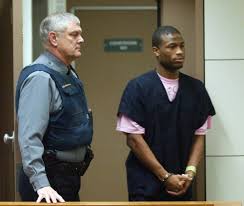
Jason Wallace, 2004

Jason Wallace, 2004

The exact nature of the statements made by Jason Wallace regarding his participation in the Hartman murder have long been veiled in secrecy and the source of much speculation. The statements of Wallace, as summarized by Judge Paul Lyle in a document that was intended to remain confidential, were briefly published by the Fairbanks Daily Newsminer.

An article posted by the Fairbanks Daily Newsminer on August 20, 2015 to the newspaper’s website revealed the specifics of the confession, apparently made in 2003 to an attorney and investigator employed with the Fairbanks Public Defender’s Office. The Newsminer reported the details of Jason Wallace’s statements were leaked “inadvertently” by a party who was in lawful possession of the material. The article then goes on to detail the confession of Jason Wallace in the murder of John Hartman.

KEY POINTS IN THE WALLACE STATEMENT

  • Wallace confessed in 2003 while awaiting trial on an unrelated murder to public defender Geoffry Wildridge.
  • Wildridge then sent public defender investigator Tom Boles to speak to Wallace, presumably to investigate the veracity of his claim.
  • Wallace, like Holmes, describes leaving a party in a car with the intention to assault people. He describes first assaulting a man on First Avenue and robbing him. Holmes also describes an assault that preceded the Hartman beating, but in less detail. Wallace’s description of the assault closely matches the facts known about the Dayton assault, which figured predominantly into the case.
  • Wallace names three people as participants in the Hartman murder – himself, William Holmes, and a third person, whom the article only clarifies as a man also named in the 2011 Holmes confession. We feel it is safe to assume that Jason Wallace named himself, Holmes, and Rashan Brown, as both Brown and Holmes were both incarcerated in maximum security facilities in others states, had less to lose, and posed no threat to Wallace. Holmes names the same three participants as Wallace, plus Marquez Pennington and Shelmar Johnson.
  • Wallace denies sexually assaulting Hartman, and states that he does not think his group would have sexually assaulted Hartman. He speculates that the Fairbanks Four could have found and sexually assaulted Hartman later. In reality, there has never been any forensic indication of sexual assault. The charges were based entirely upon the observations of one nurse, not qualified to take an exam, and whose belief Hartman was sexually assaulted contradicted the autopsy and medical examiner’s conclusion.
  • Wallace claims he, not Holmes, was driving the car. Holmes and Wallace essentially finger the other as the major aggressor, although both confess to participating in the planned hate crime assault which killed Hartman.
  • For over fifteen years, public employees sworn to act as agents for justice have kept the confession of Jason Wallace secret under the auspices of privilege, despite the fact that failure to reveal the information has contributed to the unlawful detainment of four citizens, and that disclosing the information is clearly allowed.

The article was live for a very short period of time before the link was removed and all traces of reporter Sam Friedman’s revelation in the Fairbanks Four case were rapidly erased from the Newsminer site. The printed paper in circulation throughout the city today shows no sign of the report. we can only speculate that the newspaper removed the article after experiencing backlash from some local or state player – and likely from the source of the information leak.

Prior to the removal of the article, several members of the “Free the Fairbanks Four” Facebook page copied and preserved the text. We are opting to republish the article in its entirety, along with a series of images which confirm that it was indeed posted by the newspaper. It is supposed to be the job of the press to report newsworthy and credible stories without attention to political pressure or consideration for the reputations of the players. Certainly, the Newsminer showed no hesitation when running the first articles in this case which contained incredible inaccuracies, unchecked information, astounding bias, and fed the community frenzy which contributed to the hasty and wrongful convictions of George Frese, Kevin Pease, Eugene Vent, and Marvin Roberts. When the players are have more social capital the rules of reporting apparently swing as far in the other direction. According to their own article, the Newsminer has factual and credible information on the confession of Jason Wallace and has opted to rescind an article which fulfills the most important duty and responsibility of the free press – to report the news. It appears the press is not nearly as free as it ought to be here in the Golden Heart City. In a world where journalists are beheaded for speaking the truth and jailed for protecting their sources, the cowardice it takes to remove the article stands out all the more.

We applaud Sam Friedman for writing the article. The full text is below:

FAIRBANKS—A sealed court document obtained by the Daily News-Miner corroborates some details of an alternate account of the 1997 John Hartman murder but also clashes with key aspects of the 2012 statement that is being presented as a confession by one of the teen’s true killers.

Since their convictions in the late 1990s, the four men convicted of murdering 15-year-old Hartman have maintained their innocence and tried to win exoneration. Three of these men — Eugene Vent, Kevin Pease and George Frese — remain in jail. The fourth, Marvin Roberts, was paroled this year.

Nearly two years ago, the Alaska Innocence Project, which had taken up the case of the men who have come to be known as the Fairbanks Four, filed court papers claiming the men are innocent and that Hartman was killed nearly 18 years ago by a group of five other teenagers in a maroon Ford Tempo driven by William Z. Holmes, a man later convicted of two other killings.

Advocates for the four men backed their claims with three documents — a handwritten statement from Holmes and two indirect accounts about another convicted killer, Jason Wallace, whom Holmes says stomped Hartman to death.

One of the indirect accounts, containing statements reportedly made by Wallace, has remained under a court seal. It is awaiting a court determination on whether a statement Wallace made to a Public Defender Agency employee can be used as evidence.

The News-Miner obtained a sealed court document that contains a summary of Wallace’s purported confession after an individual with lawful access to the document inadvertently provided it to the newspaper.

Similarities, differences

Holmes and Wallace were Lathrop classmates who went into the cocaine-trafficking business. Holmes is serving a double life sentence and Wallace a 70-year sentence for murders committed in a failed 2002 takeover of a drug business. Wallace beat an Ester woman with a hammer while Holmes shot two men en route from Tacoma, Washington, to California, according to the cases against them.

Holmes told a California prison chaplain in December 2011 that he was involved in the Hartman murder. He repeated the assertion in a sworn statement in August 2012 for the Innocence Project.

Holmes wrote in his affidavit that he was driving around downtown Fairbanks on Oct. 10, 1997, with four others looking for an intoxicated Alaska Native to beat up, something he used to do for entertainment at the time. During their drive, they came across a “white boy” walking alone, he wrote. Holmes said Wallace and the three other young men in his car got out to beat up the boy.

Holmes said he remained in the car and that he couldn’t see the beating because bushes blocked his view.

The group later realized from newspaper accounts that the boy they had beaten was John Hartman and that he had died from his injuries.

Wallace’s account shows some similarity to Holmes’ account but also has some key differences.

Superior Court Judge Paul Lyle described Wallace’s narrative in a sealed November 2014 ruling related to the Alaska Innocence Project’s exoneration case. The ruling is under seal pending a court ruling on its status because it relates to a statement Wallace reportedly made to a Public Defender Agency employee, information that is supposed to remain confidential.

Wallace’s statement reportedly originated from a visit he had from Thomas Bole, then an investigator for the Public Defender Agency, which was representing Wallace in the unrelated 2002 murder case.

Lyle’s ruling says Bole went to Fairbanks Correctional Center to interview Wallace in January 2003 after Wallace told court-appointed attorney Geoffry Wildridge he had information about the Hartman case.

Wallace reportedly told Bole that he — not Holmes — was driving the car. And he says it was Holmes and another of the people named by Holmes who beat Hartman. Wallace says he remained in the car while Hartman was assaulted.

Wallace also reportedly mentions a total of three young men in the car, including himself, differing from the five mentioned by Holmes.

“Wallace said that Holmes and [the third person] jumped out of the car while he waited in the car. He did not witness the assault, but, when they came back to the car Holmes and [the third person] had a couple of dollars,” Lyle wrote in his summary.

“Wallace told Bole that he thought the petitioners found and killed Hartman because Hartman had been sexually assaulted and he apparently did not think Holmes or [the other person] would have done that,” Lyle wrote.

Lyle clearly mentions, in a footnote, that he is not passing judgment on what Wallace is alleged to have said: “The statements of Wallace summarized in this paragraph are not considered for the truth of the matters asserted.” His note says they are included because they are relevant to the question of whether Wallace was seeking advice from his attorney.

Wallace, in the judge’s summary, also references an incident that preceded the attack on Hartman, one not mentioned by Holmes.

The evening began, Wallace said, at a party attended by Holmes and another of the men alleged to later be involved in Hartman’s death. He says the three left and drove through downtown and assaulted — “knocked over” — an individual on First Avenue and stole money from him. The group then drove to the Foodland grocery store — now home to the Co-op Market Grocery &

Deli — and, after a while, returned to their car and drove down Barnette Street, where they encountered Hartman, who was walking.

Lyle’s summary of Wallace’s purported statement doesn’t mention what car they were in.

Holmes makes no mention of the First Avenue assault in his five-page affidavit. He says the group of five — not three — left a girl’s apartment to go downtown, with Holmes driving. Holmes said the other four men jumped out of the car and chased two Alaska Natives but returned to the Ford Tempo when the men ran into an alley. He said there were 10 other grown men in the alley. There is no mention of an assault.

The group, according to Holmes, then drove around downtown for about 20 minutes “without seeing anyone else to harass” and decided to return to the apartment where they had been earlier in the night. It was at that time that they encountered Hartman, he wrote.

The victim of the First Avenue assault mentioned by Wallace is not identified in Lyle’s ruling, but an assault in front of the Eagle’s Hall on First Avenue figured prominently in the case against Frese, Vent, Pease and Roberts. The four were convicted of that assault in the same trials that led to their murder convictions.

The statement’s path

Wallace’s alleged statement about the Hartman murder came to the Alaska Innocence Project by a circuitous process.

Bole, the Public Defender Agency investigator who had interviewed Wallace in 2003, later passed the information to another agency investigator, Richard Norgard, who had previously helped found the Alaska Innocence Project and who had been in contact with the organization about the Hartman case.

The parties dispute exactly when the information changed hands between Bole and Norgard, which matters because it determines who breached what is supposed to be a confidential relationship between a client and his attorney.

Lyle, in his November tentative ruling, found it was not necessary for him to determine who breached Wallace’s confidentiality; rather, he wrote that the issue to be decided was the legal remedy for Wallace and how to handle the desired use of the information by attorneys for Frese, Pease, Vent and Roberts.

The Alaska Innocence Project, which is leading the exoneration effort, is seeking judicial permission to use Wallace’s alleged statements as part of its case. Lyle and, later the Alaska Court of Appeals have each ruled that the attorney-client privilege was breached and that the Innocence Project can use the statements.

Wallace opposes the statement’s release and has taken the matter to the Alaska Supreme Court, which has yet to hear the case.

Below are some images which confirm the origin of the text. HERE is a link to a PDF version of the article.

Newsminer editor Rod Boyce shares the article on his Twitter feed.

Newsminer editor Rod Boyce shares the article on his Twitter feed.

wallacelinkpic

Article as seen on Newsminer.com prior to its removal.
Appeals Court Reveals Second Murder Confession in Hartman Murder

In a ruling made public today, the Alaska Appellate Court has shot down the efforts of inmate Jason Wallace to keep his confession to the murder of John Hartman out of court.

Although the exact statements of Jason Wallace related to his participation in the 1997 murder for which the Fairbanks Four were convicted and remain incarcerated have yet to be revealed to the public, the ruling confirms that Jason Wallace made statements to “an investigator working for his attorney which, if true, would tend to exculpate four defendants who were previously convicted of the same crime that J.W. described.” Wallace, currently incarcerated for another murder and represented by Fairbanks attorney Jason Gazewood who was most recently in the news after being held in contempt of court, has fought the release of his confession since the Alaska Innocence Project entered them under seal as part of a Post Conviction Relief filing based on actual innocence on behalf of the Fairbanks Four. Marvin Roberts, Eugene Vent, Kevin Pease, and George Frese were arrested and convicted of the Hartman murder in October of 1997. the four young men were convicted despite a wealth of alibi evidence and with no physical evidence of any kind linking them to the victim or each other.

Jason Wallace has been fingered as an alternate suspect in the Hartman killing since at least 2004, but a substantial statement related to his involvement proved elusive. Finally, in a sworn affidavit to the Alaska Innocence Project dated in 2008, high school acquaintance of Wallace Scott Davison detailed the statements about the killing Wallace had made to him just days after the murder. Davison was absolutely bullied and berated by the State of Alaska for coming forward.

According to oral arguments made during a recent misconduct hearing on the case, in 2011 William Holmes, a Fairbanks man serving a double life sentence in a California prison for unrelated murders, developed a relationship with correctional officer and chaplain Joseph Torquato. Holmes told Torquato about his life in Alaska and his troubled past. On December 5th, 2011 Holmes detailed to Torquato his role in the stomping murder of a young boy for which four innocent men were imprisoned. Torquato was so compelled by the statements of William Holmes that he went home the same night and used the internet to research similar murders in Alaska. He came upon the Hartman case, and the next day when he saw Holmes he asked him, “Does the name Hartman mean anything to you?” to which Holmes replied, “Do you mean John Hartman?” The inmate confirmed that the murder he had confessed to the previous day was indeed the Hartman murder. Torquato implored Holmes to come forward to Fairbanks authorities, but he refused.

The correctional officer then took the information to his supervisor and together the two composed what is now referred to in proceedings as the “Torquato Memo.” Torquato sent the written account of the confession by Holmes to the Fairbanks Police department. They forwarded it to the District Attorney’s office. Ultimately, neither party took action.

The State’s failure to disclose the confession of Holmes when first received was the subject of the July 30th hearing in Fairbanks Superior Court, where the state argued that the wording of the Code of Ethics as written in 2011 should have allowed the prosecutor to withhold the confession, although they conceded that such conduct would not be acceptable in 2014. They further argued that because the Fairbanks Four had been convicted by 2011 that they did not have any remaining constitutional due process rights.

Counsel for the Fairbanks Four argued that there were indeed state and federal constitutional rights violated through the withholding of the Holmes confession, and that the ethical obligation to disclose the confession was so clear that it was “offensive to justice” to have withheld it. Attorneys for the Fairbanks Four discussed the harm that had come to the four men’s case as a result of the State’s decision to hide the Holmes confession. Among other things, they cited the 2014 deaths of two witnesses who had heard confessions from Marquez Pennington. Had the State revealed the confession as obligated, the argued, the witnesses may have been alive to testify that Marquez Pennington made admissions in the case as well. This small comment was the first reference to yet a third confession – the confession of Marquez Pennington. 

A decision as to whether the actions of the District Attorney violated the rights of the men known as the Fairbanks Four is forthcoming from Judge Paul Lyle.

Despite the State decision to withhold the confession, it eventually came out. Holmes confessed directly to the Alaska Innocence Project. In 2012, Holmes mailed a detailed and handwritten confession to his role in the killing of John Hartman in which he named Jason Holmes, Marquez Pennington, Shelmar Johnson, and Rashan Brown. The five teenagers, according to Holmes, went out that night hoping to assault “drunk Natives” for fun, and after being unable to find the ideal victim happened upon John Hartman. According to Holmes Jason Wallace was the ringleader of the vicious assault, but all four of the other men he named attacked and killed Hartman, while Holmes served as driver. (Read the Holmes confession HERE). IMG_7092

The Holmes confession provided answers long-sought by the Fairbanks Four and their families and friends who for nearly two decades have insisted on their innocence. It also corroborated the affidavit of Scott Davison, and became the centerpiece of the 2013 Alaska Innocence Project filing for Post Conviction Relief on behalf of the men. Also contained in the filing were statements made by Jason Wallace said to “corroborate the confession of William Holmes.”

The statements by Wallace, potentially subject to attorney-client privilege, were filed under seal and it was never known if they would be made public. Jason Wallace can, and likely will, appeal the decision to release his confession to the Alaska Supreme Court, although it seems unlikely that they would opt to hear the case. The decision by the Court of Appeals only applies to the narrow issue of whether or not the judge CAN consider it for admission. It is still possible that Judge Lyle will not declare it admissible. It is possible that he may admit it and keep it confidential.

This wins a battle, but the war is long.

story1Whatever the legal meanderings of this case through the maze of a truly sick justice system, we have as much faith today as we did when we wrote our first post. The first time anyone ever used the term “Fairbanks Four” we used it with this promise beside it  –  “This is story of injustice, a plea for help, for understanding, and above all a story of faith in the power of stories, of the truth. Writing this blog is an act of faith, a testimony to the power of the truth, spoken, read. We may not be experts in journalism, in law, or many other things. But the contributors here come from Alaska, from a culture that has a long tradition of storytelling, and a belief that the truth holds incredible power. This is a long story, and we will have to tell it the old way, the slow way, in pieces as they come.”

This story is unfolding as we knew it would and know it will because we have known the ending since the beginning. This blog is still a story, told in pieces as they come. Today, this is a new piece of a long story. This movement is still a plea for help. We need you to share this story and do what you can to right a wrong.

Above all, it is still an act of faith and we have absolute faith in the good of people like you and the power of the truth.

State of Alaska Pulls Funding for Eugene Vent’s Attorney

obstaclesColleen Libbey, after 11 years working on one of the most complex and high-profile cases in the state of Alaska, has been removed from the case without warning.

This alteration in counsel, which the Department of Administration has attributed to budget cuts, comes deep in the midst of disovery, and days before Eugene vent’s scheduled deposition.

When the public defender’s office is too busy, conflicted, or otherwise engaged, the Office of Special Advocacy regularly assigns the work to private defense attorneys. It is a basic tenet of our justice system, so much so that it is incorporated into the Miranda rights…”If you can’t afford an attorney, one will be appointed to represent you….” Colleen Libbey was assigned to Eugene Vent as a court appointed attorney.

Vent, the only one of the Fairbanks Four who had an ongoing active appeal at the time of the September 2013 Innocence Project filing, has had the same attorney since 2004. The litigation has dragged on these eleven years primarily because of delays and appeals within the system, and in part because of the complexity of the case.

When the Alaska Innocence Project filed their motion for post-conviction relief, the State immediately asked for an extension of just over seven months simply to review the case. By the time the case reaches court for the evidentiary hearing the original motion will be more than two years old. Although we have consistently found these extensions and delays to be extravagant, they are an appropriate measure for what kind of time the State of Alaska has determined is necessary for an attorney to prepare for even a singular action on the case. Now, days before he was scheduled to be deposed, and a handful of months before the evidentiary hearing, the State of Alaska has terminated Vent’s attorney.

The impossible task of preparing for a case in which the other attorneys have required years to gain familiarity is now left to Whitney Glover. Glover is a Office of Special Advocacy attorney, employed by the State of Alaska. Prosecutor Adrienne Bachman, in an interview with journalist Brian O’Donoghue, commented that Vent’s new attorney Whitney Glover currently has upwards of twenty other PCR actions pending and has repeatedly filed in other cases indicated that her “docket is so full she may not be able to meet deadlines.”

It is not uncommon for a public attorney to have an extraordinarily high caseload, and it is likely that Glover is indeed coping with a full docket, to which one of the most significant cases in Alaskan history was just hurriedly added.

It is impossible to know the motivations of the individuals who made the decision to remove Eugene Vent’s attorney from this case. The timing is so poor that it is difficult not to see the removal as strategic.

Other recent moves by the State seem equally strategic. The witness lists, for example. The State of Alaska did not include any information or clue as to the nature of the testimony of the sprawling list of witnesses they named in discovery. A move like this, as small as it may seem, is impactful. That means the Alaska Innocence Project, a tiny nonprofit with one attorney and limited funds, will have to investigate each and every name on that list just to know what the person may testify to. MY name, among other names, made that list. Right next to the kitchen sink….

Sometimes, the appearance of indiscretion is as good as the real thing. The State insists this is all a clean, above-board search for justice. Yet, it certainly seems like something else.

On this blog, we often refer simply to the State of Alaska. The state is, of course, composed of many branches, departments, task forces, offices, etc. That said, the State of Alaska is indeed an entity. State monies and priorities are delegated, and all of these many branches belong to the same tree. The State of Alaska through the actions of its many agents and agencies is engaging in a series of actions and deceptions which, if taken at face value, at best seem incompetent or reckless. If considered as a whole they seem strategic.

The State of Alaska was eager to share this figure as justification for the decision – in the eleven years that Colleen Libbey served as Eugene Vent’s counsel, Alaska spent $104,000.00 on his attorney. Roughly $25.00 per day that she worked on the case. Here is a figure they are not so eager to share – by the time the evidentiary hearing begins this October, the State of Alaska will have spent $896,400.00 housing him as an innocent man in prison. They will have spent about $3,585,600.00 incarcerating all four.*

As menacing as the incarceration figure is, there is another dollar amount we believe will be much higher. The figure that we would love to see, and one the State of Alaska has refused to share, is the total cost of the prosecution of the Fairbanks Four.

The State of Alaska has spent millions of dollars prosecuting, incarcerating, and fighting the release of Eugene Vent, yet suddenly cannot afford for him to have an adequately prepared attorney.

got thisWhitney Glover, Vent’s new attorney, deserves as much support and votes of confidence as she can get. Luckily for her, she is inheriting a lot of quality evidence, and above all will find herself fighting for the truth. There have been many moments over the last eighteen years where those close to the case and the four men themselves have come close to feeling defeated. It is not going to happen, no matter the obstacle, it can and will be overcome. We have learned that over and over – we have been there, done that, got the t-shirt.

Colleen Libbey – thank you, thank you, thank you for eleven years of work on a hard case you surely deserved to see come to completion under your watch. We appreciate every moment you gave.

Whitney Glover – we believe there is a rhyme and a reason to all things, and a higher purpose in this story. Congratulations on being the person our maker selected for the job, you must be the one meant for it. Fate brought you here, so it is here you belong. Welcome!

Read this story in the news!


*Costs of incarceration found HERE


State of Alaska Caught Lying AGAIN (Yawn)

liar2It is becoming routine and almost boring to get on a blog and explain that the State of Alaska is deliberately, illegally, criminally fighting to keep innocent men in prison. It is not a boring topic at all – it is an important topic. Yet, no matter how many times the media reveals another deception, the State does not get any better at lying or hiding, and shows no signs of ceasing.

William Holmes passed a lie detector test. HERE is the well-written article that revealed this latest development. William Z. Holmes has confessed multiple times over a handful of years to the murder of John Hartman, a crime for which the Fairbanks Four were convicted of and have served nearly eighteen years for despite their unbroken insistence on their innocence and a distressing lack of evidence against them. The Holmes confession was publicly revealed for the first time in September 2014 when the Innocence Project filed their case asking for the Fairbanks Four convictions to be overturned based on the innocence of the four men. This claim of innocence was evidenced in part by the guilt of William Holmes and the accomplices he named – Jason Wallace, Marquez Pennington, Shelmar Johnson, and Rashan Brown.

The State of Alaska’s Department of Law came out with a press release immediately following the September 2013 filing, saying that they had no reason to think that there was any problem with the conviction of the Fairbanks Four. What no one knew then was that they had been in posession of a confession from Holmes and one of his accomplices  in the case for years, and kept it hidden. Holmes confessed to a Fairbanks corrections officer in 2011 who then passed the confession on the the Fairbanks Police Department. The FPD then shared the confession with the Fairbanks DA’s office. The DA was legally obligated to disclose this but elected to withhold it. The FPD could have elected to investigate it, but by their own admission simply shrugged it off.

When the Innocence Project unearthed this outrageous act they filed misconduct allegations against the state, and Detective Nolan, the police officer who received the confession said (and yes, pay attention, this is an actual quote) that he “”got it and basically, uh, I didn’t write anything up.”

Sitting chief of police Laren Zager described the receipt of a murder confession in a high-profile alleged case of wrongful conviction “basically a shoulder shrug,” in a May 2014 interiew with the Fairbanks Daily Newsminer. While an alternate murder confession sat on his desk, Zager boasted to the cameras during the KTUU documentary “The Fairbanks Four” that he had reviewed the case and considered it “model police work.”

After a seven month delay the State of Alaska responded to the original filing by the Innocence Project that contained the Holmes confession. The twenty-three-page response (so….just over one page per month in productivity) was a disorganized, hurried, odd attack on the Holmes confession, alternately attacking its credibility and its admissibility.

Over a year later, we now know that the State of Alaska had not only already covered up Holmes involvement by sweeping his confession under the rug, but had the gall to administer a lie detector test to the man, and after he passed it, continue to insist he was not telling the truth.

We didn’t need a lie detector test. It as been clear for a long time who is lying and hiding and who is telling the truth.

The argument could be made, and would likely be made by the State, that failing to disclose information or making an argument that a piece of evidence should be ruled technically inadmissible even though it is important and true is not as simple as lying. The procedures, loopholes, standards of practice, and theories of the court cloud and complicate things which should be in their nature quite simple. For example, they were under no obligation to disclose the lie detector test to the public. But the strategic withholding of information and deliberate proliferation of misinformation, however cloaked in orders or procedures, is at its core simple dishonesty. To create filings and statements that argue a murder confession should be suppressed because it isn’t credible while you hold back a lie detector test that demonstrate it is credible is lying, no matter how buried in technicalities the core is simple. William Holmes is telling the truth, the State of Alaska through many of its assigns knows that, and is still fighting to dismiss and hide that.

liedetectorWilliam Holmes has killed two people and participated in the murder of at least one more. Yet, he appears to be more capable of telling the truth about that than agents of the State of Alaska who have taken an oath to uphold justice. The State of Alaska is less ethical and honest than a convicted double murderer serving life in a maximum security prison. And we have the statements, videos, photos, lab reports, newspaper articles, science, forensics, witness statements, and now add to that list the LIE DETECTOR RESULTS to prove it.

When I was a little kid my dad used to say, “if you’re going to lie to me, lie to me. But don’t insult my intelligence by telling me a stupid lie.”

This entire case has become an exercise in humiliation, incompetence, incredible fiscal irresponsibility, moral bankruptcy, and stupid lies on the part of the State of Alaska. I am not sure whether or not the constant deceit will ever change, but it has come to a point where it seems the most insightful thing to say to the State of Alaska is, if you are going to lie to us, lie to us. But don’t insult our intelligence with another stupid lie.

No one can alter the past, but anyone can change the future. At any point in time the State of Alaska could drop charges against the Fairbanks Four, and perhaps even use that money to prosecute the men who actually killed John Hartman, some of whom still walk free. And this case reached a point long ago when that was simply the right thing to do. Instead, it appears they are absolutely unwilling to change course, and will spend millions of more dollars of Alaska’s money during a budget crisis to defend a prosecution they know is fatally flawed, completely fail to protect the public from accused thrill killers, and fail to pursue charges against criminals who should be in prison for killing a child.

truthMeaningful change does not come easily. There is a bias and a sickness in the justice system of Alaska that must be changed. Every door that is kicked down or pried open in this case will remain open for all those who come after them. The precedents that will be set while one grant-funded, underpaid, dedicated attorney for the Alaska Innocence Project faces off against the entire Alaska legal system will be relied on for the forseeable future. The Fairbanks Four case is and has always been about more than one case or four wrongfully convicted men. It is about all Indigenous people, all people, all Alaskans, all of the lives that have been lost to the bias in the system, and all the lives that will be saved when it is changed.

Thank you all for your continued dedication to the innocence and justice movements in Alaska. Never be discouraged – let each of these revelations, however troubling, be a reminder of why you have taken a stand. And brace yourself for more – I would love nothing more than to write the blog post that says the State has acted honorably and in the interest of justice, but expect that change will have to be brought upon them, not led by them.

The truth makes a formidable enemy, and one against whom the State has no chance. Truth prevails in the end, there is not enough money or deceit in the world to defeat it. The truth makes a powerful ally – be glad to stand on its side.

IMG_7115

BillFiling

I Am Spartacus – Prosecutor’s Hate Speech Backfires in Fairbanks Four Case

fairbanksfour4Prosecutor Jeff O’Bryant, in cooperation with lead detective Aaron Ring, was without question the driving force behind the conviction of the Fairbanks Four. They pursued the conviction with a strange zealotry that to this day remains hard to understand.

By the time the cases went to trial it is impossible to conceive that the two men driving the court action could have possibly believed that the Fairbanks Four were guilty. In fact, they fabricated court exhibits, coached testimony they knew to be false, and attempted to intimidate defense witnesses, threatening them with arrest if they testified. They do not appear in this story as men who believed incorrectly that the four young men were guilty. They do not come across as men making a mistake – in reality it is clear that their actions were deliberate and calculated. And someday, we hope they are imprisoned for the crimes they committed.

Jeff O’Bryant was the man who tried and convicted George Frese, Kevin Pease, Eugene Vent, and Marvin Roberts. He went to trial with very little evidence of any kind, a few jailhouse snitches in his pocket, one fabricated exhibit presented as scientific, and absolutely no physical evidence. In addition to the lack of evidence indicating the men were guilty, there was a tremendous amount of alibi testimony indicating that the men were innocent. To convict the Fairbanks Four, O’Bryant knew he would have to convict the alibis, the witnesses, and in reality, all Native people. He had the ideal stage. Overt, extreme racism against the Native people of Alaska is the norm in the northern state. Persuading an all-white jury that being guilty of being Native was guilty enough was not as difficult as we hope it will be someday. So, Jeff O’Bryant argued that the alibi witnesses in the Fairbanks Four case should be ignored because they were simply Indians sticking together the way Indians do, a la “Spartacus.”

Fortunately for ol’ Jeff, the jury must have met the demographic of people who have seen the movie Spartacus. In order to fully understand the reference we did some research into the Spartacus mythology, and the pop culture “I Am Spartacus” moment that Jeff O’Bryant compared Native people to. And, wow, Jeff. He got it all wrong. He really misunderstood Spartacus. And he really misunderstood Native people. He really misunderstood a lot of things, and the jury misunderstood with him. But at the end of the day, he may be right about the Spartacus-Fairbanks Four Supporter connection.

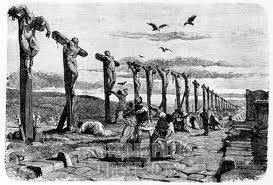
spartacusThe mythology of Spartacus has taken many forms, and made its way into American pop culture in the 1960 movie “Spartacus” starring Kirk Douglas. According to that account, Spartacus was born into a corrupt Roman empire, where the poor were regularly enslaved as soldier in a never-ending series of wars. Spartacus was born a soldier in that world, but eventually refused to fight and escaped. He was hunted down and arrested, then turned over as a slave in a labor camp. While enslaved there, Spartacus led a small band of other slaves to freedom with a brazen escape plan. Shortly after escaping, the enemy army located Spartacus and his fellow slaves in a camp. They fought off the soldiers sent to recapture them, and went on to free many more slaves and win many battles. At its height, his army born from a slave uprising is said to have reached over 100,000 men. As the leader of the most notable uprising of the lower class against the government in the history of the Roman empire, Spartacus was most-wanted man in the ancient world and there was a huge price on his head. When the Roman army eventually circled around and outnumbered the escaped slaves they made the recaptured soldiers a simple offer: all of the slaves would be pardoned. They would not be killed, but would remain slaves. All of their lives would be spared so long as they handed over Spartacus. If they failed to hand over Spartacus, they would all be crucified.

Spartacus heard the offer while they all sat surrounded and stood up. To spare the lives of his friends and fellow warriors, he said “I am Spartacus.” But one after another, more slaves stood up and proclaimed “I am Spartacus.”

i-am-spartacus-2The rebel army that stood behind Spartacus met a bloody fate. Most were killed that day in 73 BC and in the days that followed. 6,000 escaped followers of Spartacus were hunted down and crucified. The government lined the streets with their corpses as a warning to any other citizens considering rising up against the empire. Yet, the men died free, and the rebellion has inspired humanity ever since.

The story of Spartacus is told as a story of loyalty. Bravery. Of the perseverance of the human spirit and the ability to defeat enormous enemies in the face of oppression if not logistically, then spiritually.

With that in mind, it is a strange and poignant irony that Prosecutor Jeff O’Bryant chose this story as the metaphor for the Fairbanks Four alibis and witnesses. O’Bryant argued, apparently persuasively, that the witnesses were all somehow simultaneously fabricating their testimony in an effort to protect other Natives. Slaves. Unruly slaves were what came to mind when O’Bryant wanted to undermine an entire race of people.  According to the Fairbanks Daily Newsminer, O’Bryant told this version of the Spartacus story in closing arguments:

“It reminded me,” he told jurors, “of the movie where the Romans have a bunch of prisoners, slaves, and there’s an uprising amongst the slaves because of the conditions. And the leader of the uprising, apparently, was Spartacus.”

When the Romans came looking for Spartacus, O’Bryant observed, “much like the witnesses here” slaves stepped forward declaring “I am Spartacus,” one after another.

When the jury announced a guilty verdict, Kevin Pease turned to Jeff O’Bryant and said, “How does it feel to convict an innocent man, Jeff?”

How did it feel, Mr. O’Bryant?

fairbanksfour6In 1997 there was no army. There was no conspiracy, there was no massive decision by dozens upon dozens of Native people to lie for the benefit of other Native people. There were only people, telling the truth in a court of law, where they were dismissed at face value because of their ethnicity. Kids. Living out a role they were born into. They hadn’t had that moment yet. That moment when you realize some kinds of discrimination are bigger than the individual. Those kids walked into the courtroom believing justice was blind, and they walked out with their eyes wide open.

billfairbanksofurBut today, there is an army. There are thousands of people willing to stand behind these wrongfully convicted men and say, if you take one innocent person you take us all. To say no, we will not quietly allow you to take a few people in exchange for a life where we are complicit in our own continued enslavement. Thank you for pointing us to this inspiring bit of history. But remember, never take heavy words for granted. Never forget words have a power all their own, that once they leave your mouth there is always the risk that they will be truly heard. Cause guess what, Jeff? Can you hear them now? They’re saying, I am Spartacus. We are all Spartacus.

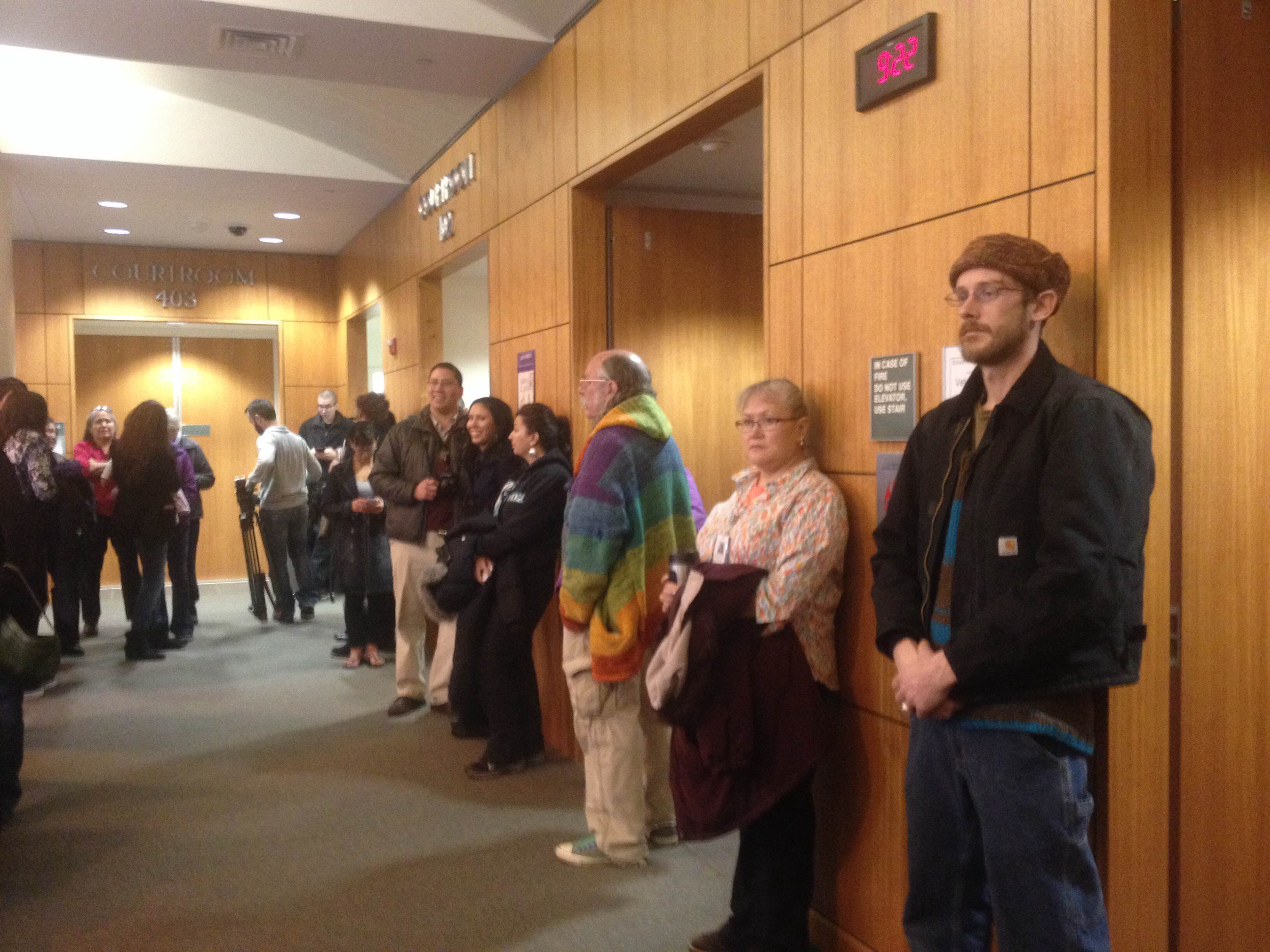
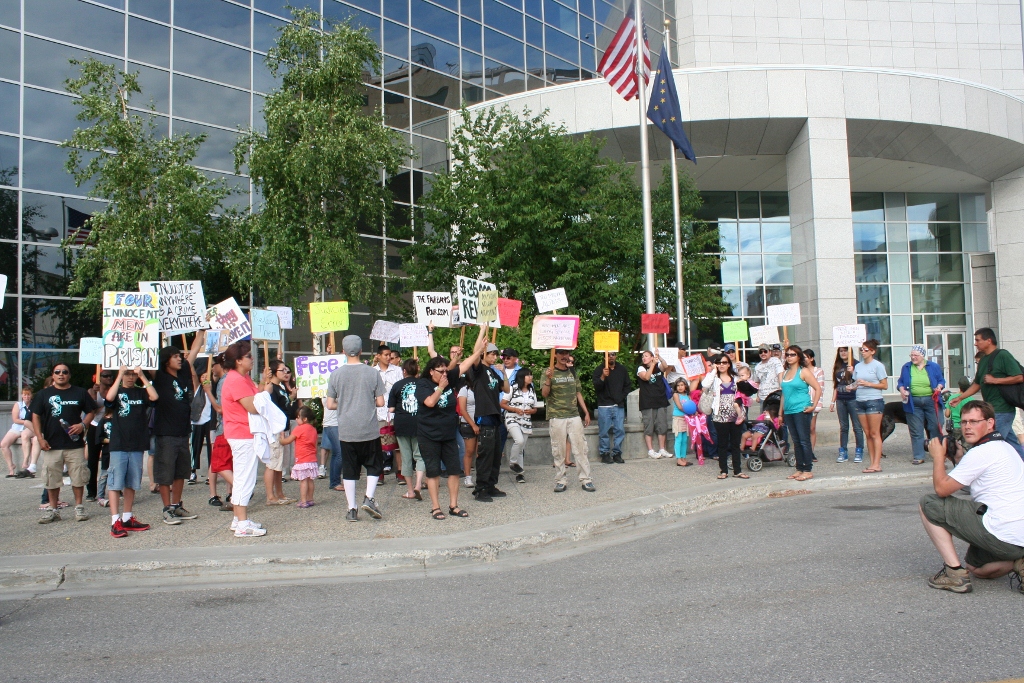
fairbanksfour5 fairbanksfour3 fairbanksfour4 fairbanksfour2 secrethearing1 IMG_1857 courthousecrowd 415 (1024x683) IMG_7093 IMG_7092

The “Secret Confession” Alaska Courts Failed to Unwrap this Christmas

statueThe snow-covered courtyard that stretches from the doors of the Fairbanks Superior Courthouse to the meandering bank of the Chena River twinkles with Christmas lights throughout the late winter months. The clock tower chimes the time. In the shadow of the clock lies the cernterpiece of the plaza – a large bronze statue of an Inuit family. It is meant as a tribute to the first peoples of Alaska who for years have gathered at the courthouse doors asking for justice. In summer months the statue is the centerpiece of a busy downtown, but in the silence and snow they appear determined, but alone.

Inside the courthouse, on the desk of Paul Lyle, sits what is likely to be one of the most controversial court rulings in the history of Alaska. The ruling is another layer in the web of bureacratic secrecy that has troubled the Fairbanks Four case for many years.

Judge Lyle has made a ruling on the “secret confession,” and that ruling now sits hidden from public view while the appeal courts consider the secret appeal to the secret ruling on the secret document contained in the Alaska Innocence Project filing from September 2013. The document is widely assumed to contain a murder confession by Jason Wallace in the 1997 death of John Hartman, the crime for which the Fairbanks Four have been imprisoned for over 17 years and which they have claimed to be innocent since their arrests.

In recent weeks, a long-awaited sign of activity on the Fairbanks Four case appeared on the docket of the Fairbanks Superior Court. The court records available to the public are scant, but have put the community on notice that there is indeed activity behind the closed doors.

Court documents released in early January indicated that Judge Paul Lyle has indeed made a decision on some element of the case, but the decision has been stayed – the legal equivalent of a pause button. The reason for the stay is to allow for a person named only as “The Affected Party” to perfect an appeal. Although the nature of sealed proceedings is inherently vague, the press was quick to deduce that the affected party was Jason Wallace, a man whose “secret confession” is at the heart of the sealed brief, the closed courtroom proceedings, and much controversy.

jason wallacLittle is known about the details of the statements made by Jason Wallace and filed under seal. But enough is known about Jason Wallace, his crimes, his actions, his habits, and circumstances, that coupled with the reporting surrounding the issue, that supporters have long been able to read between the lines.

Jason Wallace currently resides in Spring Creek Maximum Security Prison in Seward, Alaska, where he is serving a 60 year sentence for the 2002 murder by hammer of Fairbanks woman Teacke Bacote, the stabbing of Fairbanks resident Corey Spears, and his part in the conspiracy that led to the killings of Hakeem Bryant and Christopher Martin. The bloody crime spree planned by Wallace and his associate William Holmes was interrupted before they were able to kill thier last three intended victims – Michale Keys, Jaqueline Godfrey, and Godfrey’s young daughter.

Wallace and Holmes had a relatively simple plan – the two were involved in a planned $80,000 drug purchase, along with a handful of friends. Wallace was to stay in Alaska to kill the two people in Fairbanks who knew the details of the buy, Teacka Bacote and Corey Spears, while Holmes flew to California with their fellow buyers, Hakeem Bryant and Christopher Martin, to kill them. Then, Holmes and Wallace would reunite in Washington to make the purchase and kill the last targets – Michael Keys and Jaqueline Godfrey along with her young daughter (presumably to prevent witnesses) -allowing them to keep the drugs and cash. William Holmes and Jason Wallace were willing to kill their own friends, women, and an innocent child for $80,000 in cash and another $80,000 worth of cocaine. The plan did not end as planned and fate spared the lives of the last three victims.

William Holmes, 1997

William Holmes, 1997

Holmes killed Martin and Bryant in California. He shot them execution-style on the side of the freeway on Christmas Eve. Their bodies along with the charred remains of the rental car the three were travelling in were discovered the same day.

On December 27, Jason Wallace went to the home of Teacka Bacote, an unarmed 22 year old woman and friend, and killed her with a hammer. He then went to the house of friend Corey Spears and stabbed him in the neck with a screwdriver as the man slept. Although it was Wallace’s intention to kill him, Spears survived the brutal attack. After attacking Spears, Jason Wallace returned to the home of Teacka Bacote to set her body and fully occupied apartment building on fire.

Wallace was apprehended at the Fairbanks International Airport when he arrived burned and reeking of gasoline and attempted to board a flight. He confessed nearly immediately to his crimes. He cried and talked often of his mother and God in his interviews with troopers. His tears were not for his victims, but for himself. Having planned the deaths of seven people, stabbing his friend, and murdering a woman by hammer, Jason Wallace was overcome with self-pity. It is clear in transcripts that Wallace wanted to do as little time as possible, and he immediately began providing information on his codenfendent as well as many other associates. He, for example, names Shelmar Johnson as the man who supplied the weapons for the crime spree he and Holmes planned. He named many individuals as drug users, sellers, and showed an extreme willingness to provide any kind of information he could to negotiate for leniency.

Sometime between the night he was arrested and early 2004, Wallace said something else. The Alaska Innocence Project refers to “statements of Jason Wallace” that corroborate the written confession to the Hartman beating death by William Holmes, and goes on to say that the court must determine whether these statements are still subject attorney client privilege.

Given that Jason Wallace only had one attorney, public defender Geoffrey Wildridge, and only had communication with the attorney from spring of 2003 through the end of his trial, it doesn’t take a rocket scientist to deduce that Wallace must have confessed to killing John Hartman to his attorney. Because Jason Wallace provided so much information, and so openly negotiate information for leniency, it is easy to imagine that Wallace may have confessed only in an attempt to trade the information for more leniency. It seems not only possible but very likely that many people under State of Alaska employ inside the justice system may have known about alternative confessions in the Hartman case as far back as 2002 or 2003.

Do Not EnterYet, unless and until the words of Jason Wallace currently buried inside a secret filing and caught up in a secret appeal are ever released, the truth about Jason Wallace remains a carefully kept secret.

As always, Alaskans, remember that there are many who walk among you with secrets about this case. Sadly, that includes some members of society we are told to trust the most. But it also includes scores of individuals who heard directly from William Holmes, Shelmar Johnson, Marquez Penningotn, and Jason Wallace about the killing of John Hartman. If you or anyone you know has information about this case please contact the Alaska Innocence Project at (907) 279-0454.

Want to read more? Do!

Local Reporters Visited Wallace at FCC in 2004. In this article, they describe his response to their questions about the case. Read that HERE

Local reporter Brian O’Donoghue released an article recently in the Fairbanks Daily Newsminer. It is as detailed as any article is likely to be regarding the appeal process.HERE.

HERE, HERE, and HERE are a few articles on the murders Wallace and Holmes committed in 2002.

Wallace was hardly the only one talking. Bill Holmes confessed to the murder of John Hartman first in 2011 to an officer at the correctional facility where he is serving a double life sentence, who sent the confession on to the Fairbanks Police Department, who passed it on to the District Attorney. They then worked together to hide the confession, but it was eventually revealed. Read about that HERE. Holmes eventually got a confession to the Alaska Innocence Project as well. Read about that HERE.

Deranged State of Alaska Insists that Innocent Men Should Remain in Prison

queenofheartsThe State of Alaska filed their response to the Innocence Project filing that rejected their claims. You can and should read about that HERE. Because, honestly, the state’s response is so stupid that it isn’t even fun to write about and probably no picnic to read about either. And it has left me thinking about the crazy, mean Queen of Hearts from Alice in Wonderland. Remember her? I am feeling pretty convinced that if we put her in charge of the justice system in the State of Alaska we would be making a fair trade in terms of ethics and competence. But at least we would have painted roses and maybe a catchy theme song.

The State of Alaska started this response period of with….wait for it….yet another request for an extension! When they requested an extension I had high hopes that they may have something at least new to say. Alas, it appears they needed more time to simply regurgitate their last filing, with the spelling errors mostly cleaned up, and the rather embarrassing, tasteless, dishonest attack on a witness removed.

But the basics are the same. The State of Alaska is willing to have an evidentiary hearing on the Fairbanks Four case. They just don’t want any of the evidence to be allowed in. They surmise that in this evidence hearing they do not want any evidence that will bring Alaskans “closure” on this issue. Apparently, they honestly believe their citizens are so unaware or stupid that we will accept an evidence hearing without the evidence as closure and go on with our lives, pretending that they didn’t lock up innocent children. Pretending that they didn’t leave serial killers on our streets. Pretending that they didn’t lie, hide, cheat, and bribe. We cannot have justice, so they offer “closure” through a review of evidence with no evidence allowed.

I can see why – it is evidence likely to set innocent men free. It is evidence likely to make it crystal clear that the Fairbanks Police Department chief hid a murder confession. That the DA hid a murder confession. That the courts are still hiding what appears to be a separate murder confession. That witnesses were harassed. That witnesses were bribed. And, most horrifyingly, that if the people sworn to seek and uphold justice in 1997 had tried even a little bit to do that, not only would four innocent men be free, but at least five other lives could have been saved, perhaps more. It’s the brutal and unflinching truth, and the truth is the rattling skeleton in the State of Alaska’s gleaming mansion of lies.

The State argues that the confession of William Holmes should be thrown out and considered hearsay. We discussed that at length HERE the last time they made the argument.

The State argues that the scientific evidence should not be allowed in because progression in the forensic sciences is not relevant to post conviction relief filings. I mean, who needs science, right? The progression in the sciences has more than doubled our life expectancy and led to such revelations as the world not being flat, the existence of space, and the cure to the diseases that used to kill nearly all of us. But, scientific progress isn’t for the State of Alaska.

In a nutshell, the state believes a confession of murder from the murderer is “hearsay” and that modern science has no place in a courtroom. Even though the filing is full of words and legal references (as a matter of fact, in one jewel of a statement they attempt to discuss precedent by citing an unpublished opinion that they then acknowledge does not set precedent), all I can picture is that crazy queen. Our system indeed seems that absurd, deranged, and sick with power. It would be easy to make fun of that for 5,000 words. Yet, the state opinion is so ridiculous it is essentially a parody of itself. And, they are spending your tax dollars to do this absurd work, much more slowly than necessary!

In the end, there is nothing funny about it. This isn’t a movie and it isn’t a joke. Lives are at stake, and our justice system is sick, sick, sick. It remains sad, it remains shocking, it remains heartbreakingly painful that the State of Alaska is so invested in protecting themselves from embarrassment that there is no limit to the lives they will ruin, deaths they will turn a blind eye to, and lows they will stoop to. But, it has been made clear that they have no plan to change their tactic.

It’s an election year. Alaskans, you might want to ask your politicians about this issue. Surely, we can do better than this.


Motion In Fairbanks Four Case Condemns State Response, Accuses State of Prosecutorial Misconduct


The Alaska Innocence Project lead counsel Bill Oberly and attorney Colleen Libbey filed silmoutaneous motions in Fairbanks Superior Court accusing the State of Alaska of accomplishing little more than “wasting paper” in their controversial response to the Fairbanks Four case. In a filing on behalf of Eugene Vent, Libbey further accuses the State of Alaska of violating Vent’s constitutional right to a fair trial and prosecutorial misconduct by withholding a murder confession in this case.

The filings, which come less than sixty days after the State’s response, trump the State response itself in simple length and drastically outshine the State in the merit of their respective arguments. The contrast between the aimless and sometimes bizarre content of the State of Alaska’s Motion to Dismiss and the succinct and well substantiated arguments in the Alaska Innocence and Libby filings are stark.

The Innocence Project filing undermines the credibility of every piece of information alluded to in the State filing and casts serious doubt on the intention and merit of their work. Libbey’s motion details the prosecutorial misconduct surrounding the decision to hide a murder confession in the case during ongoing legal actions, and at one point in reference to the State’s most vigorous assertions says, “This argument does not make sense.”

It is hard to imagine a court in the free world that would not grant the Fairbanks Four a new trial in light of the ever-mounting pile of evidence that William Holmes, Jason Wallace, Marquez Pennington, Rashan Brown, and Shelmar Johnson killed John Hartman, or the overwhelming and ever-growing evidence that the State of Alaska has engaged in misconduct and corruption at nearly every level of this case, from the first moments of the investigation up to today. Yet, it is indeed this terrifyingly corrupt and unapologetically deceptive system that the Fairbanks Four must leave their fate to.

There are people in this case who have information and are currently, right now, refusing to come forward. Those who fail to come forward take the side of the oppressors. They assist the state in keeping innocent men in jail. If you know someone who has information in this case, ask them to come forward. If they will not, turn them in. The time for inaction is long over.


State of Alaska Witnesses – Child Rapist Striking a Deal is “Credible”

In the State of Alaska response to the September 2013 filing asserting innocence of the Fairbanks Four, two issues are of central focus: credibility and hearsay.

Indeed, hearsay and witnesses with questionable credibility are central to the state’s case. Without purchased testimony and hearsay, there would never have been a case against the Fairbanks Four at all. The State of Alaska claimed in their filing that the principle witnesses put forth by the Innocence Project were not credible primarily because both men had criminal histories. The state further argues that the men did not come forward at times when they could have potentially negotiated for leniency in their own crimes, putting forth the theory that the testimony of an individual is more credible if the individual has been bribed with an offer of reduced sentences or charges in their own crimes. The argument flies in the face of common sense and begs the question – who exactly does the State of Alaska find credible? Below is one example of the kind of individual who provided testimony against the Fairbanks Four in the trials that led to their wrongful conviction. This, ladies and gentlemen, is an example of a person deemed reliable in the eyes of the State.

credibility. noun. the quality or power of inspiring belief


Joshua BradshawJoshua Bradshaw.

In early 1998 Joshua Bradshaw was in jail on charges of felony child sexual abuse. He was accused of raping a five year old child. Following contact with the Fairbanks Police Department, Bradshaw testified at trial that he heard Eugene Vent say  “[w]e didn’t mean to kick John Hartman to death.”

If a formal and written plea agreement was made between the State of Alaska, not disclosing that agreement would be a violation of the Fairbanks Four’s constitutional right to a fair trial. Such an agreement has never surfaced. Such an agreement would have been created and kept within the Fairbanks Police Department or District Attorney’s office, whose ability to take appropriate action with documentation related to this case recently came under fire when it was revealed that they had failed to disclose an murder confession from William Holmes received in 2011.

By way of explaining the murder confession that never made its way into the record, FPD Detective Nolan gracefully explained that he should have investigated it but, “basically, uh, never completed it.” If an agreement for leniency existed for Bradshaw or others, perhaps they meant to disclose it and, basically, uh, didn’t.

Despite there being no record of an agreement for Bradshaw to receive leniency in exchange for his testimony, the judge who ruled in his case found that he had indeed penetrated a child. He was sentenced to seven years, with all but just over two years suspended. The judge gave only one explanation for the extraordinary sentence – “assisting authorities.”

According to a reliable source who spoke on the condition of anonymity, Bradshaw had experienced severe mental health issues since early childhood and was placed in a program for emotionally disturbed children during his primary school years. His behaviors included pathological lying, violence, fecal smearing, and inappropriate sexual behaviors.

With that in mind, consider the following:

The most serious and chronic offenders often show signs of antisocial behavior as early as elementary school years.
American Psychiatric Association, 1994; was in Juvenile Justice Bulletin: Nov 1998 OJJDP: U.S. Department of Justice

The behavior is highly repetitive, to the point of compulsion, rather than resulting from a lack of judgment.
– Dr. Ann Burges, Dr. Nicholas Groth, et al. in a study of imprisoned offenders

Like rape, child molestation is one of the most underreported crimes: only 1-10% are ever disclosed.
FBI Law Enforcement Bulletin


Given the extreme nature of the charges Bradshaw faced, coupled with the fact that he possessed so many of the characteristics that indicate a high probability of recidivism, it would have been reasonable to expect that Joshua Bradshaw would re-offend. Child sexual abuse is under-reported and it is statistically likely that in the years that Bradshaw SHOULD have spent in prison that he may have victimized more children and further likely that the crime would remain unknown and not of record. Certainly he received leniency. If his testimony was purchased with an offer of leniency, the price may have indeed been much higher for any child he victimized during that time. Whether or not he did victimize another young child during the years of freedom granted for “assisting authorities,” certainly anyone involved with negotiating or encouraging that leniency would have known that another offense was likely. He was eventually convicted of attempted murder in 2006 for shooting a man in the head after the victim’s friend stole an ounce of marijuana from Bradshaw.

Did the State of Alaska release a man who raped a five year old child back into our community to aid in the prosecution and imprisonment of innocent men?

Did Bradshaw inspire your belief?

Is the State of Alaska credible?


.


Scott Davison Is Not Only Credible, He is ADMIRABLE

truthIn late 1997 Lathrop student Scott Davison skipped school to smoke pot with friend Matt Ellsworth and fellow student Jason Wallace. While the three young men got high and talked, Wallace made a statement that would prove life-altering for Davison.

According to Davison, Jason Wallace told them that he and his friends had beaten and killed John Hartman. He detailed a night of driving around looking for victims that culminated in the fatal beating for which four other young men had just been charged. Wallace ended the story with a threat. If Davison or Ellsworth ever repeated what he had just told them, he would kill them as well.

At the time, Davison was only seventeen years old. He was a child. And he was now a child burdened with a terrible and violent secret and the very real possibility that unburdening himself of the secret would result in his death. To keep a secret is to carry a weight. It drags you down and it permeates the deepest recesses of the mind. It hardens the heart. What an awful curse to be placed on the shoulders of a child.

Davison, understandably, said nothing to anyone. Years passed. If there was ever any doubt in his mind that Wallace was capable of making good on his threat, that doubt would have been entirely destroyed when just five years after Davison heard Wallace confess his first murder, Wallace killed again. On Christmas Eve of 2002 Jason Wallace beat a young woman to death with a hammer, crossed town to stab another man repeatedly with a screwdriver, and then returned to the woman’s apartment to set her lifeless body on fire. Clearly, Wallace was not only capable of killing, he was capable of inflicting unthinkably depraved torture and killing in cold blood. He was capable of killing an unarmed woman on Christmas Eve. He carried within him a darkness beyond imagination. So, understandably, Scott Davison continued to hold his secret.

Yet, a secret of that magnitude is a heavy burden. It is difficult to imagine the internal tug-of-war that any human being holding that information would endure. On one hand, innocent men are in prison. On the other hand, the system in place put them there and could not be trusted to allow the information to free them. On one hand, Wallace was locked up and couldn’t just show up at the door. On the other hand, Davison himself was in and out of jail at that time. On one hand, his life could be destroyed or taken if he revealed his truth. On the other hand, four other men’s lives had been destroyed. Hartman’s life had been taken.

Davison must have weighed these things over, and over, and over. Like a stone tumbled for years until finally the rough edges are worn away and the stone is smooth. And after years of that internal dialogue, Davison made a choice.

He had nothing to gain. Absolutely nothing to gain. Nothing, that is, besides becoming a man who was given a choice and made the right one. With his life and dignity and reputation at risk, Davison walked into the Innocence Project office and revealed the secret he had been so unfairly lain in his life’s path on a snowy October afternoon in 1997.

There is a reason for everything. Davison was not the victim of happenstance. To be the bearer of a truth so heavy was a task he was fated for, because Davison did something with it that few are capable of. He risked his life, he signed up for humiliation, risked retaliation, reputation – he laid all he had to offer down in service of a higher truth.

Much of the State of Alaska’s filing made in response to the Alaska Innocence Project’s aimed at demonstrating the innocence of the Fairbanks Four is focused on the task of discrediting, humiliating, and slandering Scott Davison.

Although prosecutor Adrienne Bachman waxes disjointedly and frequently about hearsay throughout the twenty-three page document, claiming that the Holmes confession and Davison’s statements are both hearsay and therefore have no place in a court of law, the remainder of the filing appears to consist nearly entirely of actual hearsay generated by Bachman herself. She makes one claim after another about the character of Scott Davison, yet the filing contains no documentation to support that her claims are factual.

Bachman berates and belittles Davison in every imaginable way. She calls him an informant in one breath, and with the next says he did not follow through with a request to be an informant. She speculates about the relationships Davison had, claiming he was “charged often and convicted occasionally” of domestic violence. Which, of course, means what it says – despite frequently being accused of domestic violence inside a relationship, he was seldom found to be guilty of the charges. Not that the nature of his relationship drama has a thing at all to do with his credibility.

Bachman asserts in her filing that because Scott Davison has nothing to gain by coming forward, and that in the past when he had legal problems he could have attempted to leverage this information to ask for leniency in his own sentencing and did not, that he should not be believed. Read that one twice. She says there is nothing in this for Scott Davison personally, and somehow that makes him less credible. Umm…okay, Adrienne. In all reality, the fact that he has nothing to gain and so much to lose bolsters the credibility of his statement.

She further attacks his credibility because he did not come forward in 1997 when Wallace first confessed to him. Yet, Davison was a teenage boy when he heard the confession of Wallace. Wallace had literally just gotten away with murder, and threatened to kill Davison should he come forward. It is unreasonable for anyone to think that a child sworn to secrecy under threat of death would call the police to tell them the secret. A secret he had heard while skipping school to get high. It is reasonable to expect an adult to make that judgment – to come forward despite the risks. And when Davison became an adult he used the judgment of one and came forward. But in 1997 he responded the way any thoughtful person would expect a child to respond. With fear. He was scared, as anyone would be.

As a young man Scott Davison clearly took a troubled path. It was that troubled path that crossed with Wallace’s. If not for the poor life choices Davison was making in the late 90’s, he would have never encountered Wallace. Although Bachman attacks his credibility based on his past criminal activities, it is only logical that anyone who had credible information on Wallace would be an associate. And most of Wallace’s associates would have had criminal tendencies. Brids of a feather, as they say.

Davison was a drug user and committed a series of crimes, primarily domestic violence and violations of the original conditions of release which all stemmed from an incident in 1998 when Davison apparently robbed someone and injured them in the course of the robbery. She describes this in such a way as to lead a reader to believe that Scott Davison ran up to an old woman, slashed her face, and ran off with her purse. Although her characterization of the events is dramatic, it is unsupported and irrelevant.

Scott Davison has clearly made mistakes in his life. He has made choices I cannot and will not defend, and he has made choices which are not admirable. Most human beings have made choices that are not defensible, and that we are ashamed of. Most of us would be devastated to read our regrets, shame, and sins on the front page of the paper. Scott Davison may have made some bad choices, but he made one decision that I find heroic. With nothing to gain and everything to lose, he opted to tell the truth and do the right thing for four strangers. For fellow human beings that he did not know. He laid his life on the line for men he never knew. And that, my friends, is one of the most courageous things I have seen a person do during my time on Earth.

When the investigators for the state contacted Davison he stuck with his story. They attack his credibility on minor details – in one version of events he claimed they smoked pot inside a car, in another version outside, etc. But on this point he did not waiver: Jason Wallace had confessed in detail to murdering John Hartman in 1997. When the state was unable to attack the factual merit of Davison’s story, they attempted to attack his will. They attempted to humiliate and discredit him as a human being when they realized that he could not be discredited as a witness.

Scott Davison, wherever you are, thank you. From the bottom of our hearts. Matt Ellsworth, wherever you are, please, DO THE RIGHT THING. That secret was bestowed upon two men. Two men have turned this over and over in their minds and made very different decisions. Davison’s is to speak, Ellsworth’s is to remain silent. We have said before and will say again the enemy of the truth is not a lie, it is silence. It is time to speak up. Four innocent men are in prison. Many murder victims followed Hartman and their lives could have been saved. Ask yourself, are you the kind of man who in the face of oppression with lives on the line speaks or remains silent? What would you wish from your fellow man if you were the the victim of injustice? It is understandable to be afraid then, and now. But how does a secret keep you safe when murderers know you are keeping it? The time for secrets is over. Scott Davison should not have to stand alone. You should be standing behind him. And if you do, we will stand with you.

Imagine hearing a confession of murder as a kid. Imagine carrying that secret for years. Imagine mustering the courage to speak out. And imagine, for a moment, what it must feel like to be so personally and obscenely attacked as retaliation for doing the right thing.

Whatever his past misdeeds, Scott Davison did what the State of Alaska will not and more: he accepted the risk of humiliation and even death to protect the concept of justice. Scott, thank you. We are so very sorry for the way you are being treated, and admire your decision to come forward. No matter what contents of your past the state chooses to parade around, your courage in this case has revealed the content of your heart to be good. Keep on keeping on!