Unknown's avatar

About thefairbanksfour

A blog promoting awareness of the case of the Fairbanks Four, four young Native American men wrongfully convicted of a brutal murder and sexual assault in 1997. One post at a time, we will tell the story of a shocking murder, a hasty small-town investigation, and reveal the shocking racism and personal motives that fueled the process. You will hear directly from the accused who are writing in from prison, stories of brutality and corruption from witnesses ignored by police, testament of alibis, and much more. The innocence of The Fairbanks Four will become evident, their fight for justice with the Alaska Innocence Project will be followed, and slowly the story will lead toward the real killers.

A Thanksgiving Perspective from Alaska

Alaska. The tourists come here in buzzing clouds, thick and as transient as mosquitos. They are very old. They are in the twilight of their lives. The women have poofs of white hair and wear elastic banded blue jeans. Their husbands carry cameras and wear khaki explorer hats.They arrive on enormous cruise ships and travel the thin highways on guided bus tours and train tracks, led by bright-eyed college students spending their summer working as tour guides. The greatest generation, spending their carefully sequestered Alaska portion of their retirement account, shuffling on the gravel at every highway overlook, scanning the horizons with their binoculars in search of a bear, a moose, their history.  They all buy the same deep blue sweatshirt that says “Alaska: The Last Frontier,” in gold-embroidered letters. It is, after all, why they came  –  to see the Last Frontier. It calls to them because they come from places where the frontier has been conquered and settled and is gone now. Alaska is the last, the very last, American frontier.

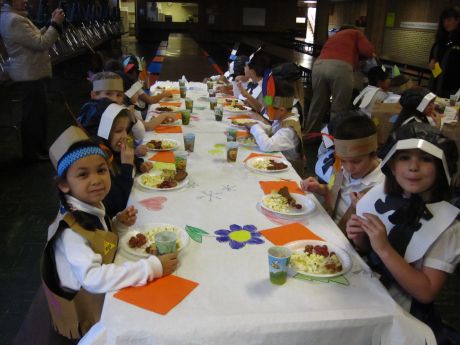
There is a lot of magic in a name; part truth and part spell. The Last Frontier was bestowed carefully, a  tribute both to the land’s untamed expanses and America’s deep rooted nostalgia for the era of cowboys sleeping under the stars and teepees peppering the wide open plains. America misses the Last Frontier. The idea that our ancestors walked bravely into the unknown, carved trails through an unforgiving wilderness, and ultimately weaved from the fabric of drastically different cultures, hard work, and luck the world’s strongest country is a great story. Our story. It is written so deeply into our collective consciousness that we walk with it, always, so intrinsic that we forget it is there. All of those old men and women were children once, together in that November classroom to learn the story. We were all there. When winter began to bite through fall we carefully stapled together the wide brown band of construction paper and pasted bright feathers to our Indian head-dress. We glued the bright yellow paper buckle to our pilgrim hats while the teacher laid out the multi-colored corn and parents arrived for the feast. And there, divided only by our different paper hats, we acted out the story: pilgrims and Indians eating together. Pilgrims and Indians celebrating abundance, welcoming the winter, waiting for the thaw, for the spring when America would begin in earnest. Thankful. So very deeply thankful for not just a meal, but for what was to come.

The story of our bright beginning, the purest freedoms, the wide open plains, that story is deep in our bones now. But we know that it wasn’t that easy. We feel the ghosts of other, less often told stories, lurking in the periphery of that happy story. We close our eyes and see teepees burning. We know that the pilgrims won, and we know how. Sand Creek. Custer’s Last Stand. Trails and trails of blood and tears carved through what was the frontier, paved and perfected so that the wild could become America. We sense it – that when those early November’s frost chased away the last of the leaves and winter was moments away, thousands of children were placed in hard-dug graves, wheels of wagons crashed over tiny bones and ground them to dust, and the division was real. Some of us walk with those stories, too, as deeply written and as impossible  to shed as the first Thanksgiving. But those stories are heavier. Harder to carry.

For most of America, the stories get further away each season, until they are so far in the distance they are forgotten. The terrible ones remain untold until the words are hard to form and people are able to forget. But this is the Last Frontier, and here, the wagons must keep moving if America is to take root properly. Here it is sometimes America of golden arches and great bridges, but much of the time it is still cowboys and Indians.

In Alaska we are plagued with a terrible double vision, one we cannot make peace with. See, this is the America that learned from its past. This is the country that has progressed, where a million men marched, where a woman would not budge from her bus seat, where we can erradicate the past in order to form a more perfect union. And Alaska is part of that America. Yet, we are out of time in some ways. We are not as far along in our story, we are somehow still in the part where teepees must be burned and trails must be carved, even though we know the ending, even though McDonald’s is here before all the bison are dead. We are American enough that we believe ourselves to not be racist, to believe ourselves to be undivided. But when Martin Luther King had a dream, soldiers still came in the night to take Indian children out of their beds and send them away. Not a story from our ancestors, a story from our parents. It’s all wrong. Someone forgot to divide the Indians into reservations and erect copper likenesses of their murdered chiefs in the town squares. Someone forgot to build town squares. We are not divided enough to pretend convincingly that we are undivided. So, we have to play a kind of first Thanksgiving. America lays out the feast and shows us the colorful corn that could never grow in this soil. See here? America says. The proof that this is your story, too. Our story together. And we put on our technicolor feathers and flopping construction paper buckles and rehearse our happy meal. Pilgrims and Indians, cowboys and Indians, make believe until you believe.

Then, sometimes, something happens that breaks it all back open and the other stories come roaring alive. A boy, say, scalped on the streets, his blood staining snow, the last of his hot breath wisping into the late fall sky, life leaving him.

Men in cars with red and blue flashing lights, wearing badges and those black paper hats that were placed onto their heads so long ago that they have forgotten they are there. Still, right away they scan the horizon, begin looking for four Indian boys playing at warrior games, feathers like a shadow. The investigation is over now, before it has begun, because these men remember this story. They know how it ends already.

This story is very old. This is the story of America. This is the story of the Last Frontier, the very last. This is a story that you know already. This story was whispered to you once in the rustling of construction paper and dried corn. This is a sad story. Listen, listen.

Free the Fairbanks Four

Murder on a Winter Night

Although the story of the Fairbanks Four has roots in history, both recent and distant, the story we are attempting to tell begins in the early morning hours of October 11, 1997 with the brutal murder of a teenaged boy on a on a freezing cold Alaska night.

He was found alone, draped over a snow covered curb, bleeding, barely breathing, life leaving him. His pants were around his knees. He was transported to Fairbanks Memorial Hospital where he would die the next day. He remained unconscious and had no identification. It was many hours before anyone knew his name, but eventually the people of Fairbanks, Alaska would remember that name forever.

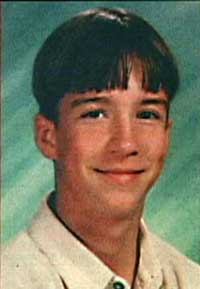
John. John Hartman. It is important to say his name singularly, alone. Partly because it is never wise to speak the name of the dead lightly, partly because it is wise to remember that there is power in a name spoken aloud. It reaches the living, and hurts them again. Touches them where they were hurt once, on the wound that never heals. It echos into the air and the wind takes it through leaves, past branches, to heaven, to the other side. The dead hear us say their name and we should never forget that.

He was just a boy, caught in the season of change, where you play at being a man because you almost are.  On October 11, 1997 he walked toward home one last time and something terrible happened. Feet and fists and hatred of unknown origins landed on his body over and over and over until he was very still, cast away and left for dead on the streets of downtown Fairbanks.

This is what we know of his last night on Earth, gathered primarily from newspaper accounts, police reports, trial transcripts, and the work of reporter Brian O’Donoghue alongside his UAF journalism students. Their detailed account of John Hartman’s last night can and should be read here. We have distilled it to the very basics below.

 John spent most of the evening with his two friends, EJ Stevens and Chris Stone, at the Rainbow Inn Motel. It is a place not unlike many across the country, and strikingly similar to a motel across town called the Alaska Motor Inn that also became a crucial location in the murder investigation. In 1997, both motels had dull gray exteriors, peeling paint, and bad reputations. The rainbow that dominated the sign at the Rainbow Inn made a mockery of the slum that waited inside. In 1997 it was known as a good place to score drugs, and a bad but cheap place to live. The floors were tilted and the carpet stank.

John’s friend EJ was there babysitting a toddler that night at the Rainbow Inn. John and Chris went there to hang out. It has been alleged that they took LSD, perhaps meth, and antidepressants, and that John had a seizure there. At the Rainbow Inn, and throughout the day, John was wearing very distinctive camouflage pants. This orphan fact has troubled many who followed the case closely enough to know that a short time after leaving the Rainbow Inn John would be found dying with his friend Chris’ corduroy pants around his knees, the camouflage pants missing. From the time that EJ, Chris, and John departed the Rainbow Inn, a countdown to his murder begins.

1:12am  When the parent of the toddler returned home, he was not happy to see that EJ had invited John and Chris over. He paid for the boys to take a cab to EJ’s house across town.

1:20am (approximately).  EJ’s mother watched the boys get out of the cab. Her son came inside and, she says, John Hartman and Chris Stone walked off together. Chris Stone claims the opposite, that they headed in separate directions, with John Hartman walking down the road toward the site of his murder, and Chris heading the opposite way.

1:30am John Hartman was beaten and viciously murdered at the corner of 9th Avenue and Barnette Street.

1:45am Chris Stone ran into Foodland, a grocery store a few blocks from the murder site, panicked, saying something about his friend being hurt. Around this time Chris left a terrified-sounding message for family friend Barbara Higgins. She tried for weeks to persuade police to get a copy of the message. They were not interested, and eventually it was accidentally erased.

2:50am A car full of people leaving a downtown wedding reception (a location that would become central to the investigation) found John Hartman barely clinging to life on the curb. He was not wearing his camouflage pants, but Chris Stone’s blue corduroy pants, and they are down around his knees. The motorists called 911 and John Hartman was transported to Fairbanks Memorial Hospital.

6:30am After many hours of care in the ICU, and hours spent searching for his family who thankfully were located in time to wait at his deathbed, John Hartman was declared dead. At that moment John Hartman officially became a murder victim. He left this world for the next. The lives of his loved ones changed forever. The lives of many, many people changed forever.

There will be many future posts in which will discuss the flaws of the investigation, the way that racism appears to have figured into the arrests and convictions of the Fairbanks Four, what we see as corruption, and much more. But for now, we want to let the very sad story of what happened to this young man stand separately, as it should.

Keep in mind that we are not reporters, but activists. There is ample, incredibly detailed reporting on this case. Please visit Extreme Alaska to read a detailed account of John Hartman’s last day. You can also read details of Chris Stone’s movements, his testimony, the story of how he had suffered a similar and severe beating a few weeks earlier, and much, much more information than we could provide here in the Newsminer series about the case published in 2007.

The Beginning of Our Story

It is hard to introduce a story so specific yet universal, so young, yet so old. It is not enough to say that this is a blog about four young Native men wrongfully convicted of a brutal murder.

It is not enough to say that this blog is about racism or hate, or faith or hope. This is the story of Alaska. Of America. A story of injustice, a plea for help, for understanding, and above all a story of faith in the power of stories, of the truth. Writing this blog is an act of faith, a testimony to the power of the truth, spoken, read. We may not be experts in journalism, in law, or many other things. But the contributors here come from Alaska, from a culture that has a long tradition of storytelling, and a belief that the truth holds incredible power. This is a long story, and we will have to tell it the old way, the slow way, in pieces as they come.

In telling this story we hope to achieve one small justice for four men, but also to contribute to building justice for all Native people. For all people. In the weeks and months to come we will introduce a brutal murder, a shocking investigation, and the stories of heartbreak, determination, and hope from many people that have all sprung from one terrible night.